
Yes, French Bulldogs can safely eat papaya. Veterinary experts at PetMD confirm it is non-toxic and safe for dogs. Infact it’s a healthy, fiber-rich treat that aids their often-sensitive digestion. However, you must remove the seeds and thick skin first, and keep serving sizes small for this breed.
As a Frenchie owner, you are likely used to those big, soulful eyes begging for a piece of whatever you are snacking on. If you are slicing up a fresh papaya, you are in luck, this exotic fruit can be a genuinely beneficial snack for your dog, with a few important caveats.
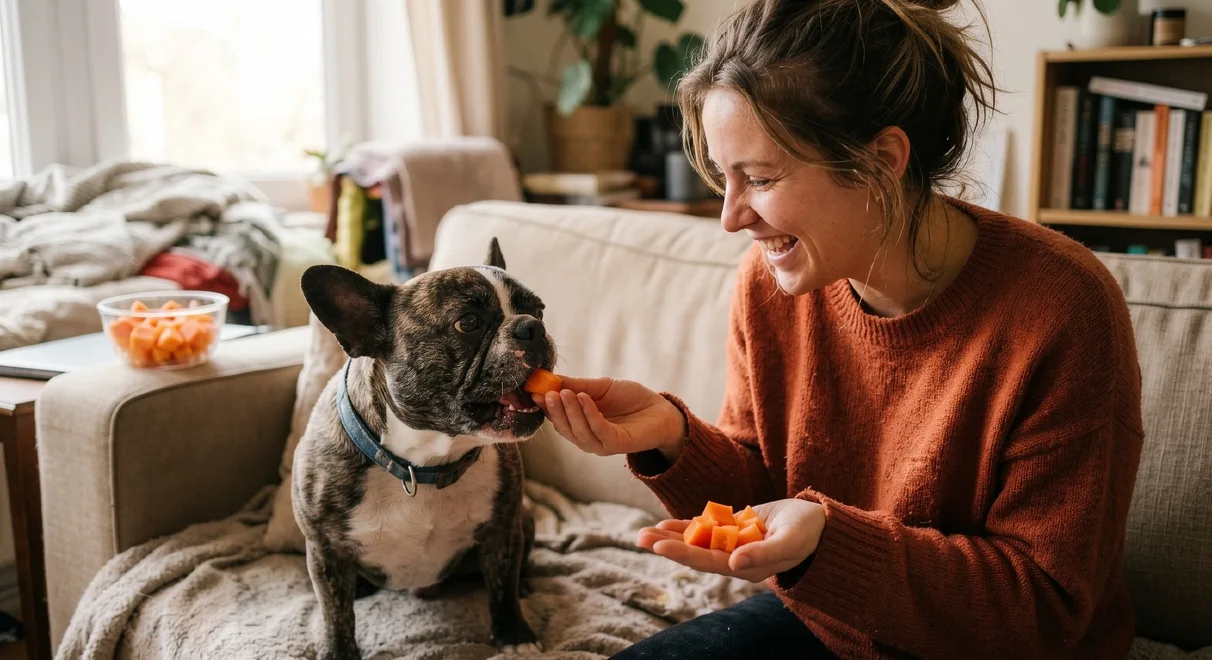
Always serve papaya in small, seedless cubes (as shown above) to prevent choking and ensure your Frenchie reaps all the digestive benefits safely.
Why papaya is a great choice for your Frenchie
French Bulldogs are notorious for having “gassy” stomachs and digestive issues. Papaya contains a natural enzyme called papain, which is a powerhouse for breaking down proteins.
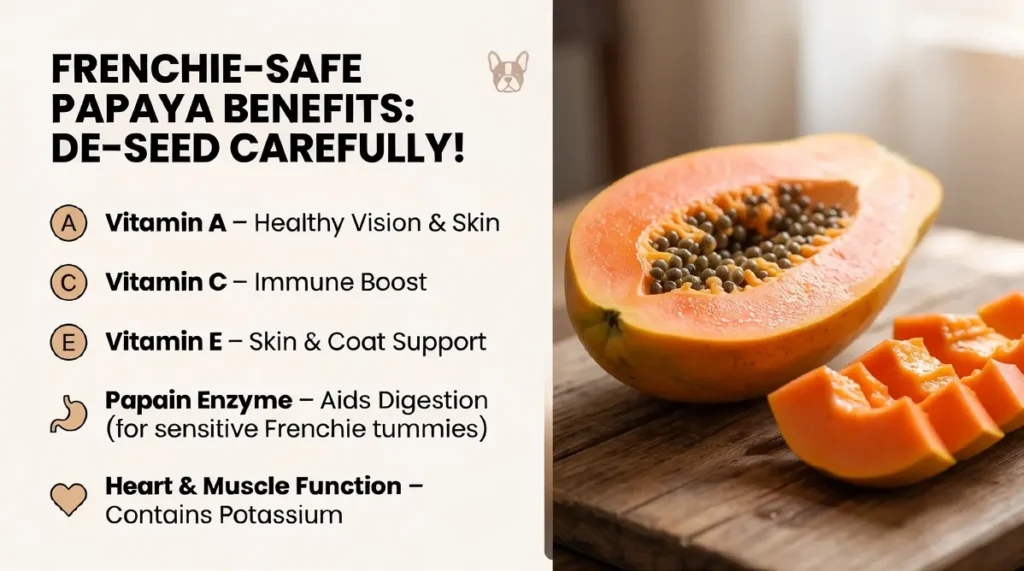
Papaya benefits for French bulldogs
Digestive support
Papain soothes upset stomachs and reduces bloating, a big deal for a gassy Frenchie.
Vitamin boost
Loaded with Vitamins A, C, E, and K supports a shiny coat and a strong immune system.
Heart health
Potassium and magnesium are well-known in veterinary science to support cardiac muscle function, making papaya a heart-healthy choice for aging Frenchies.
Hydration
High water content makes it a refreshing snack on hot US summer days when Frenchies struggle to stay cool.
The hazards: what to avoid
While the flesh of the fruit is gold, other parts of the papaya are completely off-limits for your pup.
The seeds
Papaya seeds contain tiny amounts of cyanide. While a few seeds might not be fatal, they can cause digestive distress. According to veterinary advice from Dial-A-Vet, they can also lead to intestinal blockages in smaller breeds like the Frenchie. Always scoop them out thoroughly.
The rind / skin
The skin is thick and hard to digest. For a brachycephalic (flat-faced) breed, a piece of skin can easily become a choking hazard or lead to a painful gut blockage.
Dehydrated papaya
Avoid the dried papaya found in grocery store snack aisles. These are packed with concentrated sugars and preservatives that can lead to rapid weight gain or even pancreatitis in sensitive dogs.
The breed-specific pro-tip
Since French Bulldogs are prone to Brachycephalic Syndrome, they often swallow a lot of air while eating, leading to excessive flatulence. To prevent “papaya-farts” and gas buildup, never feed large chunks.
Instead, mash a small tablespoon of ripe papaya into their regular kibble or a lick mat. This forces them to eat slowly, prevents gulping air, and allows the papain enzyme to mix better with their main meal for optimal digestion.
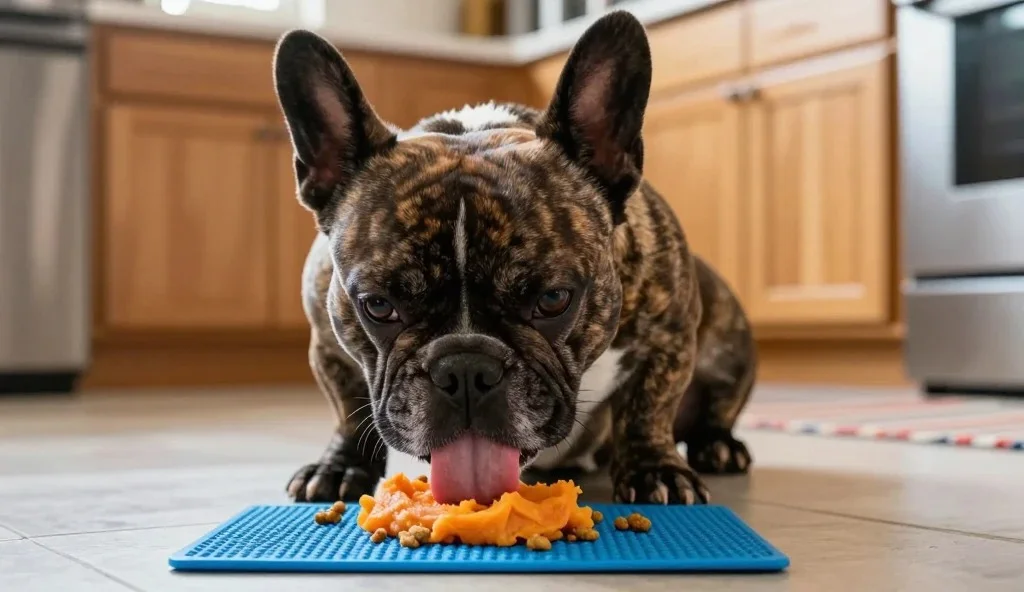
How to safely serve papaya to your Frenchie
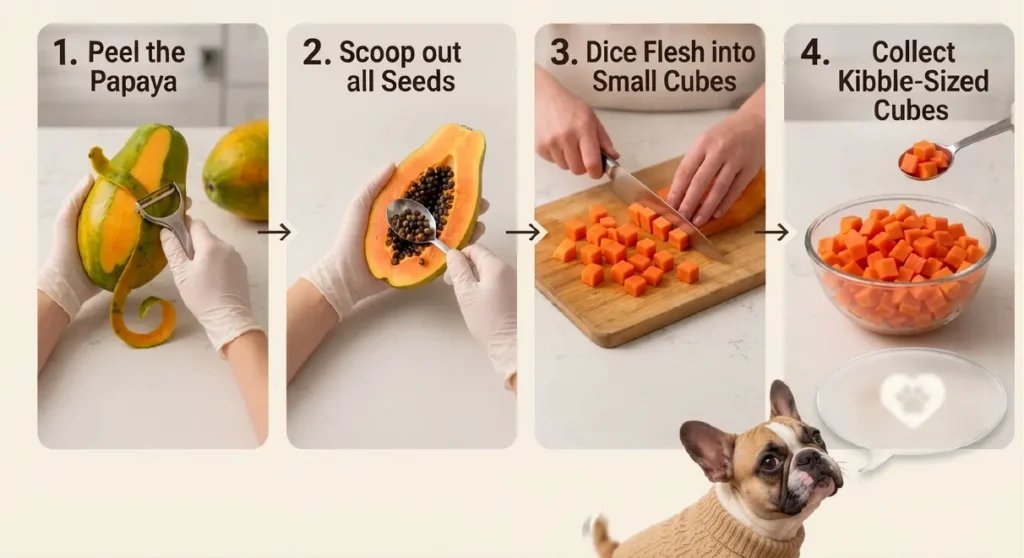
Papaya is a vet-approved, digestion-friendly treat for your Frenchie but preparation is everything. Remove the seeds, ditch the skin, skip the dried version, and keep portions small. Done right, it is one of the best fruits you can add to your Frenchie’s rotation.
I’m building a database of **Frenchie dietary habits and digestive sensitivity.** Does your Frenchie have a sensitive stomach, and have you tried feeding them papaya before? Let’s discuss in the comments below!
Frequently asked questions
Indirectly, yes. Papaya aids digestion and helps break down food more efficiently in the gut, which can sometimes reduce the “stinky” odors that come up from a sluggish digestive system.
Don’t panic. If they swallowed one or two, they will likely be fine. Monitor them for any vomiting or changes in their stool. If they ate a large handful of seeds, call your vet immediately.
It is best to rotate fruits. While papaya is healthy, its natural sugar content can add up. Stick to 2–3 times a week to keep their weight in check.

Written by Zain
Lead Researcher @ The Breed Expert
Zain spends dozens of hours every week analyzing veterinary journals and community feedback to provide Frenchie parents with accurate, science-backed advice.
Medical Disclaimer: The information provided on The Breed Expert is for educational and informational purposes only. It is not intended as a substitute for professional medical advice, diagnosis, or treatment. Always seek the advice of your veterinarian with any questions you may have regarding a medical condition or dietary changes for your pet. Reliance on any information provided by this site is solely at your own risk.
Pingback: Can French Bulldogs Eat Apples ? Safety Guide & Recipe
Pingback: French Bulldog Lifespan Blueprint: 5 Tips for a 14-Year Life
Pingback: Can French Bulldogs Eat Bananas? Vet-Approved Guide
Pingback: Can French Bulldogs Eat Watermelon? The 3 "No-Poop" Rules