
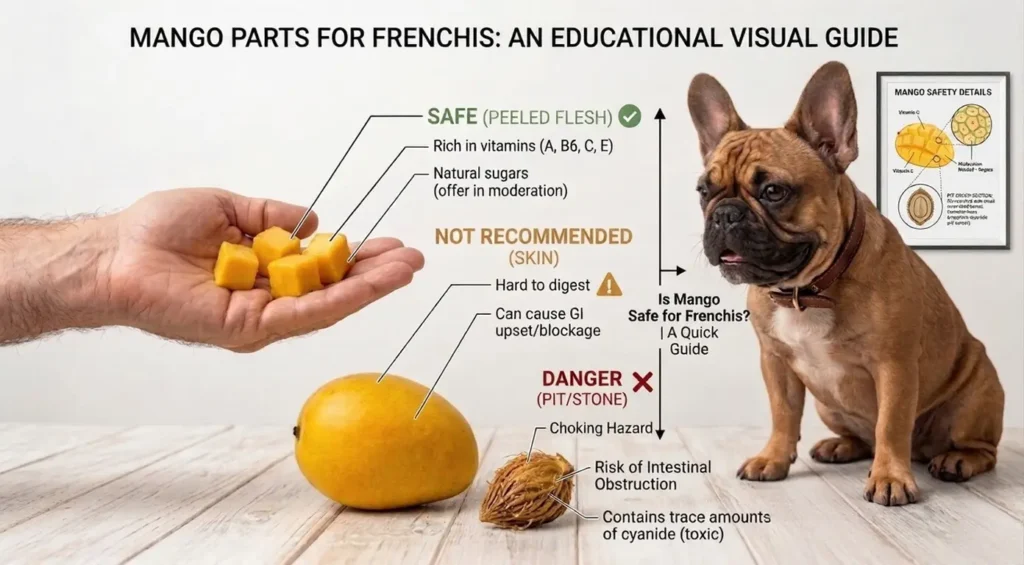
Yes, French Bulldogs can eat mango, but it must be served with caution. While the flesh is non-toxic and packed with vitamins, the high sugar content and fibrous texture require strict prep. To avoid choking and severe gas, always remove the pit and skin, and cut the fruit into tiny, pea-sized cubes.
If you own a Frenchie, you are basically a full-time digestive detective. You spend your days checking stool consistency and sniffing the air for the “silent but deadly” gas this breed is famous for. So, when those big, bat-eared shadows start begging for a piece of your tropical snack, you have to ask: Is mango a “Superfood” or a “Gas-Bomb”?
While mango is technically safe, Frenchies have a specific set of “operating instructions” that other breeds don’t. Here is the reality of feeding mango to the world’s most sensitive stomach.
Verdict Card
Table of Contents
The “Gulp” Factor: Why Anatomy Matters
Most blogs tell you mango is a choking hazard because of the pit. For Frenchies, it’s more than that. Because of their brachycephalic (flat-faced) structure, Frenchies don’t chew like normal dogs they “inhale.”
Mango is naturally slimy and slippery. If you give a Frenchie a large slice, it can easily slide down their throat before they even attempt to crunch it. This can lead to a terrifying “back-up” in their narrow esophagus. Scientifically, Frenchies have a crowded oropharynx, meaning slippery foods are a high-risk “slip-and-slide” directly into their airway.
The “Yeast” Connection & The Wrinkle Warning
French Bulldogs are the “Kings of Yeast.” If your pup struggles with red, itchy paws, smelly brown gunk in their wrinkles, or chronic ear infections, take note. The high natural sugar (fructose) in mango acts as fuel for that yeast.
Mango juice is incredibly sticky. When your flat-faced pup eats, that juice often gets trapped in their nose ropes and facial folds. If left uncleaned, that sugar creates a breeding ground for bacteria right in their wrinkles. According to clinical studies on canine skin microbiota, moisture and organic residue in skin folds significantly increase the risk of “Sour Face” (Dermatitis).
The “Fart-O-Meter”
We have to talk about the gas. Mango is loaded with fiber and an enzyme called Amylase. In a Golden Retriever, that’s great for digestion. In a Frenchie, it can lead to a “bubbly stomach.
Because Frenchies have a shorter digestive tract, these sugars often reach the colon before being fully broken down. They begin to ferment, and that fermentation is the exact reason for those “room-clearing” farts. If your dog already has a sensitive gut, start with one tiny cube and wait 24 hours to see if the “air quality” in your living room changes.
Managing the “Mango Drama” (Behavior)
Frenchies are “Velcro dogs” with major FOMO (Fear Of Missing Out). If they see you eating a mango and don’t get a piece, their stress levels can actually trigger Reverse Sneezing.
To avoid the drama without overfeeding them sugar, try the “Switch-and-Bait.” Give them a tiny, pea-sized cube of mango, but keep a bowl of crunchy, low-calorie green beans nearby to satisfy their need to “eat with you.”
How to Safely Prepare Mango for Frenchies

If your pup has a sturdy stomach and clear skin, here is how to serve it safely:
Frenchies have notoriously weak digestive enzymes for tough fibers. Remove every scrap of the peel; it’s like trying to digest plastic for them.
Cut the flesh into cubes no larger than 1cm. This forces them to actually taste it rather than just swallowing it whole.
The mango pit contains small amounts of cyanide, but the real danger is the size. A swallowed pit is an automatic $3,000 emergency surgery for a small-stature breed like this.
Mango Foods Frenchies Should Avoid or Limit
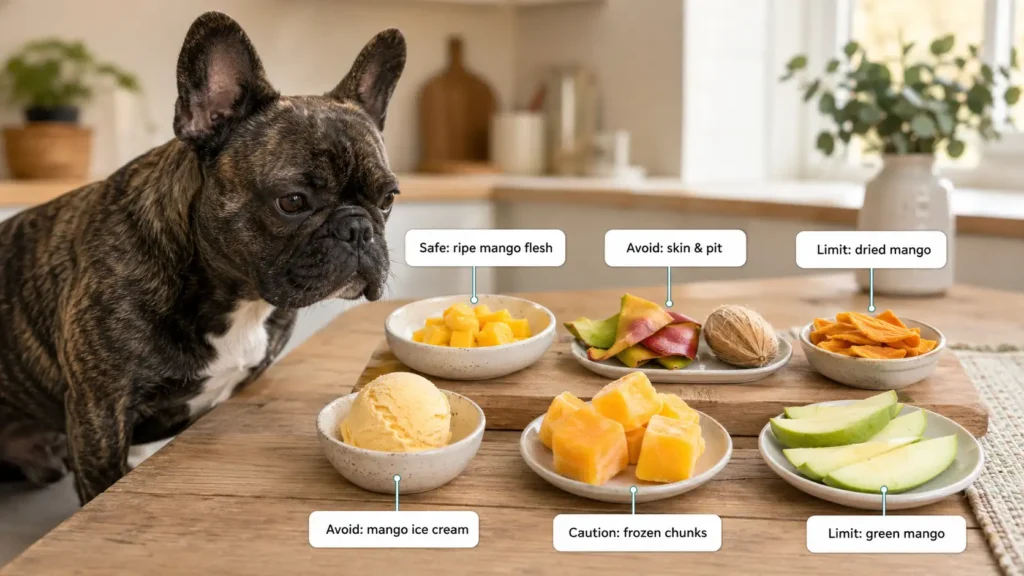
Plain ripe mango flesh is the safest way to share mango with a Frenchie. Other mango forms can be harder to digest, too sugary, too sticky, or risky for dogs that gulp food quickly. This is why the type of mango matters just as much as the amount. For a full food safety list, see our guide on what Frenchies can eat.
Can Frenchies Eat Mango Skin?
No, Frenchies should not eat mango skin. The peel is tough, fibrous, and harder to digest than the soft fruit inside. It may also increase the chance of choking or stomach upset, especially in French Bulldogs that swallow food quickly.
Always peel mango before serving it. If your Frenchie eats a small piece of mango skin by accident, watch for vomiting, loose stool, coughing, gagging, or signs of discomfort. Call your vet if symptoms appear or if your dog ate a large amount.
Can Frenchies Eat Mango Ice Cream?
Mango ice cream is not a good choice for French Bulldogs. It usually contains dairy, added sugar, and other ingredients that can upset a Frenchie’s stomach. Some frozen desserts may also contain unsafe sweeteners or additives, so it is better to avoid them.
If you want a cold mango treat, use a tiny amount of plain ripe mango instead. You can mash it with water and freeze it on a lick mat, but keep the portion small because mango is still high in natural sugar.
Can Frenchies Eat Dried Mango?
Dried mango is not ideal for Frenchies. It is much more concentrated in sugar than fresh mango, and many store-bought versions contain added sugar or preservatives. That can lead to gas, soft stool, or stomach upset in sensitive dogs.
Fresh ripe mango is the safer option. If your Frenchie accidentally eats dried mango, check the ingredient label first. If it contains added sugar, spices, or artificial sweeteners, contact your vet for advice.
Can Frenchies Eat Frozen Mango?
Yes, Frenchies can eat frozen mango if it is plain, peeled, pitted, unsweetened, and cut into very small pieces. The problem is not frozen mango itself; the problem is serving large hard chunks that can be difficult to chew.
For a safer option, let frozen mango soften slightly before serving or mash a tiny amount onto a lick mat. Avoid sweetened frozen mango, mango sorbet, mango popsicles, or frozen mango desserts made for people.
Can Frenchies Eat Green Mango?
Green mango is not the best choice for French Bulldogs. It is usually firmer, more acidic, and harder to digest than ripe mango. For a Frenchie with a sensitive stomach, that can mean gas, drooling, vomiting, or loose stool.
If you want to share mango, choose ripe mango flesh that is soft and sweet. Keep the serving tiny and avoid giving mango if your Frenchie already has stomach upset or food sensitivities.
The “Summer Heat” Hack
Frenchies and heat are a dangerous mix. Because they can’t pant efficiently, they overheat in minutes.
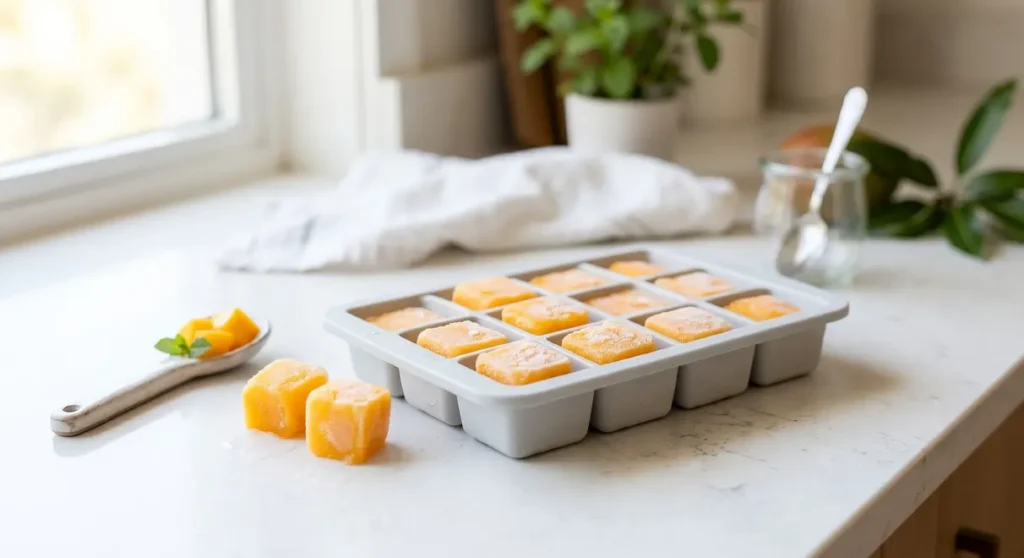
Blend fresh mango with a splash of unsweetened coconut water and pour it into a “Lick Mat” or ice cube tray. The cold fruit helps lowers their core temperature instantly and keeps them calm and occupied without the sugar spike.
Mango is safe for Frenchies — flesh only, pea-sized pieces, 2–3 times a week max. Prep it right and it’s one of the best summer treats for this heat-sensitive breed.
Does your Frenchie get the “zoomies” or the “stinkies” after eating fruit? Let me know in the comments below!
Quick Questions from the Community
Wait until 12–16 weeks. Their gut biome is still “leveling out,” and the high fiber in mango can cause instant diarrhea in young puppies.
Don’t panic, but expect a “messy” walk tomorrow. The skin usually passes through undigested, often causing a bit of straining or a soft stool.
Actually, no. Blueberries have less sugar and more antioxidants. If your Frenchie is a bit “chunky,” stick to blueberries. If they are fit and active, a little mango is a great weekend reward.
Don’t wait for symptoms. Call your vet immediately. Because Frenchies are a compact breed, the chance of a large pit passing naturally is very low, and it can cause a life-threatening blockage.

Written by Zain
Lead Researcher @ The Breed Expert
Zain spends dozens of hours every week analyzing veterinary journals and community feedback to provide Frenchie parents with accurate, science-backed advice.
Medical Disclaimer: The information provided on The Breed Expert is for educational and informational purposes only. It is not intended as a substitute for professional medical advice, diagnosis, or treatment. Always seek the advice of your veterinarian with any questions you may have regarding a medical condition or dietary changes for your pet. Reliance on any information provided by this site is solely at your own risk.
Pingback: Can French Bulldogs Eat Apples ? Safety Guide & Recipe
Pingback: Can French Bulldogs Eat Bananas? Vet-Approved Guide
Pingback: Can Frenchies Eat Cucumbers ? The "Matchstick" Secret