
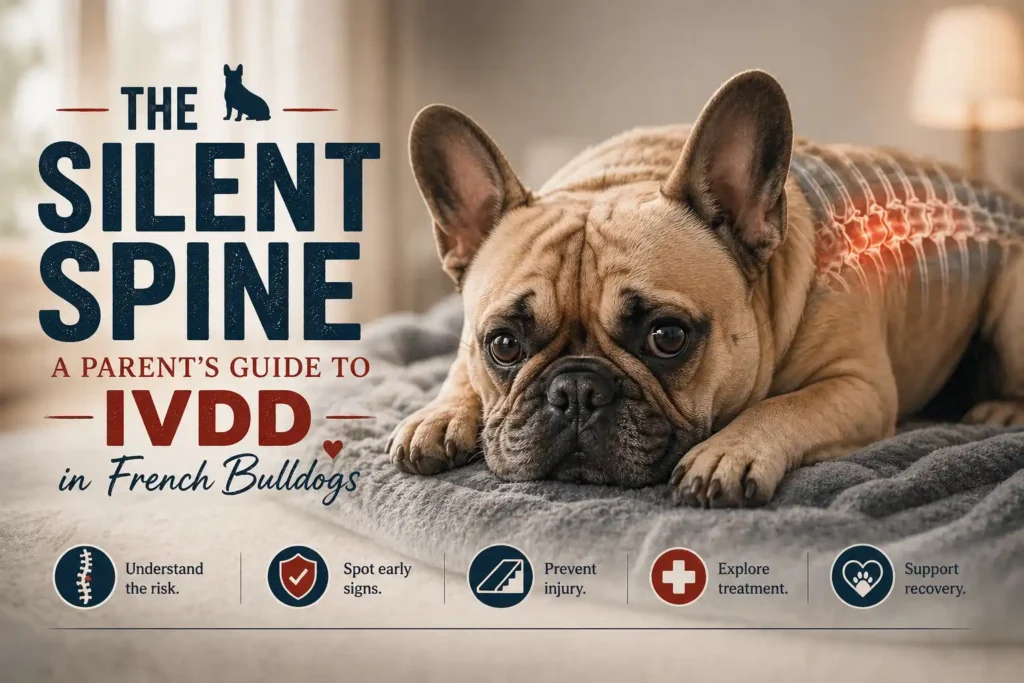
There is a specific kind of silence that falls over a home when a Frenchie loses their “zoomies.” One minute they are a chaotic “bat-pig” chasing a toy, and the next, they are shivering, tucked up, or most terrifyingly unable to move their back legs.
If you are reading this because your dog is acting “off,” take a deep breath. You aren’t just a dog owner; you are a caregiver. Intervertebral Disc Disease (IVDD) is a heavy diagnosis, but it is not a death sentence.
What is IVDD in French Bulldogs?
To put it simply, IVDD is a spinal condition where the cushioning discs between the vertebrae either bulge or burst (herniate) into the spinal cord space.
Because Frenchies are a “chondrodystrophic” breed (a fancy word for breeds with dwarfism), their spinal discs age and harden prematurely. Think of it like a shock absorber in a car that has become brittle and suddenly snaps except that “snap” happens against your dog’s sensitive nerves.
How Common is IVDD in French Bulldogs?
Research suggests that nearly 1 in 4 Frenchies will experience some form of spinal disc issue. It is one of the most significant health hurdles for the breed. This isn’t because you did something wrong; it is a biological reality of their compact, “cobby” build.
What Causes IVDD in French Bulldogs?
While a sudden jump can be the trigger, the root cause is “calcification.” In a healthy dog, discs are soft and squishy. In a Frenchie, that “jelly” turns into hard, gritty material. When the dog moves, that hard material is forced upward into the spinal cord.
Is IVDD Genetic in French Bulldogs?
Yes. Scientists have identified the FGF4 retrogene as the culprit. It is written in their DNA. You didn’t cause this by letting them jump once; their blueprint just came with a fragile foundation.
Early Signs of IVDD in French Bulldogs
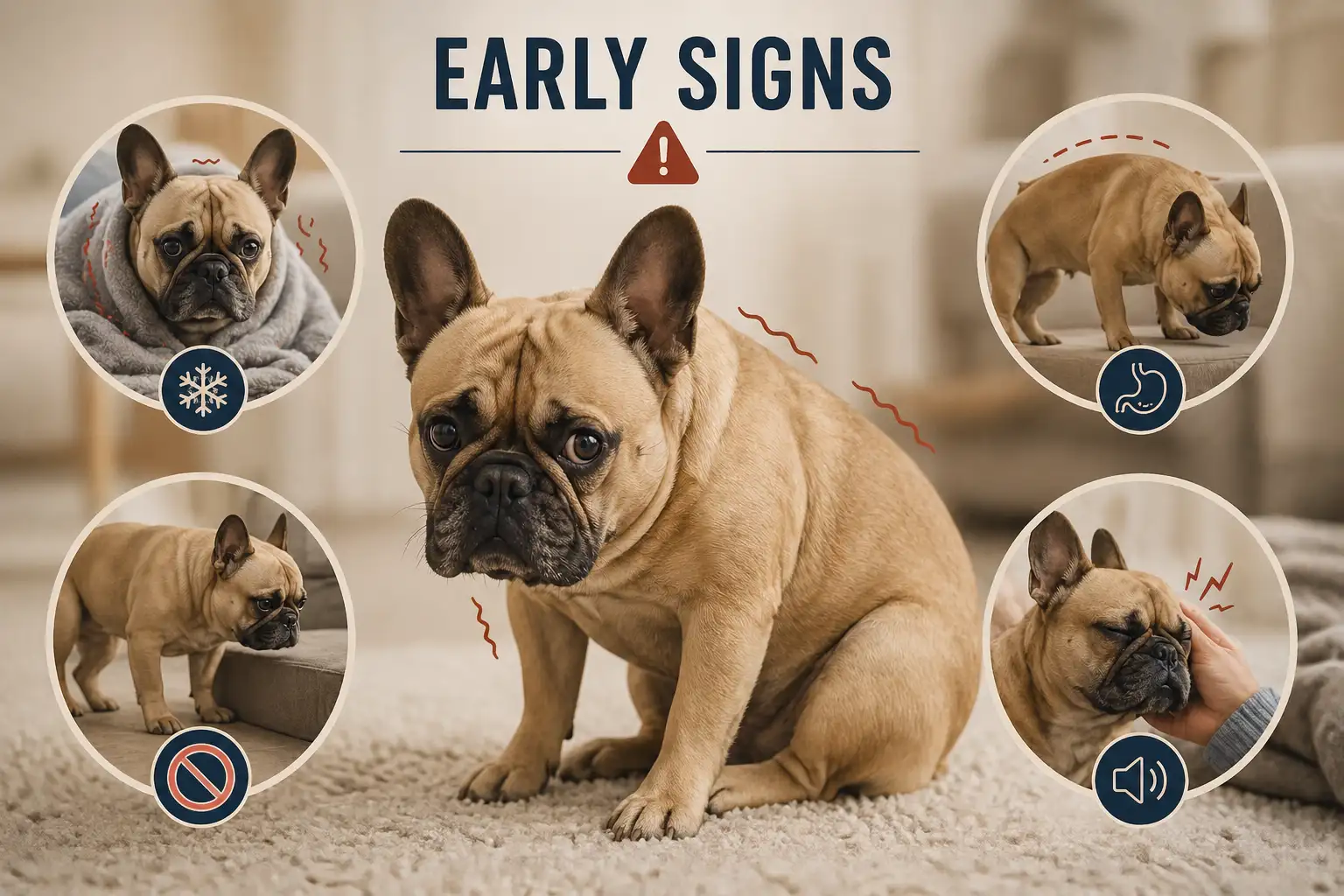
Frenchies are notoriously “tough” and often hide their pain. You have to be a detective to catch the early signs of IVDD in French Bulldogs before they lose mobility.
The Shivers
Sudden trembling when it isn’t cold.
The Tucked Tummy
A hard, rigid abdomen as they brace their core.
Reluctance to Move
Suddenly refusing to get on the sofa or go up stairs.
The “Yelp”
Crying out when picked up or when turning their head.
Symptoms of IVDD in French Bulldogs
As the condition progresses, the symptoms of IVDD in French Bulldogs become more physical. You may notice:
- Dragging back paws or “knuckling” (walking on the tops of the feet).
- A “drunk” or wobbly gait in the hindquarters.
- Loss of bladder or bowel control.
Cervical IVDD in French Bulldogs
It isn’t always the back. Cervical IVDD in French Bulldogs refers to the neck. If your Frenchie is holding their head very low, refuses to eat from a bowl on the floor, or screams when their ears are touched, it is likely a neck disc. This is often more painful than back issues.
What Age Does IVDD Start in French Bulldogs?
18 mo
Early adulthood onset possible
3–6 yrs
Peak risk for disc herniation
< 1 yr
Calcification starts early
How to Prevent IVDD in French Bulldogs
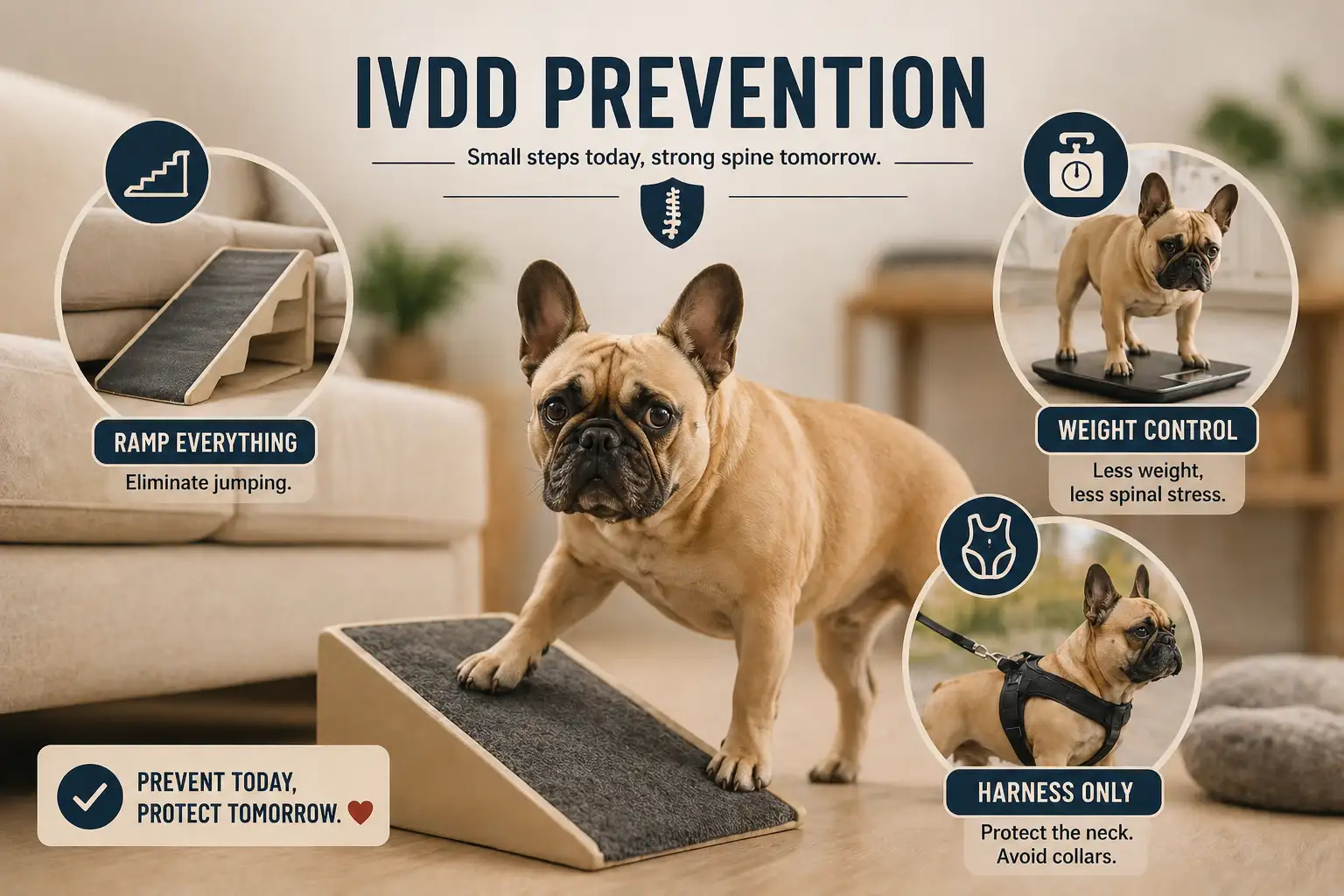
Ramp Everything
Essential safety tools for daily life.
Weight Control
Leaner bodies mean less spinal stress.
Harness Only
Protect the neck from collar strain.
How to Avoid IVDD in French Bulldogs
Always lift by supporting both the chest and the rump to keep the spine horizontal. Never let their back dangle.
The 5 Stages of IVDD in French Bulldogs
Understanding these stages helps determine how quickly you need to seek specialist care:
The dog is still walking but may arch their back, shiver, or resist moving their head.
Mobility is affected. You will notice a wobbly or “drunk” walk in the back legs.
The dog can still move their legs, but they cannot stand up on their own.
Complete loss of motor function. The dog cannot move but still feels “Deep Pain Sensation.”
No feeling and total paralysis. This is a 24-hour surgical emergency to prevent permanent damage.
Treatment for IVDD in French Bulldogs
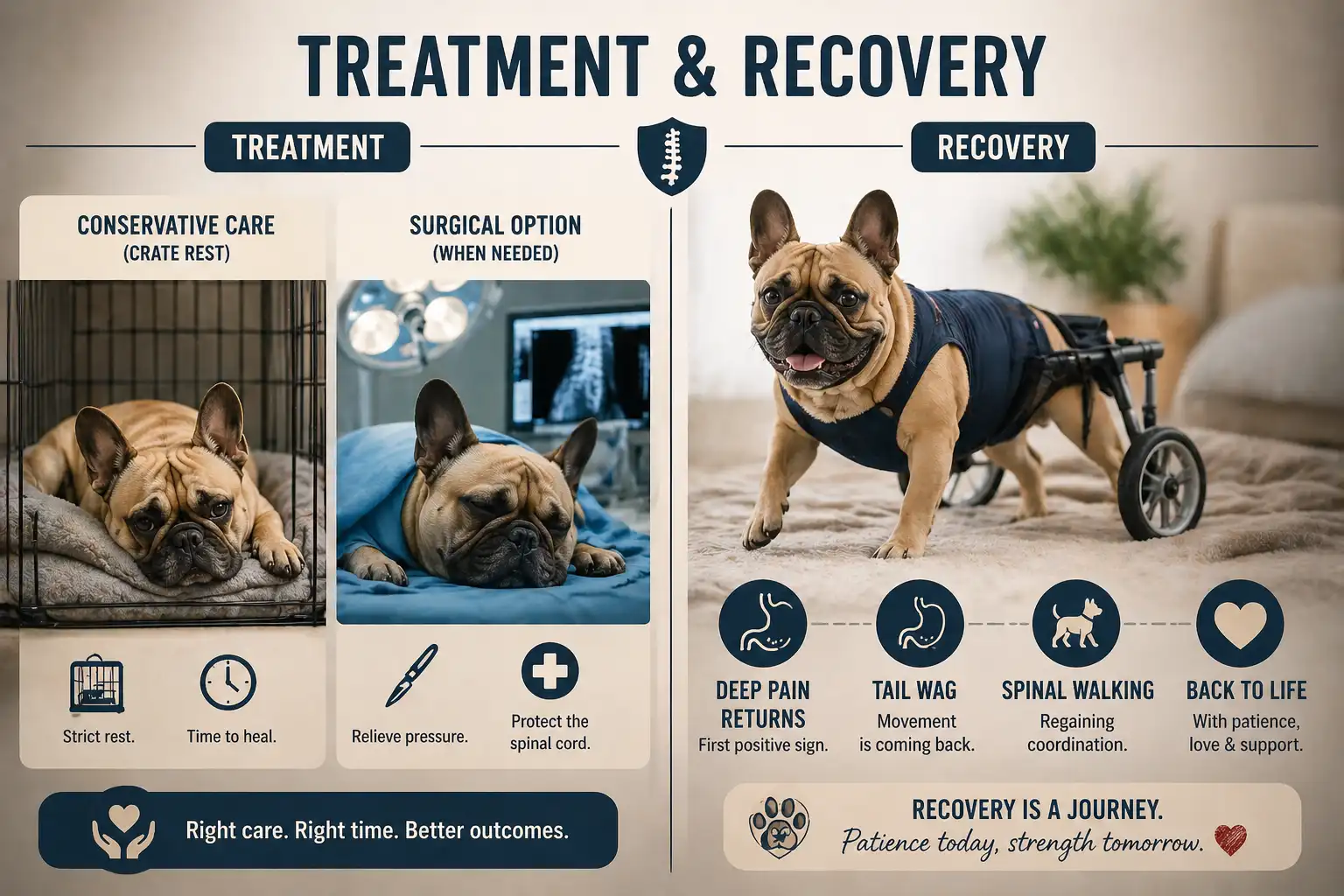
If your Frenchie is diagnosed, treatment for IVDD in French Bulldogs usually falls into two categories:
Conservative Management (Crate Rest)
For mild cases, 4–8 weeks of 24/7 confinement allows the disc to heal.
Surgery
A neurologist removes the bone and disc material pressing on the cord.
IVDD Surgery Recovery
Recovery is a marathon. IVDD surgery recovery signs to watch for include the return of deep pain, then the “tail wag,” and finally “spinal walking.” It requires patience, physical therapy, and a lot of floor-time cuddles.
Expert Advice: What Others Miss
The 60-Minute Protocol
Estimated Surgery Cost
Crate Rest is Healing
Final Thoughts to the Scared Parent
Whether you are sitting on the floor next to a crate tonight or researching for the future, remember that you are your Frenchie’s hero. They don’t define their life by their ability to walk; they define it by the love they feel from you.
Stay vigilant, use those ramps, and cherish the wiggles.
Frequently Asked Questions

Written by Zain
Lead Researcher @ The Breed Expert
Zain spends dozens of hours every week analyzing veterinary journals and community feedback to provide Frenchie parents with accurate, science-backed advice.
Medical Disclaimer: The information provided on The Breed Expert is for educational and informational purposes only. It is not intended as a substitute for professional medical advice, diagnosis, or treatment. Always seek the advice of your veterinarian with any questions you may have regarding a medical condition or dietary changes for your pet. Reliance on any information provided by this site is solely at your own risk.
Pingback: Can French Bulldogs Eat Cantaloupe? The Zero-Choke Method
Pingback: Do Frenchies Get Cold at Night? 68°F Rule You Should Know