
If you are wondering, Can French Bulldogs eat cantaloupe? the answer is Yes, French Bulldogs can eat cantaloupe, but it should be viewed as a hydration tool rather than just a snack. While the fruit is 90% water and packed with eye-protecting vitamins, its high sugar content and “slippery” texture require breed-specific preparation. To protect their sensitive spines and narrow airways, always remove the rind and seeds and use the “Ribbon Method” for serving.
Cantaloupe Safety Verdict for Frenchies

If you own a Frenchie, you aren’t just a dog owner you are a Thermostat Manager. You know that panicked “huff-huff” sound they make after just three minutes in the sun. Because of their brachycephalic (flat-faced) anatomy, Frenchies don’t just “get hot”; they overheat at a cellular level, according to American Kennel Club veterinary research on thermoregulation issues in brachycephalic breeds.
While most generic dog blogs say cantaloupe is safe “in moderation,” they aren’t looking at it through the lens of a Digestive Detective. Here is the science-backed reality of feeding melon to the world’s most charming (and gassy) roommates.
Table of Contents
Is Cantaloupe Safe for French Bulldogs? Why It’s a “Thermal Tool”
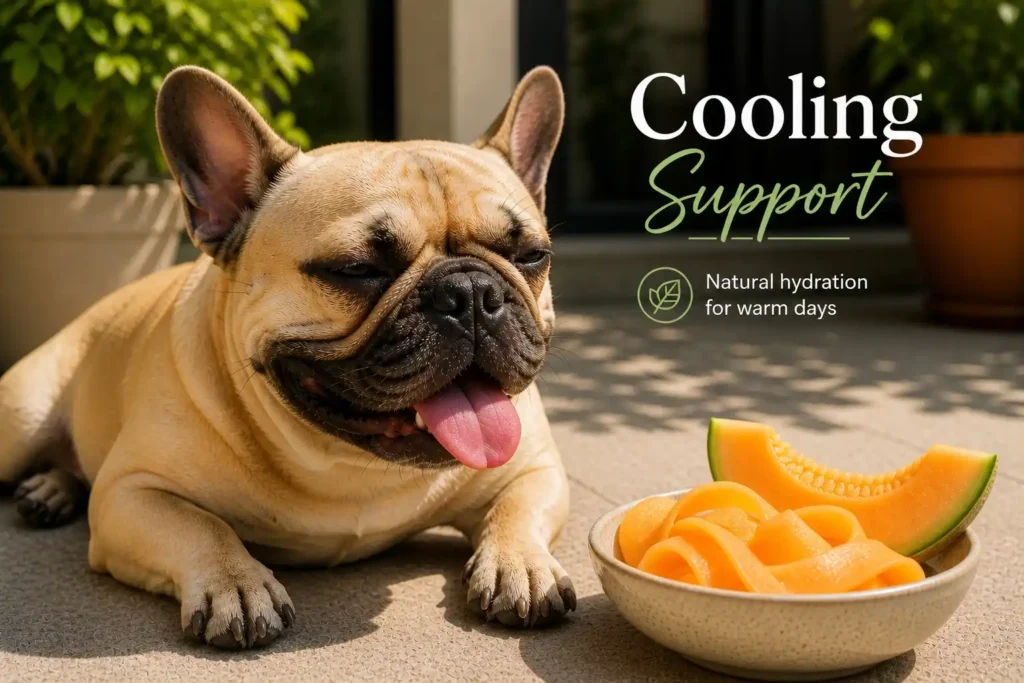
The “Internal Ice Pack” Effect
Cantaloupe is essentially “solid liquid.” By feeding chilled, high-moisture fruit, you provide hydration that bypasses the “gulping air” problem. It absorbs slower in the gut, helping to keep their core temperature stable for longer during those humid summer months.
Support for those “Bat Eyes”
Prominent Frenchie eyes are prone to dryness and irritation. Cantaloupe is loaded with Beta-carotene (Vitamin A) , which is essential for ocular health and protecting the corneal surface as your pup ages.
The Glycemic Load vs. The Frenchie Spine
French Bulldogs have a “stocky” build, which is a polite way of saying they gain weight faster than a vacuum. For a breed genetically prone to IVDD (Intervertebral Disc Disease), extra weight is a medical emergency. Cantaloupe is higher in natural sugar than berries or green beans. If your Frenchie is a “Low-Energy Potato” or currently on a weight-loss journey, skip the melon. That extra pound of “fluff” puts immense pressure on their spinal discs.
To compare cantaloupe with other safe and risky foods, see our full guide on what Frenchies can eat.
The “Inhalation” Risk: Ribbons vs. Cubes
Let’s talk about the “Frenchie Vacuum.” Because of their jaw structure and crowded throat, French Bulldogs don’t chew they gulp. Because of their jaw structure and narrow airway, the shape of food matters more than most owners realize.
That’s why a simple cube can become a choking hazard.
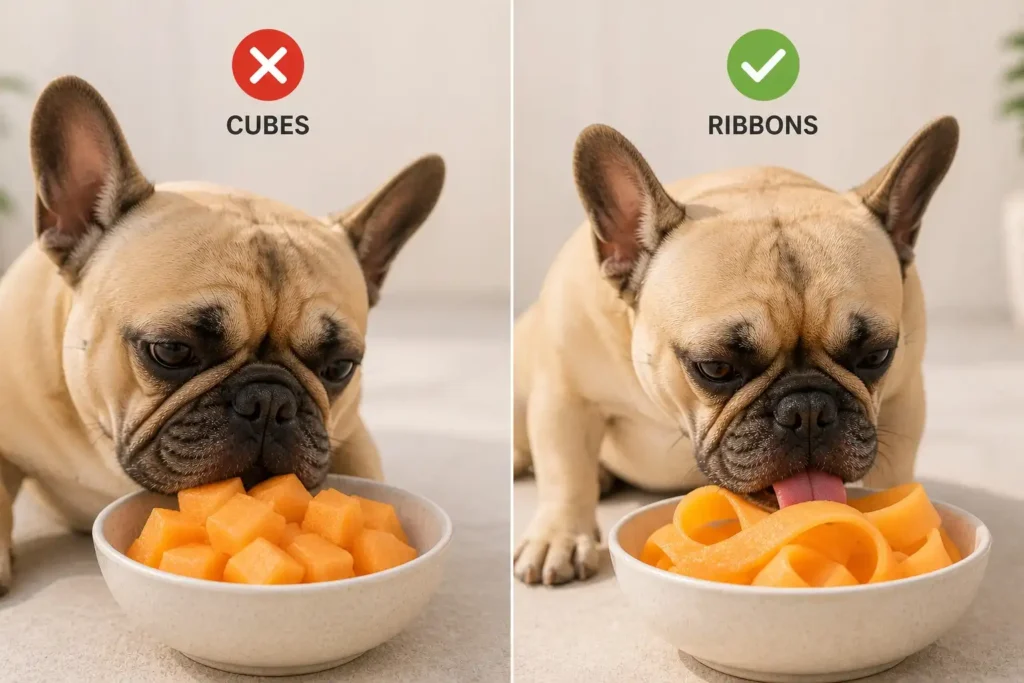
A firm cube of cantaloupe is almost the perfect shape to “plug” a narrow Frenchie esophagus. For gulping breeds, this creates a high choking risk, especially when they’re excited or eating quickly.
Standard Cubes
A firm cube is the perfect shape to “plug” a narrow Frenchie esophagus. High choking risk for gulping breeds.
Cantaloupe Ribbons
Use a vegetable peeler to create thin ribbons. They slide down or dissolve effortlessly with zero choking potential.
The “Hidden” Danger: Listeria & The Wrinkle Warning
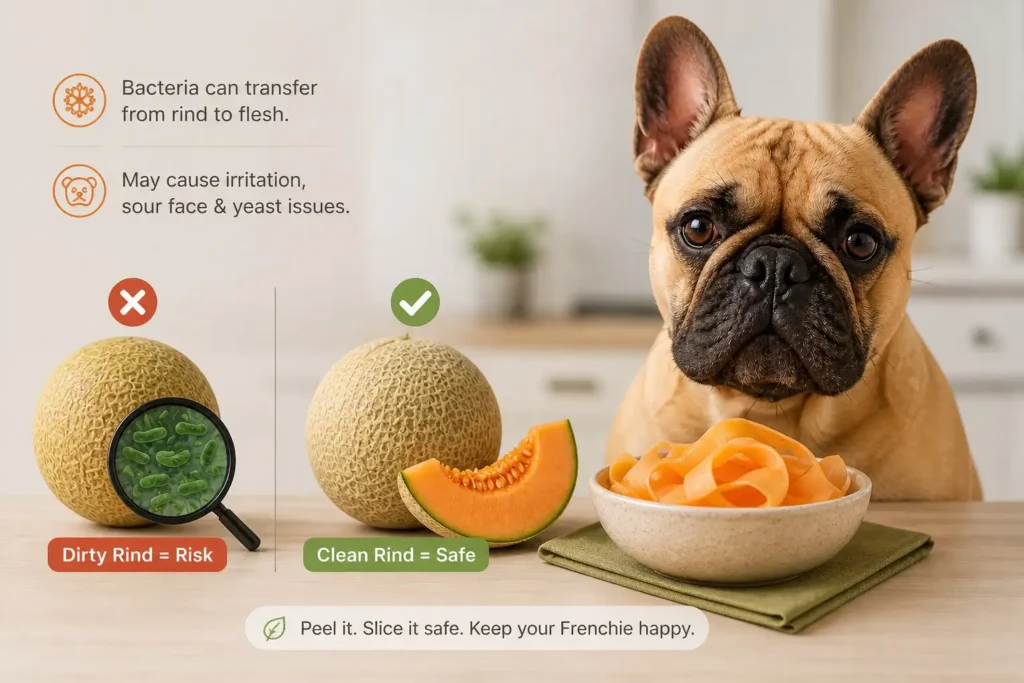
Cantaloupe’s rough rind can carry hidden bacteria and for French Bulldogs, that risk doesn’t stop at the fruit.
How to Safely Prepare Cantaloupe for French Bulldogs
Recipe: 01, The Cantaloupe “Zero-Choke” Recipe For Frenchie
Puree the fruit
Puree 3 ribbons of cantaloupe.
Add Greek yogurt
Mix with a teaspoon of plain, non-fat Greek yogurt (probiotics for the gassy gut).
Freeze on a lick mat
Spread onto a Lick Mat and freeze.
This provides 15 minutes of mental stimulation and “internal cooling” with very little caloric impact. It is the ultimate “Science-Backed” summer hack for a hot Frenchie.
Recipe: 02, The Frenchie “Internal Ice Pack” Slushie
The Scrub
Scrub the rind with a brush under cold water to remove any trapped Listeria before slicing.
The Flash Freeze
Slice 3 thin ribbons and pop them in the freezer for 20 minutes until they are “crunchy.”
The Blend
Pulse the frozen ribbons with 1/4 cup of cold water until it reaches a slushie texture.
This texture is perfect for older pups or those prone to regurgitation.
⚠️ WRINKLE WARNING: Because this is a liquid snack, always wipe your Frenchie’s ‘nose rope’ and chin wrinkles with a damp cloth afterward to prevent sugar-induced yeast growth.
The Bottom Line
Cantaloupe is a “Thumbs Up” but only if you are the one doing the prep work. Stick to the Ribbon Method, watch the sugar intake to protect their back, and keep that fruit juice out of their wrinkles!
Community Pulse: Does your Frenchie do the “melon dance” or are they strictly a meat eater? Tell us your “Digestive Detective” stories in the comments!
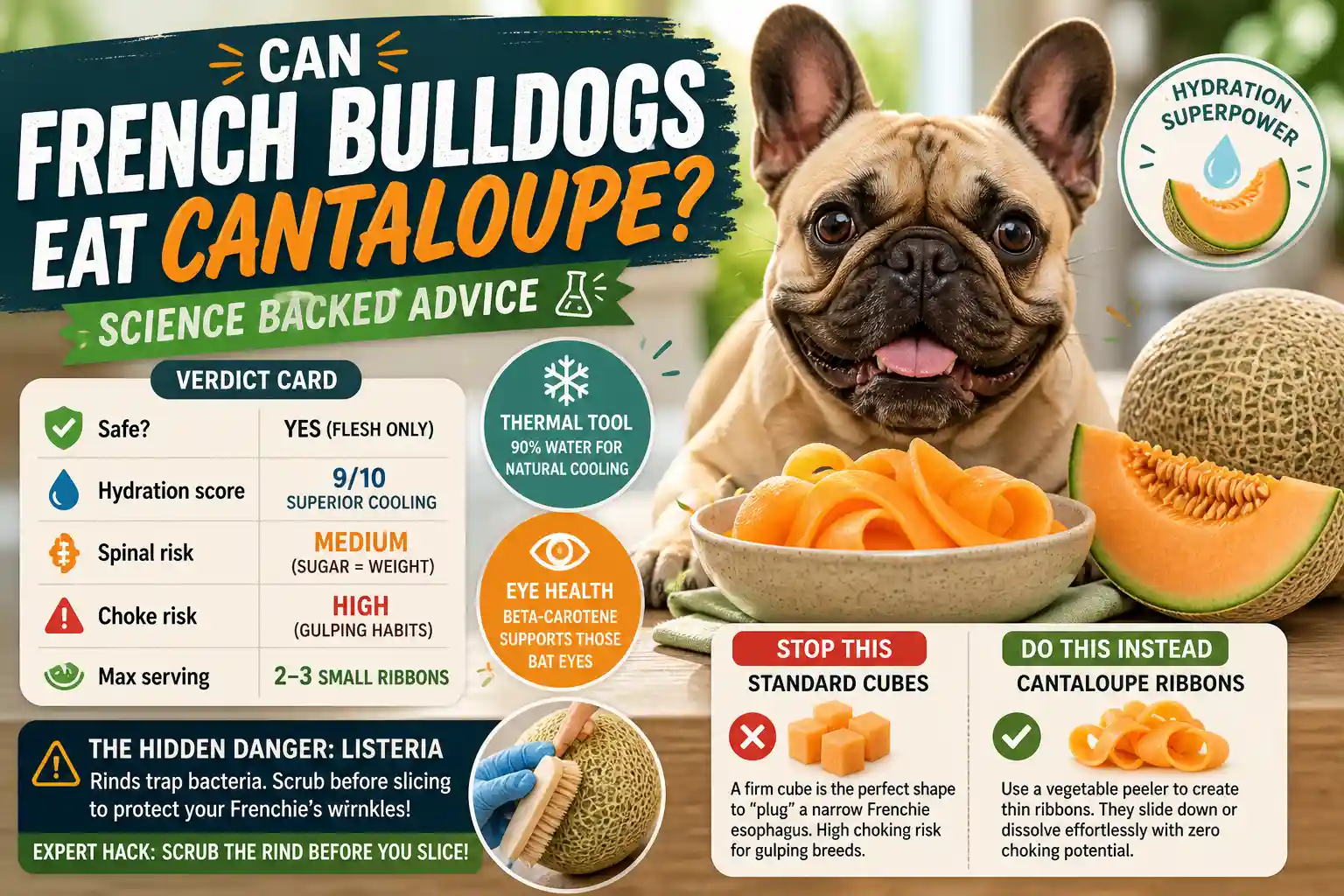
Press and hold (or right-click) the image to save this “Science-Backed” guide to your phone for your next summer grocery trip.
Commonly Asked Questions from the Community
Yes, but wait until they are at least 12 weeks old. Their digestive systems are very sensitive. Start with one tiny, mashed piece to ensure it doesn’t cause loose stools.
One or two seeds aren’t toxic, but they can be a minor irritant. Monitor your dog for any signs of stomach upset. If they swallow a large amount, contact your vet to check for potential blockages.
Both are excellent for hydration. Cantaloupe has more Vitamin A and C, while Watermelon is slightly lower in fiber. Rotating between both is a great way to provide a variety of antioxidants.
While Vitamin A supports eye health, tear stains are usually caused by allergies or drainage issues. Cantaloupe isn’t a “cure,” but a clean, antioxidant-rich diet can help reduce the inflammation that contributes to staining.

Written by Zain
Lead Researcher @ The Breed Expert
Zain dedicates over 40 hours a week to distilling complex veterinary data into actionable advice. By cross-referencing peer-reviewed journals with real-world feedback from the French Bulldog community, he ensures every “Can they eat…” guide is rooted in canine science and breed-specific safety.
Medical Disclaimer: The information provided on The Breed Expert is for educational and informational purposes only. It is not intended as a substitute for professional medical advice, diagnosis, or treatment. Always seek the advice of your veterinarian with any questions you may have regarding a medical condition or dietary changes for your pet. Reliance on any information provided by this site is solely at your own risk.