
We’ve all been there: you’re making breakfast, the bacon is sizzling, and you feel a pair of eyes burning a hole in your soul.
Your Frenchie is sitting there, ears at full mast, convinced that a single strip of bacon is their birthright.

As a Frenchie parent and researcher who spends 40+ hours a week cross-referencing veterinary journals and community feedback, I know the pressure. You want to share the love, but can french bulldogs eat bacon without a trip to the clinic?
Before you drop that crispy strip, we need to talk about why bacon is basically the “toxic ex” of the canine food world. For us, it looks great and smells amazing, but it’s only going to cause drama.
Technically safe in a nibble. A regular snack? Absolutely not.
A fingernail-sized nibble of cooked bacon isn’t toxic like a grape or an onion. However, when asking can frenchie eat bacon as a regular snack, the answer is a firm no. For our compact, bat-eared roommates, the “Bacon Heist” comes with a price tag that usually involves a very expensive vet bill.
Frenchie Verdict Card: Bacon Safety & Risk Guide
Table of Contents
Why Bacon is “Kryptonite” for Your Frenchie
If bacon is the gold standard of human breakfast, it’s the lead weight of the Frenchie world. While our pups would gladly trade their favorite squeaky toy for a single strip, their biology simply isn’t built for the ‘big three’ ingredients found in every slice: salt, saturated fat, and chemical preservatives. We have break down why this trio is so uniquely risky for the breed.
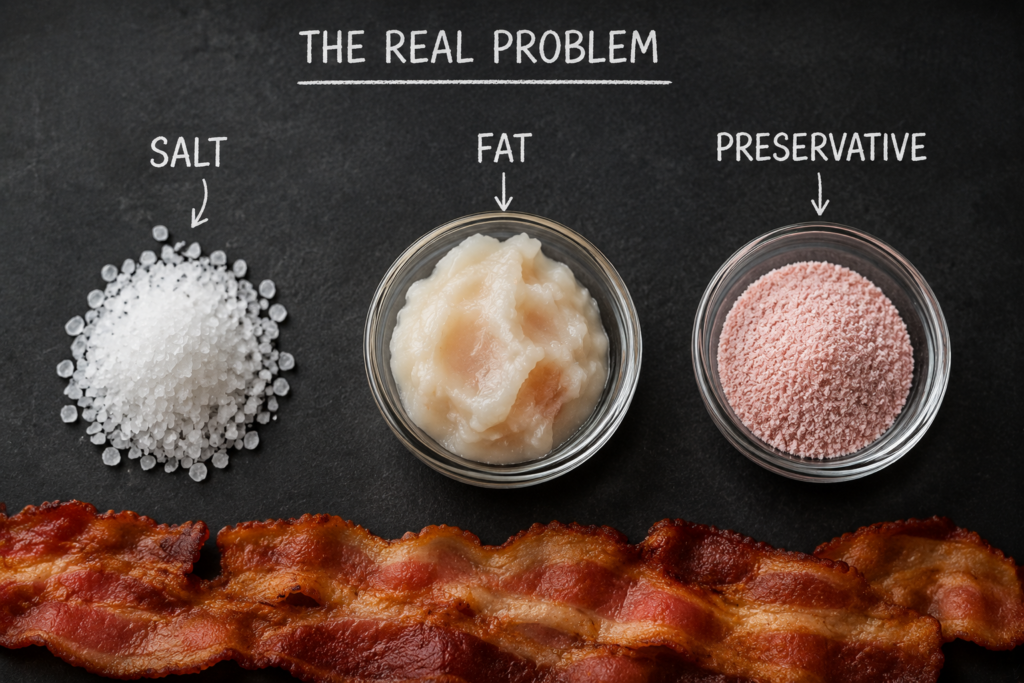
The Salt Bomb
A single slice of cooked bacon can contain between 130mg and 190mg of sodium.
The Perspective: For a 25lb Frenchie, that’s a massive hit to their system.
The Science: According to data often cited by the American Kennel Club (AKC), excessive salt causes “salt toxicosis.” In a small breed, this leads to extreme thirst and fluid retention, putting unnecessary strain on their heart and kidneys.
The “Grease Fire” (The Fat Factor)
Bacon is roughly 40-70% fat. While we love the crunch, a Frenchie’s internal “plumbing” is more like a delicate Swiss watch than a heavy-duty drain.
The Nitrate Trap
Most store-bought bacon is cured with sodium nitrates. Research from veterinary experts at Purina suggests that these preservatives, while fine for humans in moderation, are linked to long-term health complications in smaller mammals.
The Bacon Loopholes: Turkey, Raw, and Portions
In my deep dives through the Frenchie community, I often see parents looking for “safe” ways to include their pups in the Sunday sizzle. Whether you’re eyeing a healthier meat alternative or wondering about raw portions, here is the expert reality of the most common bacon loopholes.
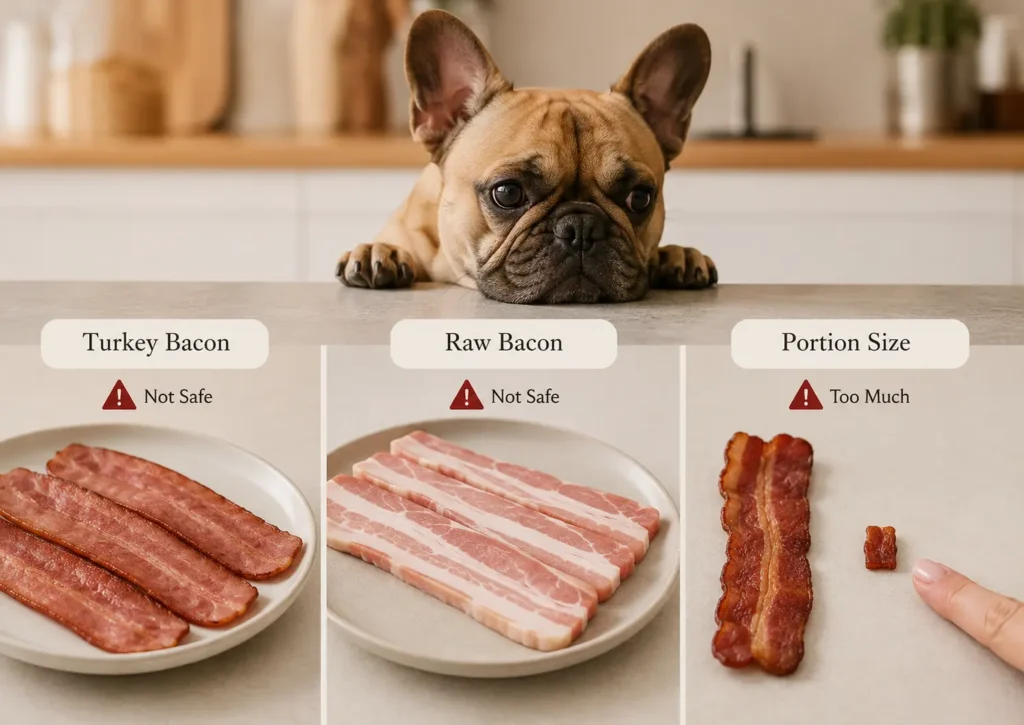
The Turkey Bacon Trap: Can Frenchies Eat Turkey Bacon?
You might think you’re being a health-conscious parent by reaching for the bird instead of the pig. Can french bulldogs eat turkey bacon? While it is leaner, turkey bacon is often more processed and contains just as much sodium and nitrates as the pork version. So, if you were wondering, can frenchies eat turkey bacon as a safe loophole. Unfortunately, it’s still a “no” for the breakfast table.
The Raw Danger: Can Frenchies Eat Raw Bacon?
This is where things get serious. Can frenchies eat raw bacon if it falls off the counter? Absolutely not. Raw pork can carry parasites like Trichinella spiralis. If your dog manages a raw heist, skip the “wait and see” approach and call your vet immediately.
The “Ribbon-to-Slice” Scale: Why Size Matters
Unlike a 100lb Labrador, a Frenchie is a “compact powerhouse.” A “tiny” piece of bacon to us is the equivalent of a human eating three double cheeseburgers in one sitting. Their smaller systems process these processed fats much slower, leading to what I call the “Internal Chaos Factor.”
The Sunday Morning Regret
We’ve all seen the posts: a guilt-ridden photo of a Frenchie sitting next to an empty plate, followed by a frantic 2 AM update. In the world of Frenchie parenting, there is a specific kind of ‘hangover’ that happens after a successful breakfast heist.
“Sure, they want to, but it’s just not worth the risk of a potential inflammatory flare-up.”
When to See a Vet: If Heist Happens
If your little “disappointed potato” managed to swipe a whole pack off the counter, do not play the guessing game. Seek emergency veterinary care immediately if you notice:
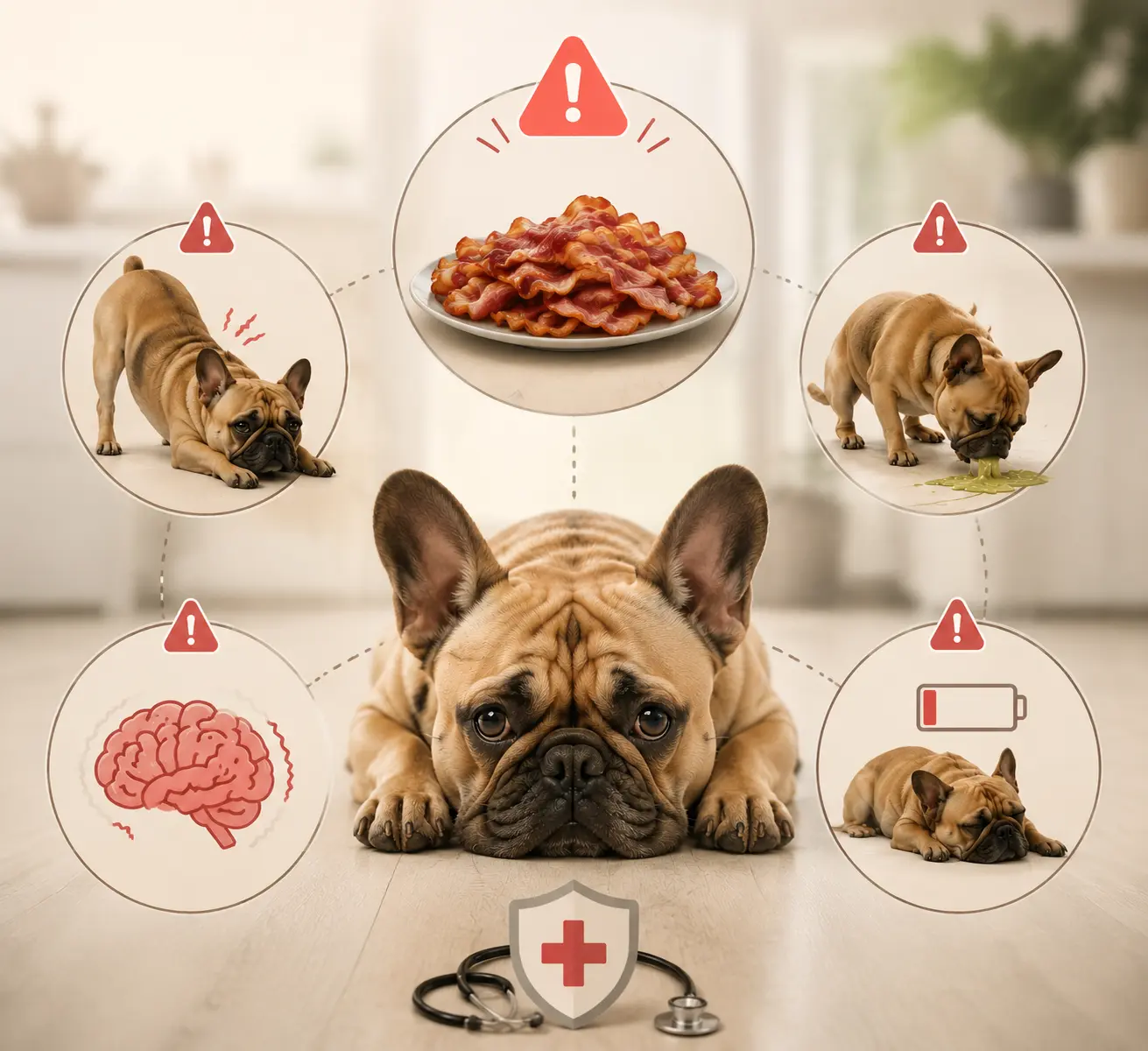
The “Prayer” Position
If they are standing with a hunched back or stretching their front legs out while keeping their rear up, this is a sign of intense abdominal pain.
Repeated Vomiting
More than three times in 24 hours, or if they cannot keep water down.
Neurological Red Flags
Confusion, muscle tremors, seizures, or walking as if they are “intoxicated” (signs of salt poisoning).
Extreme Lethargy
If they refuse to get up, even for their favorite (safe) toy or treat.
The “Better-Than-Bacon” Breakfast Hack
You can still include them in the Sunday ritual! Skip the cured meats and try these “Frenchie-Approved” alternatives:
The Plain Scramble
A tiny bit of unseasoned, oil-free scrambled egg.
The Sweet Potato “Jerky”
Dehydrated sweet potato slices give them that “chew” without the salt bomb.
Bacon is one of the foods Frenchies should avoid, but there are safer human foods you can offer in tiny portions. For a complete safe-food overview, see our full guide on what Frenchies can eat.
Keep the bacon for your BLT. Your Frenchie might give you the “side-eye” now, but they’ll thank you when they aren’t dealing with a rumbly tummy at 3 AM.
Bacon & Frenchies: Common Questions
Absolutely not. Bacon grease is pure liquid fat. Drizzling it over kibble is the fastest way to trigger a “grease fire” in your Frenchie’s digestive system, often leading to acute pancreatic inflammation. Stick to plain water or low-sodium chicken broth for moisture.
Actually, they are often worse. Most store-bought bacon bits contain liquid smoke, artificial red dyes, and massive amounts of preservatives that can trigger skin allergies in sensitive breeds like French Bulldogs. Even “vegan” bits are usually high in sodium and soy.
While oven-baking removes some of the external grease, the internal fat and salt content remains the same. The curing process (the nitrates) is still present. No matter how it is cooked, bacon remains an high-risk, low-reward treat for a Frenchie.
You should keep a close eye on them for at least 24 to 48 hours. Symptoms of salt poisoning can appear within hours, but a pancreatic flare-up may take a day or two to fully manifest. Watch for lethargy, “hunching,” or repeated vomiting during this window.

Written by Zain
Lead Researcher @ The Breed Expert
Zain dedicates over 40 hours a week to distilling complex veterinary data into actionable advice. By cross-referencing peer-reviewed journals with real-world feedback from the French Bulldog community, he ensures every “Can they eat…” guide is rooted in canine science and breed-specific safety.
Medical Disclaimer: The information provided on The Breed Expert is for educational and informational purposes only. It is not intended as a substitute for professional medical advice, diagnosis, or treatment. Always seek the advice of your veterinarian with any questions you may have regarding a medical condition or dietary changes for your pet. Reliance on any information provided by this site is solely at your own risk.