
If you’re wondering, can French Bulldogs eat watermelon? the answer is Yes, but it’s a “Hydration-First Treat.” Watermelon is non-toxic, low in calories, and packed with water, making it a refreshing snack for Frenchies. However, its natural sugar content and high water load can trigger loose stools and unwanted weight gain if overfed.
Watermelon Safety Verdict for Frenchies
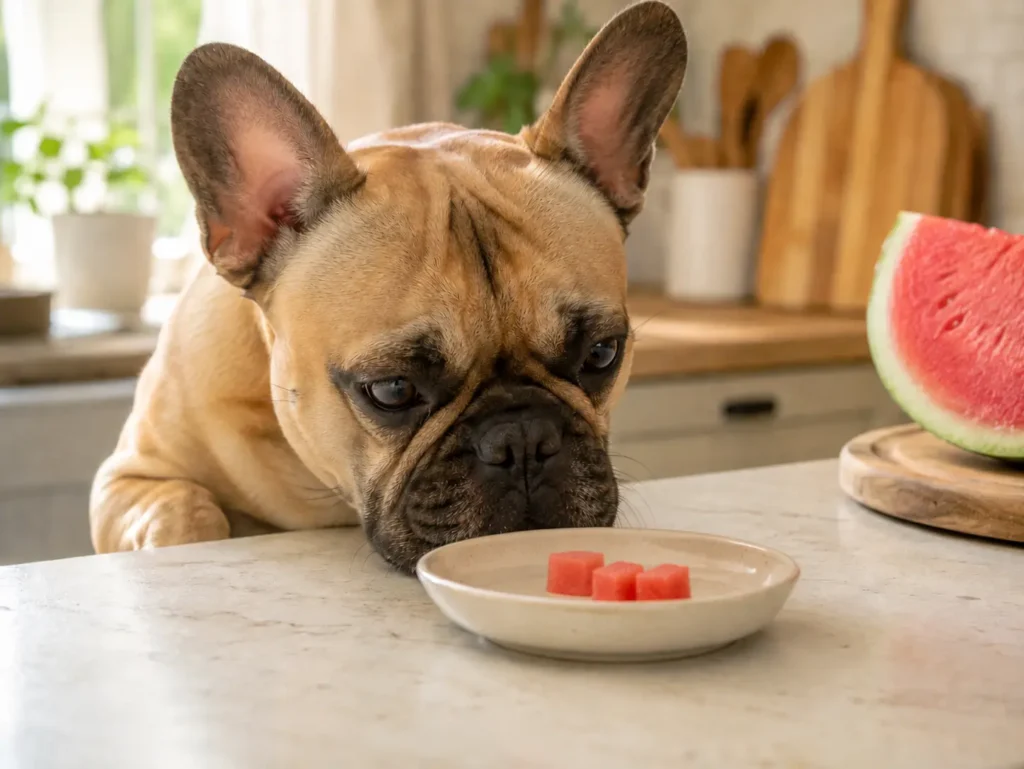
Table of Contents
Can Frenchies Eat Watermelon Safely? The “Double-Edged Sword”
If you live with a Frenchie, you already know they’re not just dogs, they’re heat-sensitive companions with delicate digestion. Unlike high-energy breeds, French Bulldogs struggle in warm temperatures due to their flat faces. That’s why watermelon is the perfect summer “hack” for a breed that overheats easily. However, most owners don’t realize that a Frenchie’s greatest strength (their appetite) and their greatest weakness (their sensitive gut) collide when eating this fruit.
The “Hydration Science” Behind Watermelon
Most owners know watermelon is a refreshing treat, but few understand the biological impact it has on a brachycephalic breed. Unlike other fruits that offer vitamins as their primary benefit, watermelon’s real superpower is its ability to provide rapid internal cooling, as research from UMass Amherst shows it is composed of about 92% water.
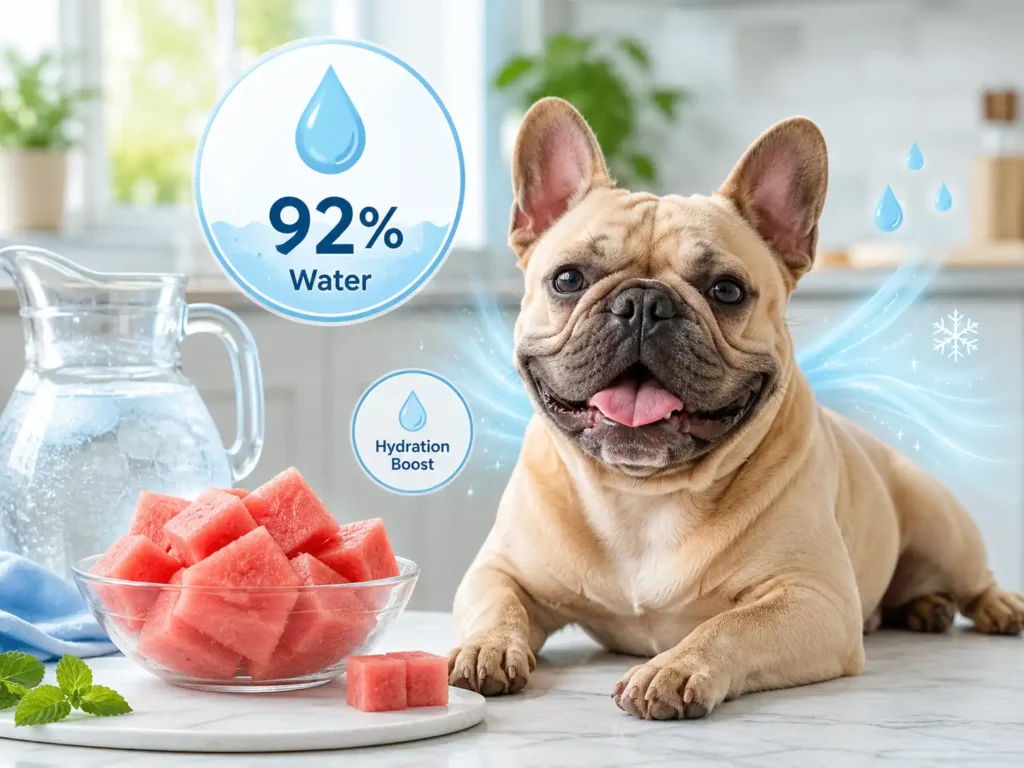
With such high water content, this fruit helps regulate a Frenchie’s core temperature from the inside out. Think of watermelon as a biological cooling tool, it hydrates at a much deeper level than a standard water bowl.
The “Flat-Face” Feeding Challenge
Because Frenchies have no muzzle, they often struggle to pick up slippery, wet fruits. Unlike Apples or Papaya, which have a firmer grip, watermelon is the most slippery fruit your Frenchie will encounter!
This isn’t just a minor inconvenience, it’s a genuine safety concern. The combination of a flat face, narrow throat, and “inhale” eating style makes watermelon one of the few fruits that requires a completely different serving approach.
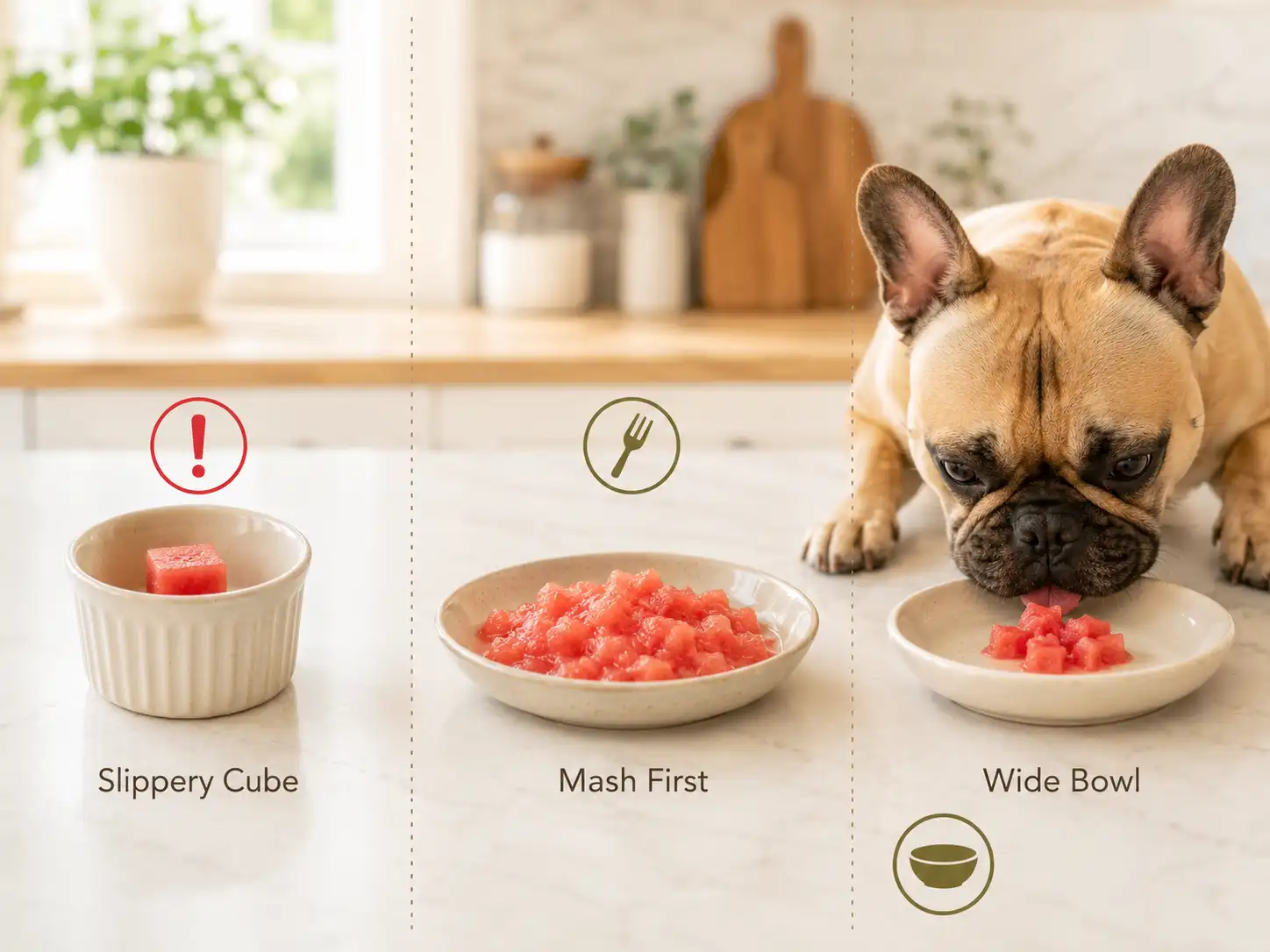
⚠️ The Gulping Risk
The Fork-Mash Method
Roughly mash the fruit into a “chunky salsa” to break the slippery surface and prevent whole-swallowing.
The Wide-Bowl Strategy
Use a shallow, wide dish so they can lap up pieces with their tongue rather than “vacuuming” them from a deep bowl.
The “Wrinkle Risk”: Facial Fold Hygiene
French Bulldogs have deep facial folds and no muzzle to keep their faces out of their food.
When a Frenchie eats juicy watermelon, the sticky, sugary water runs directly into their nose wrinkles and lip folds.
Sugar trapped in skin folds is a breeding ground for yeast infections and Fold Dermatitis. If left uncleaned, that refreshing snack can turn into an itchy, red infection within 24 hours.
The “Post-Melon” Survival Guide for Parents
Feeding the treat is the easy part, it’s what happens 30 minutes later that separates the experts from the beginners. If you’ve ever had to clean a Frenchie’s “zoomie path” or deal with a mid-night potty emergency, you’ll want to pay close attention to these three breed-specific realities.
The “Nighttime Mistake” – Bathroom Alert
Unless you enjoy 3:00 AM emergency potty breaks, keep watermelon as a daytime snack. Because it’s a natural diuretic, feeding this late almost guarantees a sleep-deprived night for both of you.
The Frenchie Gas Meter – 1/10 (Low Odor)
Great news for your nose! Watermelon is a low-sulfur fruit. Unlike protein treats, it won’t produce the “silent but deadly” emissions that force you to evacuate the living room.
The Digestive Reality – Loose Stool Risk
A Frenchie’s gut is as sensitive as their personality. High water content can lead to a “soft stool” disaster. Always follow the one-cube test and wait 24 hours to see how they react.
Can Frenchies Eat Watermelon Every Day? Managing the “Caloric Tank”
Every Frenchie has a specific daily energy limit. Because they aren’t as active as larger breeds, their “treat tank” fills up fast. Veterinary experts recommend that treats stay under 10% of their total intake to prevent obesity, A major risk factor for Frenchie back issues (IVDD).
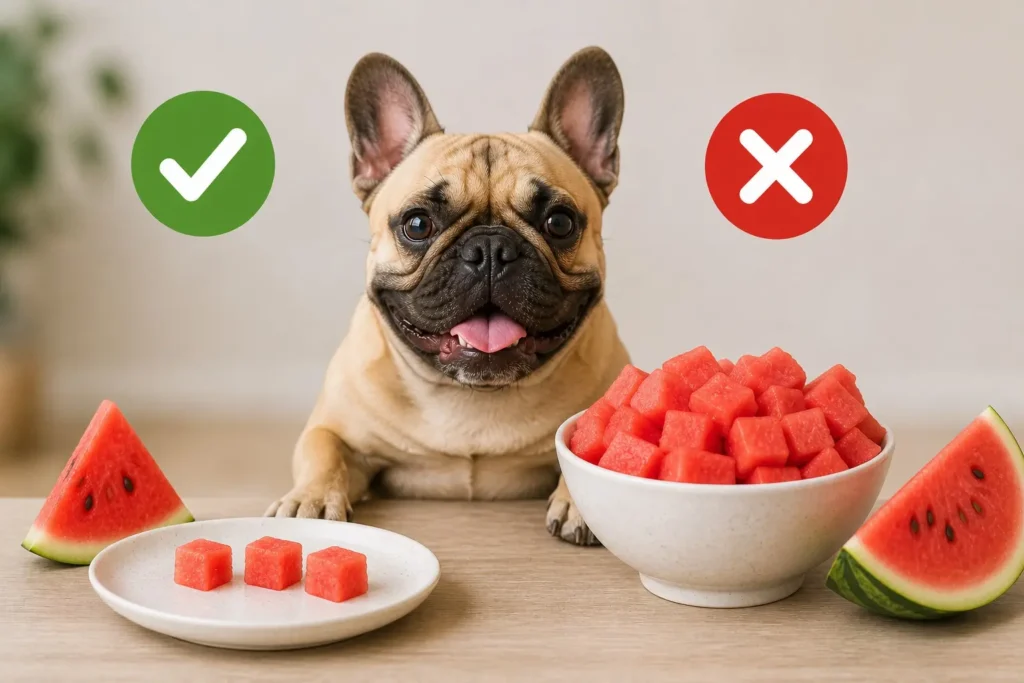
- The 10% Limit: Watermelon should only be a small fraction of their total daily food.
- Weight Watch: Excess sugar leads to obesity, putting pressure on Frenchie spines.
- Better Alternative: If your dog is on a diet, try cucumber for a lower-sugar crunch.
Can Frenchies Eat Watermelon Rind or Seeds? The Danger Zone
While the red flesh is a safe treat, the outer parts of the watermelon pose significant health risks for French Bulldogs:
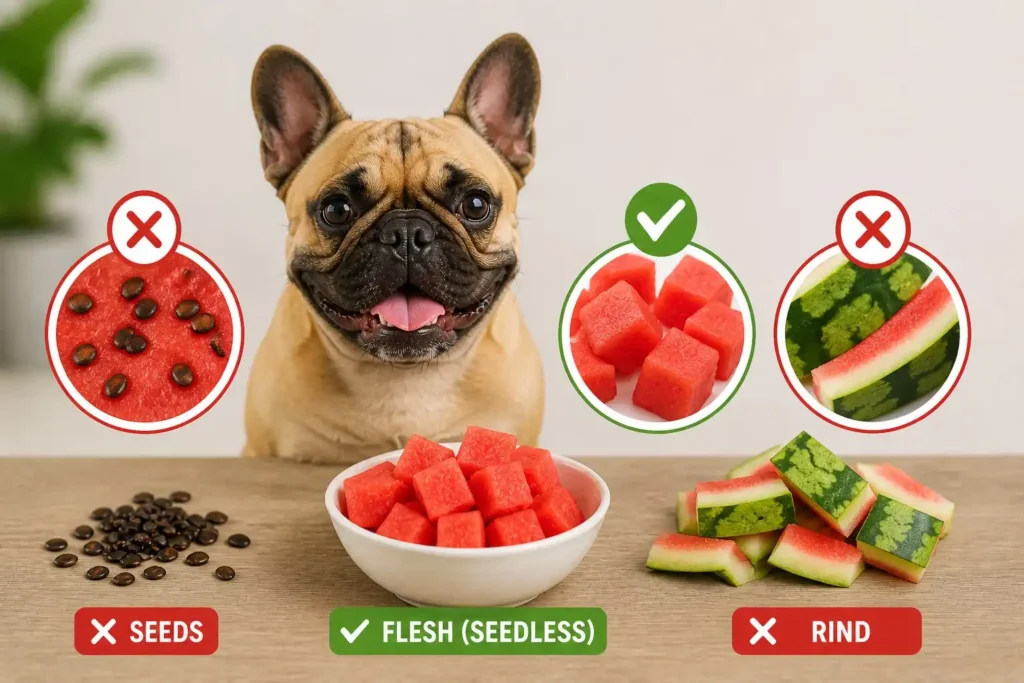
Small seeds pose a choking risk due to the breed’s narrow airways. If swallowed, they can clump together and cause a dangerous intestinal blockage.
The tough green skin is impossible for a Frenchie’s sensitive gut to digest. It often leads to painful vomiting or a serious digestive obstruction.
Can French Bulldog Puppies Eat Watermelon?
Yes, French Bulldog puppies can eat watermelon once they are fully weaned and eating solid food (usually around 8 weeks old). However, because a puppy’s digestive system is still developing, you must be extremely cautious. Start with just one tiny, seedless cube (about 1/2 inch) to ensure it doesn’t cause diarrhea. Watermelon should be a rare treat for puppies, as they need calorie-dense growth food rather than water-filling snacks.
Can My Frenchie Eat Watermelon? 2 Safe Summer Recipes
Most Frenchies get bored with plain water, and since they are prone to kidney stones, keeping their hydration high is vital. These two recipes are designed specifically for the unique digestive needs and flat-face structure of French Bulldogs.
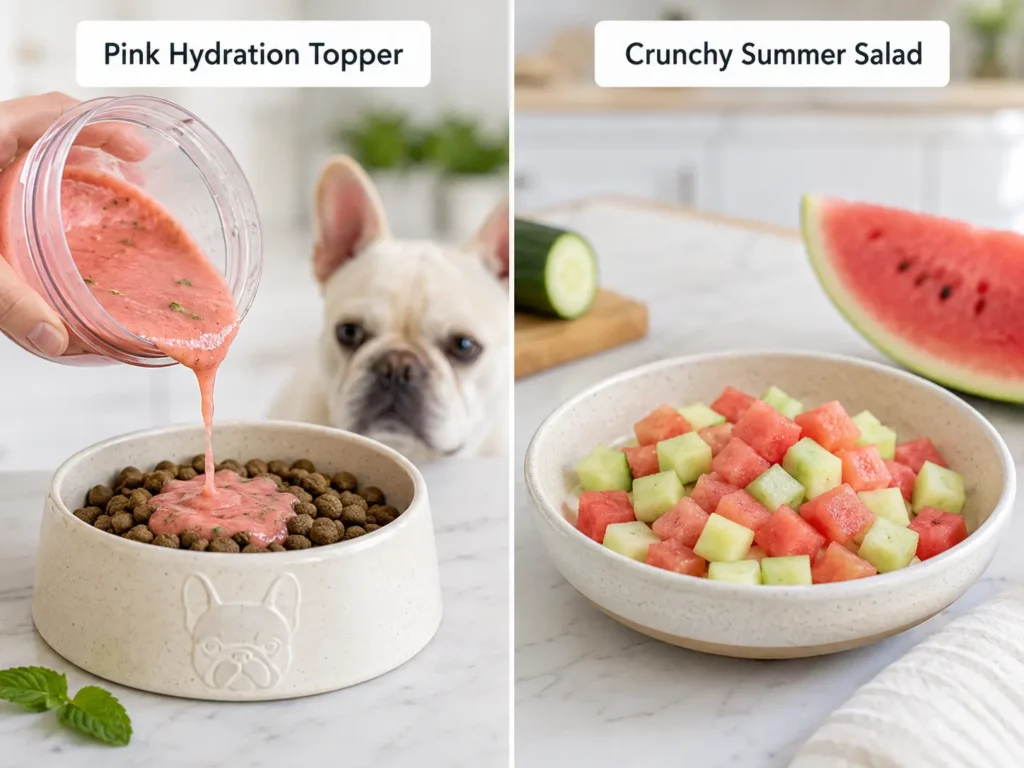
The “Pink Hydration Topper” (Meal Booster)
This is my favorite “hack” for picky eaters. It turns boring dry kibble into a hydrating feast without the risk of “Brain Freeze.”
- 1 Cup Fresh Seedless Watermelon (Flesh only)
- 1/4 Cup Plain Bone Broth (Onion & Garlic Free)
- 1–2 Fresh Mint Leaves (Finely minced)
Puree the watermelon and bone broth until completely liquid.
Mix in the minced mint by hand to keep it fresh.
Pour 2 tablespoons over their daily meal and serve.
The “Crunchy Summer Salad” (Weight-Loss Snack)
This is my go-to “guilt-free” snack for Frenchies who are constantly begging for treats or watching their weight. By combining watermelon with cucumber, you are providing a satisfying, crunchy texture that mimics a high-calorie biscuit but without the sugar and carbs that lead to weight gain.
- 1/2 Cup Diced Watermelon (Seedless)
- 1/2 Cup Diced Cucumber (Completely Peeled)
Peel the cucumber entirely (the skin is hard for Frenchies to digest).
Dice both fruits into small, bite-sized 1/2 inch cubes.
Toss together in a wide bowl and serve immediately as a cool reward.
Watermelon vs. Other Fruits: The Frenchie Summer Stand-Off
While watermelon is a fantastic low-calorie hydrating snack, how does it compare to other popular Frenchie treats? From sugar content to digestive acidity, here is a quick breakdown of how our favorite pink fruit stacks up against the competition.
Watermelon is better for hydration; Oranges can be too acidic for sensitive Frenchie tummies and may cause heartburn.
Watermelon is much lower in sugar, making it a safer pick for weight management and Frenchies with IBD.
Watermelon is a “lighter” cooling treat that provides relief without the heavy starch and calorie-density of a banana.
Watermelon can be a helpful summer snack, but it is only one fruit in a bigger Frenchie food picture. For a complete guide to safe fruits, vegetables, human foods, treat portions, and foods to avoid, see our full guide on what Frenchies can eat.
Can French Bulldogs eat watermelon? Yes, but it’s a “green light with limits” snack. Keep portions small, remove seeds and rind, and always wipe those facial folds!
Follow these four golden rules for a safe snack time:
Commonly Asked Questions
No. Due to the natural sugar content, it should be kept as an occasional treat (2–3 times a week). Overfeeding can lead to weight gain and digestive upset.
Yes, but wait until they are at least 12 weeks old. Start with a single cube the size of a fingernail to check for any stomach sensitivity or allergies.
No. While watermelon is 92% water, it is a supplement. Fresh, clean water should always be their primary source of hydration.

Written by Zain
Lead Researcher @ The Breed Expert
Zain dedicates over 40 hours a week to distilling complex veterinary data into actionable advice. By cross-referencing peer-reviewed journals with real-world feedback from the French Bulldog community, he ensures every “Can they eat…” guide is rooted in canine science and breed-specific safety.
Medical Disclaimer: The information provided on The Breed Expert is for educational and informational purposes only. It is not intended as a substitute for professional medical advice, diagnosis, or treatment. Always seek the advice of your veterinarian with any questions you may have regarding a medical condition or dietary changes for your pet. Reliance on any information provided by this site is solely at your own risk.