
If you are wondering, Can French Bulldogs eat oranges? the answer is Yes, but they are a “High-Maintenance Snack.” While the flesh is non-toxic and loaded with Vitamin C, the high citric acid and natural sugars can trigger acid reflux and digestive upset in the sensitive Frenchie gut. Because of their flat faces and narrow airways, you must remove all seeds, pith, and peels to prevent choking and “regurgitation rumbles.”
Orange Safety Verdict for Frenchies
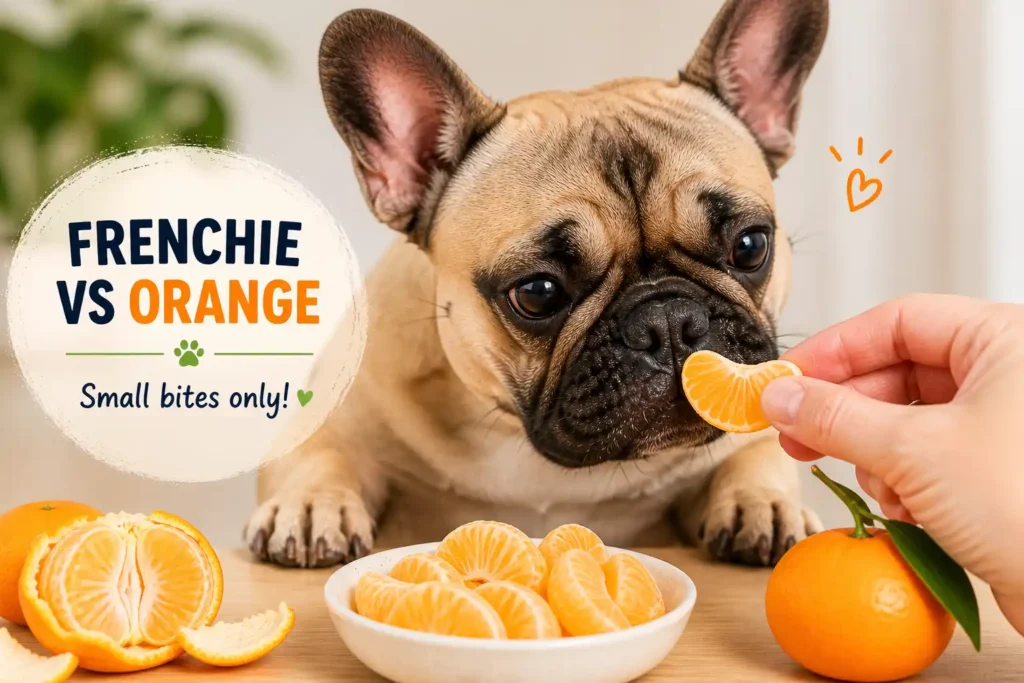
If you live with a Frenchie, you aren’t just a dog owner, you are a Digestive Detective. You know that this breed is essentially a “little tank with a glass stomach.” While a Golden Retriever might inhale an orange whole without a second thought, the French Bulldog requires a breed-specific approach.
Their unique brachycephalic (flat-faced) anatomy means that what goes down doesn’t always stay down comfortably. While generic dog blogs say oranges are fine, we have cross-referenced veterinary data with Frenchie physiology to explain why this citrus fruit is a “double-edged sword” for your bat-eared companion.
Table of Contents
Can Frenchies Have Oranges: The Vitamin C Myth
Oranges sound like a Vitamin C superfood, and the benefit is real, but it’s not the same kind of necessity for Frenchies as it is for humans.
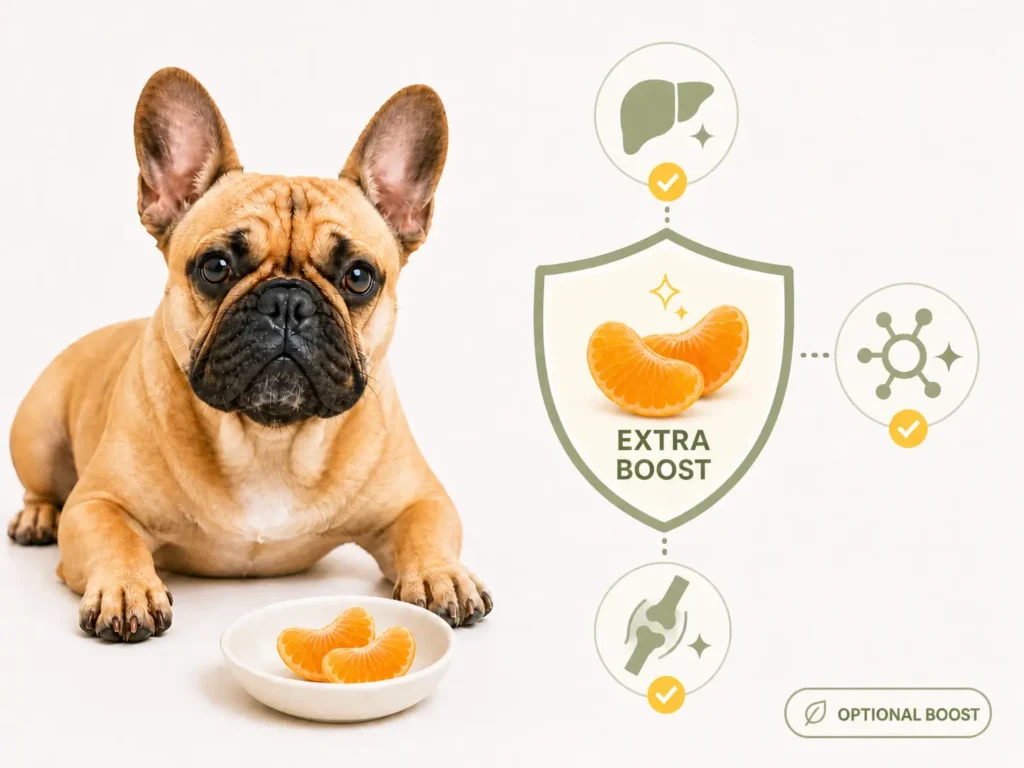
Unlike humans, dogs’ bodies are biological factories that produce their own Vitamin C in the liver. However, our research into peer-reviewed veterinary nutrition journals shows that an extra boost can be beneficial for Frenchies dealing with environmental stress or joint inflammation. The antioxidants in oranges help fight oxidative stress, which is vital for a breed that often struggles with mobility issues. Think of it as a “biological garnish” rather than a necessity.
The “Acid Reflux” Connection: Oranges and BOAS
French Bulldogs are notoriously prone to GERD (Gastroesophageal Reflux Disease) due to the negative pressure created by their restricted airways (Brachycephalic Obstructive Airway Syndrome).
Citric acid lowers the pH in the stomach, significantly increasing acidity levels.
Extra acidity can travel back up the esophagus, causing “silent reflux.”
“Gulping” air, licking lips excessively, or “reverse sneezing” after an orange slice.
The 10% Rule: Managing the “Caloric Tank”
As a Weight Manager, you must live by the 90/10 rule. Veterinary nutritionists agree that treats (including fruit) should never exceed 10% of a dog’s daily caloric intake.
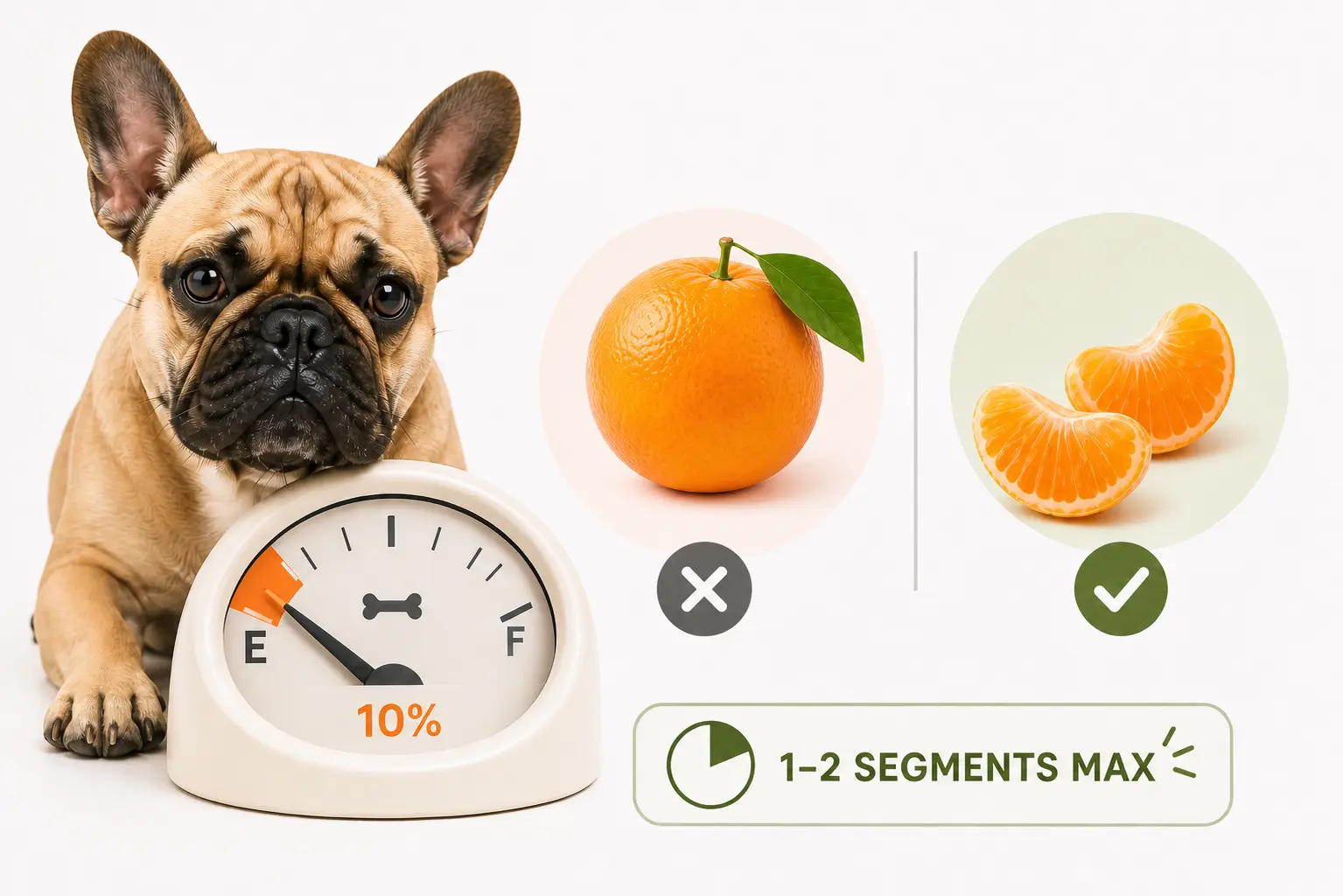
This is roughly 50-60 calories of treats per day.
One medium orange has about 45 calories.
Heads Up: If you give half an orange, you’ve used up their entire treat allowance for the day!
Can Frenchies Have Mandarin Oranges?
Many owners ask, can french bulldogs eat mandarin oranges as a safer alternative to larger Navel oranges?
Mandarins, Clementines, and Satsumas are naturally lower in acid and often seedless.
Sugar concentration is higher per gram, which can trigger weight gain.
The Terpene Factor: Why Your Frenchie Might Hate the Smell
What looks like a simple reaction is actually a scent-driven response rooted in chemistry and for a Frenchie, it can be overwhelming.
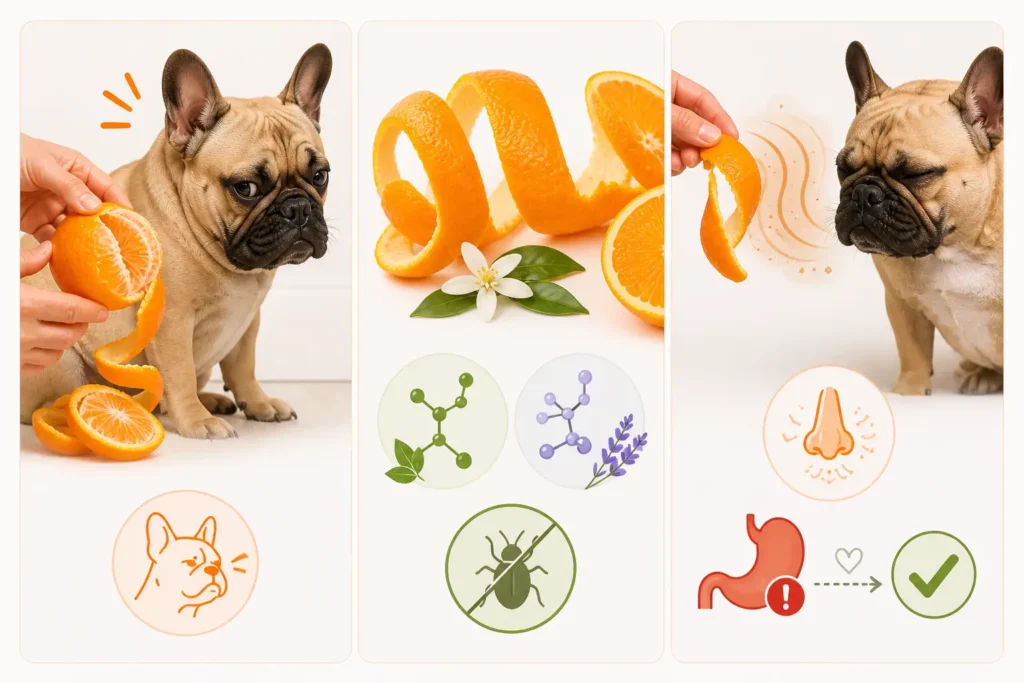
Ever noticed your Frenchie make a “sour face” and walk away when you peel an orange? It’s not just drama.
Limonene & Linalool: These are terpenes found in orange peels. While they give us that “fresh” scent, they are used in nature as insect repellents.
A Frenchie’s nose is thousands of times more sensitive than ours. To them, peeling an orange is like a “scent bomb” going off.
The Danger Zones: Pith, Peel, and Seeds
When asking can a french bulldog eat oranges, It’s not the orange itself that causes trouble it’s the parts most owners ignore. the danger is often in the “packaging” rather than the fruit, which is why experts recommend that orange peels and seeds should be removed before serving oranges to dogs.
The peel
Contains essential oils (limonene) that can cause skin irritation and severe GI distress.
The pith
While not toxic, it is incredibly fibrous. Large amounts can lead to a “fiber clog” in a Frenchie’s narrow digestive tract.
The seeds
A major choking hazard for a breed that “inhales” rather than “chews.”
Beyond Digestion: 3 More Risks to Know
Once you’ve removed the obvious hazards like peel, pith, and seeds, there are still a few Frenchie-specific concerns to keep in mind. From urinary health to weight strain and even wrinkle care, oranges can affect more than just the stomach.
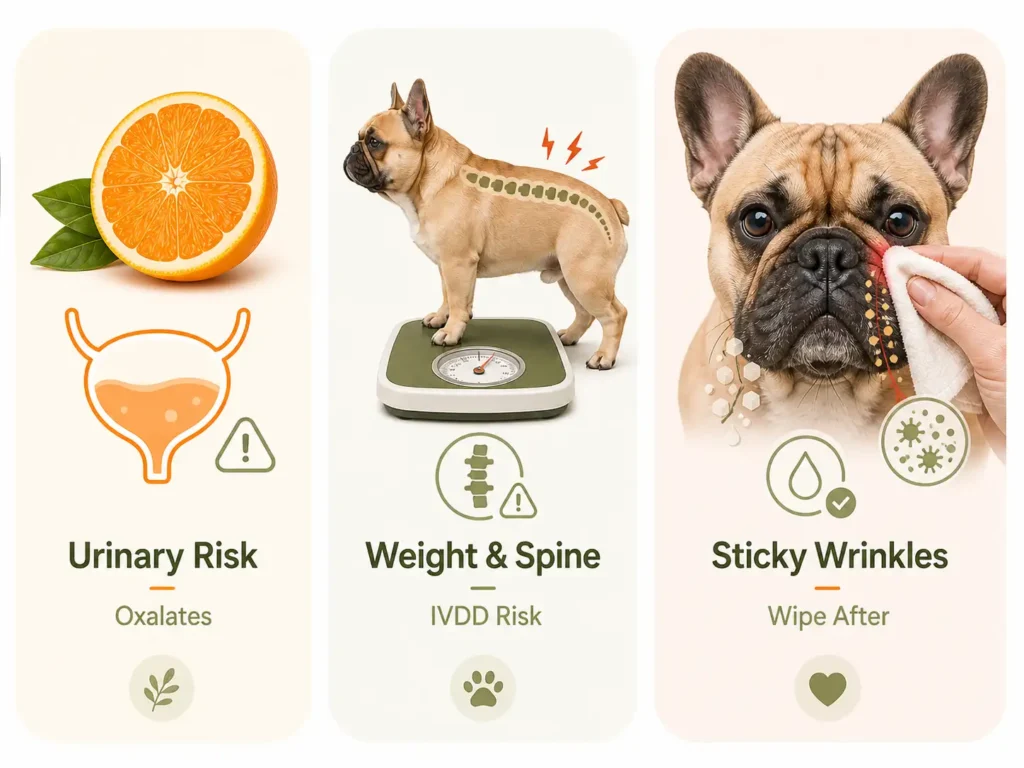
The Urinary Connection: Oxalates and Stones
As a Digestive Detective, you must look beyond the stomach. French Bulldogs can be prone to urinary health concerns, and according to Expert “the MSD Veterinary Manual” dogs with a history of calcium oxalate uroliths in dogs may need careful diet, hydration, and urinary monitoring.
Oranges contain moderate levels of oxalates, which may be a concern for French bulldogs already predisposed to calcium oxalate stones.
If your pup has a history of “crystals” in their urine, oranges should be strictly off the menu. The citric acid can alter urinary pH, potentially contributing to stone formation in predisposed dogs, For stone-prone Frenchies, even small dietary choices should be treated with caution.
The “Sticky Wrinkle” Syndrome
One thing most blogs miss is the “Nose Rope” factor. Because Frenchies have deep facial folds, the sticky juice from an orange ends up in their wrinkles.
Sugar + Moisture + Skin Folds = Yeast Infection.
Always perform a “Post-Snack Wipe” with a damp cloth to ensure no sticky orange juice remains trapped in the nose rope or facial wrinkles.
The Sugar-Spine Link: Weight & IVDD
As a Frenchie owner, you are a Weight Manager. For a breed genetically predisposed to IVDD (Intervertebral Disc Disease), every extra ounce of weight is a strain on their spinal column.
For a breed prone to IVDD, every extra ounce of weight is a direct medical risk to the spinal column.
Orange sugar converts to fat significantly faster than Cantaloupe sugar.
“If your Frenchie is a Low-Energy Potato, stick to Apples for a safer, low-calorie crunch.”
Orange is only one “yellow light” fruit for Frenchies. For a complete list of safe foods, risky foods, treat portions, and foods to avoid, see our full guide on what Frenchies can eat.
How to Safely Prepare Oranges for French Bulldogs
Before you offer that first slice, remember that preparation for a Frenchie is about risk mitigation. Because of their unique throat structure and “gulping” habits, you cannot simply toss them a segment as you would a larger breed. The goal is to strip away the “digestive blockers” (pith and seeds) and focus on high-moisture, low-acid delivery. Use the following science-backed methods to ensure your bat-eared companion gets the Vitamin C boost without the “belly burn.”
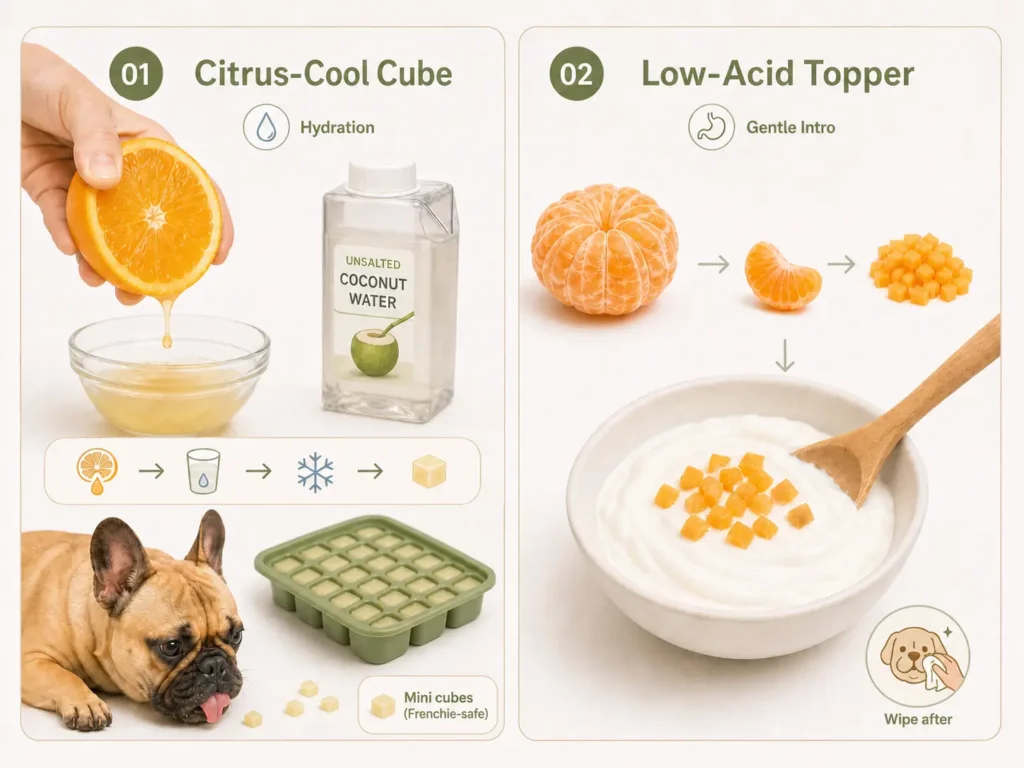
The “Citrus-Cool” Electrolyte Cube
Squeeze the juice of half an orange into a bowl.
Mix with 1 cup of unsalted coconut water (natural electrolytes).
Pour into small silicone molds and freeze.
Give one mini ice cube (pea-sized) after a summer walk to refresh the palate without the fiber overload.
The “Low-Acid” Vitamin Topper
Peel a mandarin orange and remove every trace of white pith.
Cut one segment into tiny, “pea-sized” pieces.
Stir the pieces into 2 tablespoons of plain, non-fat Greek yogurt.
💡 The calcium in the yogurt helps buffer the acidity of the fruit!
WRINKLE WARNING: Because yogurt and orange juice are sticky, always perform a “Nose Rope Wipe” immediately after your Frenchie finishes this snack to prevent yeast growth.
Can French Bulldog eat oranges? Yes, but they are a “yellow light” snack. They offer great vitamins, but the acidity can be a “belly burner” for the sensitive Frenchie. Stick to the “one segment” rule, remove all seeds, and keep that fruit juice out of their wrinkles!
Does your Frenchie make a “sour face” when they smell citrus, or are they a Vitamin C junkie? Tell us your Digestive Detective stories in the comments!
Frequently Asked Questions
No. Commercial orange juice is a concentrated “sugar bomb” that lacks the beneficial fiber of the fruit. For Frenchies, the high sugar content can lead to painful bloating, gas, and rapid weight gain which strains their sensitive spines.
While not instantly lethal, orange peels contain essential oils (limonene) that can cause severe gastrointestinal upset, vomiting, and skin irritation. Additionally, the thick, fibrous texture of the peel is a major choking hazard for brachycephalic breeds.
Stick to the “One Segment Rule.” Even for a healthy Frenchie, more than two small segments can trigger acid reflux or diarrhea due to the high citric acid levels.
Yes, Mandarins and Clementines are generally lower in acid, which is easier on the Frenchie’s esophagus. However, they are higher in sugar, so portion control is still critical to prevent IVDD-related weight issues.

Written by Zain
Lead Researcher @ The Breed Expert
Zain dedicates over 40 hours a week to distilling complex veterinary data into actionable advice. By cross-referencing peer-reviewed journals with real-world feedback from the French Bulldog community, he ensures every “Can they eat…” guide is rooted in canine science and breed-specific safety.
Medical Disclaimer: The information provided on The Breed Expert is for educational and informational purposes only. It is not intended as a substitute for professional medical advice, diagnosis, or treatment. Always seek the advice of your veterinarian with any questions you may have regarding a medical condition or dietary changes for your pet. Reliance on any information provided by this site is solely at your own risk.
Pingback: Can Frenchies Eat Cucumbers ? The "Matchstick" Secret