
No, Frenchies are not hypoallergenic dogs. French Bulldogs have short coats, but they still release dander, shed hair, and spread saliva allergens through licking, chewing toys, bedding, and close contact.
A Frenchie may be manageable for some people with mild dog allergies, but they are not a safe allergy-free choice for everyone.
If you love Frenchies but start sneezing around dogs, this question “Are Frenchies Hypoallergenic” matters.
French Bulldogs look like they should be easy on allergies. They are small, short-haired, and do not have the thick coat of a Husky or Golden Retriever. So it is easy to assume they might be a good choice for allergy sufferers.
But the honest answer is simple: Frenchies are not hypoallergenic.
French Bulldogs still shed, produce dander, and carry allergy-triggering proteins in their saliva and skin flakes. Their short coat may make them look low-maintenance, but short hair does not mean allergy-free.
That does not mean every person with mild allergies must avoid Frenchies completely. Some people manage well with the right grooming, cleaning, and home routine. But if you have strong dog allergies, asthma, or chest tightness around pets, you should be careful before bringing a Frenchie home.
This guide explains what “hypoallergenic” really means, why Frenchies can trigger allergies, whether fluffy Frenchies are different, and what to do if you still want to live with one.
Table of Contents
What Does Hypoallergenic Really Mean?
The word “hypoallergenic” is often misunderstood. Many people think it means a dog will not cause allergies at all. In reality, hypoallergenic usually means a dog may be less likely to trigger allergies in some people. It does not mean the dog is completely allergy-free.
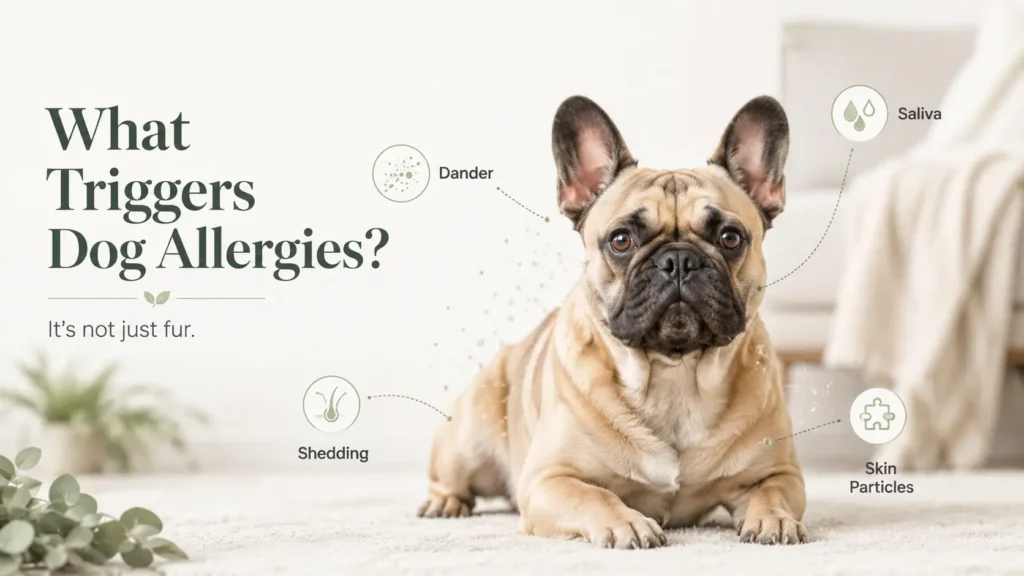
Dog allergies are not only caused by fur. Most reactions are linked to proteins found in a dog’s dander, saliva, urine, and skin particles. Fur can carry those allergens around the home, but the hair itself is not the only problem.
That is why a short-haired dog can still bother allergy sufferers. A French Bulldog can have a smooth coat and still produce dander. A Frenchie can shed lightly and still spread saliva allergens by licking your hands or sleeping on your blanket.
A study published in the Journal of Allergy and Clinical Immunology found no evidence for classifying certain dog breeds as truly “hypoallergenic.” Read the study on PubMed.
So when someone asks, “Are Frenchies hypoallergenic?” the simple answer is no. But French Bulldogs still produce the common allergens that affect sensitive people.
Why French Bulldogs Are Not Hypoallergenic
Frenchies are not allergy-free for several reasons. The issue is not one single thing. It is a mix of shedding, dander, saliva, skin oils, and close contact.
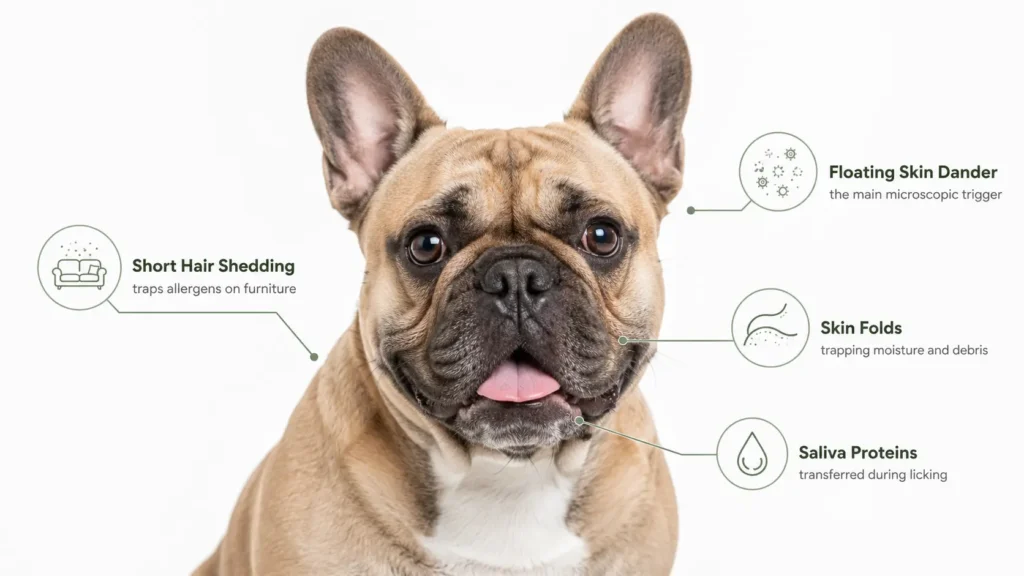
1. Frenchies Still Shed
French Bulldogs do shed. Their hair is short, but it can still stick to clothes, couches, rugs, bedding, and car seats. Many Frenchie owners describe the hair as tiny, stiff, and difficult to remove from fabric.
Some Frenchies shed more during seasonal changes. Others shed steadily throughout the year.
If you already struggle with dog allergies, even moderate shedding can matter because hair can carry dander and other particles through your home.
2. Dander Is the Bigger Allergy Problem
Dander is made of tiny flakes of skin. You may not see it, but it can spread easily.
Dander can float in the air, settle into fabric, and collect on furniture. This is why some people react even when a dog is not sitting right next to them.
Frenchies produce dander like other dogs. Their short coat does not stop that. This is one of the biggest reasons French Bulldogs are not considered hypoallergenic.
3. Frenchies Love Close Contact
French Bulldogs are affectionate dogs. They love sitting near their owners, curling up on laps, licking hands, sleeping close, and following people from room to room.
That is one of the reasons people love them so much.
But for allergy sufferers, close contact can make symptoms worse. When a Frenchie licks your skin, rubs against your clothes, or sleeps on your blanket, saliva and dander can transfer directly onto you.
If your allergies are mild, this may only cause sneezing or itchy eyes. If your allergies are stronger, it may cause coughing, skin irritation, or breathing discomfort.
4. Skin Folds Can Trap Moisture and Debris
Frenchies have facial folds and wrinkles that need regular care. These folds can trap moisture, skin flakes, saliva, food particles, and debris. If they are not cleaned and dried properly, the skin may become irritated.
This does not mean every Frenchie with wrinkles will cause worse allergies. But it does mean skin hygiene matters more with this breed.
For allergy-prone homes, wrinkle care is not just a beauty step. It is part of keeping your Frenchie’s skin healthier and reducing buildup around the face.
5. Sensitive Skin Can Increase Flaking
French Bulldogs are known for sensitive skin. Some Frenchies deal with itchy paws, dry skin, environmental allergies, food sensitivities, or yeast issues.
When a dog scratches more, licks more, or has dry skin, more flakes can spread around the home.
This is why a Frenchie with poor skin health may feel harder to live with for someone who already reacts to dogs.
Frenchie Allergy Risk Scorecard
A simple risk breakdown for allergy-sensitive Frenchie lovers.
Are Fluffy Frenchies Hypoallergenic?
No, fluffy Frenchies are not hypoallergenic.
A fluffy Frenchie has a longer coat than a standard French Bulldog, but the allergy issue is still the same. Dog allergies are mainly linked to dander, saliva, and skin proteins, not just visible hair length.
The longer coat may make loose hair easier to notice around the home. It may also hold dander, dust, pollen, and other particles if grooming is not consistent.
This does not mean every fluffy Frenchie will be worse for every allergy sufferer. But a fluffy Frenchie is not a safer hypoallergenic version of the breed.
If you are allergic to dogs, do not choose a fluffy Frenchie only because someone says the coat is special or rare. Spend time around the dog first and watch how your body reacts.
Are Frenchie Pugs Hypoallergenic?
No, Frenchie Pugs are not hypoallergenic either.
A Frenchie Pug, often called a Frug, is a mix between a French Bulldog and a Pug. Since both breeds can shed and produce dander, the mix can still trigger allergies.
Some people assume mixed breeds are automatically better for allergies, but that is not guaranteed.
A Frenchie Pug can inherit shedding, saliva allergens, skin oils, and close-contact behavior from both parent breeds.
If allergies are your main concern, treat a Frenchie Pug the same way you would treat a French Bulldog. Spend time with the dog before bringing one home, monitor your symptoms, and speak with an allergist if your reactions are strong.
Are Standard, Fluffy, and Frenchie Pugs Hypoallergenic?
A clean comparison of the main allergy concerns by Frenchie type.
Can Someone With Allergies Live With a Frenchie?
Sometimes, yes. But it depends on how serious the allergies are.
A person with mild sneezing may be able to live with a Frenchie by brushing regularly, washing bedding often, using an air purifier, and keeping the dog out of the bedroom.
But someone with asthma, chest tightness, wheezing, or severe pet allergies needs to be much more careful.
The biggest mistake is assuming a short coat means no allergy problem.
It is better to test your reaction honestly before you fall in love with a puppy.
Should You Get a Frenchie If You Have Allergies?
Your symptoms matter more than the dog’s coat length.
Maybe. Spend time with a Frenchie first and watch your symptoms before making a decision.
Be cautious. Prepare a regular cleaning, grooming, and air-filtering routine before bringing one home.
Test indoors first. Spend time inside a Frenchie home before adopting, not just around the dog outdoors.
Medical advice first. Speak with a doctor or allergist before bringing a Frenchie home.
Usually not recommended. A Frenchie is usually not recommended without medical guidance.
When You Should Be Extra Careful
A Frenchie may not be the right choice without medical advice if:
- You have asthma triggered by pets
- You get chest tightness around dogs
- Your child has strong pet allergies
- You react inside homes where dogs live, even when the dog is not nearby
- You need a truly low-allergen dog
- Your symptoms get worse after repeated exposure
Mild sneezing is one thing. Breathing symptoms are different.
If dogs affect your chest, lungs, or sleep, speak with a doctor or allergist before adopting a Frenchie.
A Simple 7-Day Allergy Test Before Getting a Frenchie
If you are thinking about getting a Frenchie but you have allergy concerns, test your reaction before making the decision. A single short meeting may not tell the full story. Some allergy symptoms appear later, after allergens settle on your clothes, skin, or bedding.
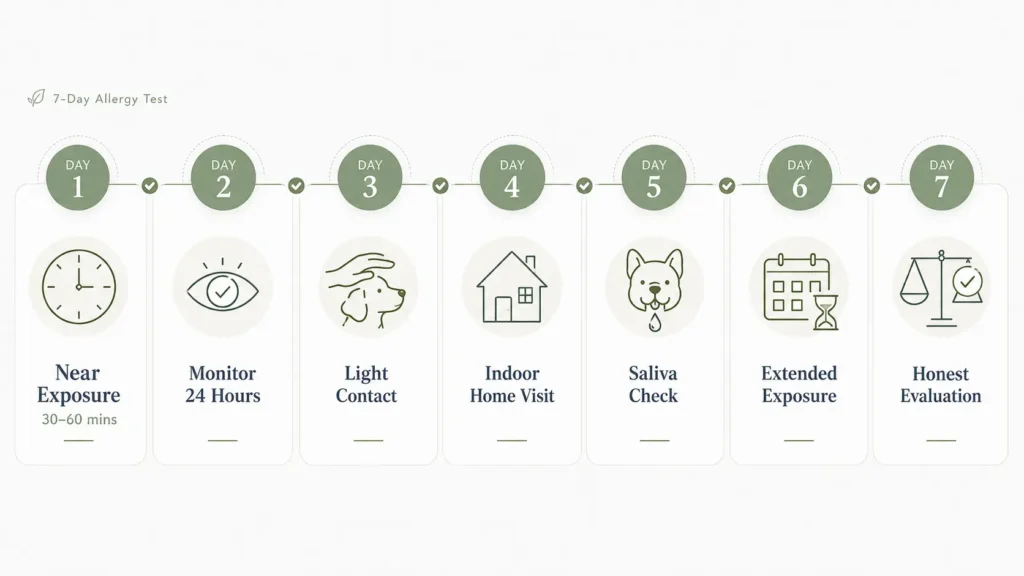
Day 1: Spend Time Near a Frenchie
Spend 30 to 60 minutes near a French Bulldog. Do not just look from a distance. Sit nearby and notice whether your nose, eyes, throat, skin, or chest react.
Day 2: Check Delayed Symptoms
Pay attention over the next 24 hours. Watch for sneezing, itchy eyes, coughing, skin redness, or breathing changes.
Day 3: Try Light Contact
If your first reaction was mild or absent, gently pet the Frenchie and wash your hands afterward. Notice if touching the dog triggers symptoms.
Day 4: Visit a Frenchie Home
If possible, spend time inside a home where a Frenchie lives. This matters because allergens collect in furniture, rugs, bedding, and air.
Some people do fine during a short outdoor meeting but react inside a dog’s home.
Day 5: Notice Saliva Reactions
Frenchies can be kissy dogs. If saliva bothers your skin or eyes, that matters. Avoid face licking, but notice whether hand licking or toy contact causes itching or redness.
Day 6: Test a Longer Visit
Spend a longer period around the dog if previous exposure was manageable. A longer visit gives you a better idea of what daily life may feel like.
Day 7: Make an Honest Decision
If symptoms are mild and manageable, a Frenchie may be possible with a strict cleaning routine.
If you have wheezing, chest tightness, strong coughing, or breathing trouble, do not ignore it. Speak with a medical professional before bringing a Frenchie into your home.
How to Reduce Frenchie Allergens at Home
If you already have a Frenchie or your allergies are mild, your goal is to reduce allergen buildup. You may not remove allergens completely, but you can make the home easier to live in.
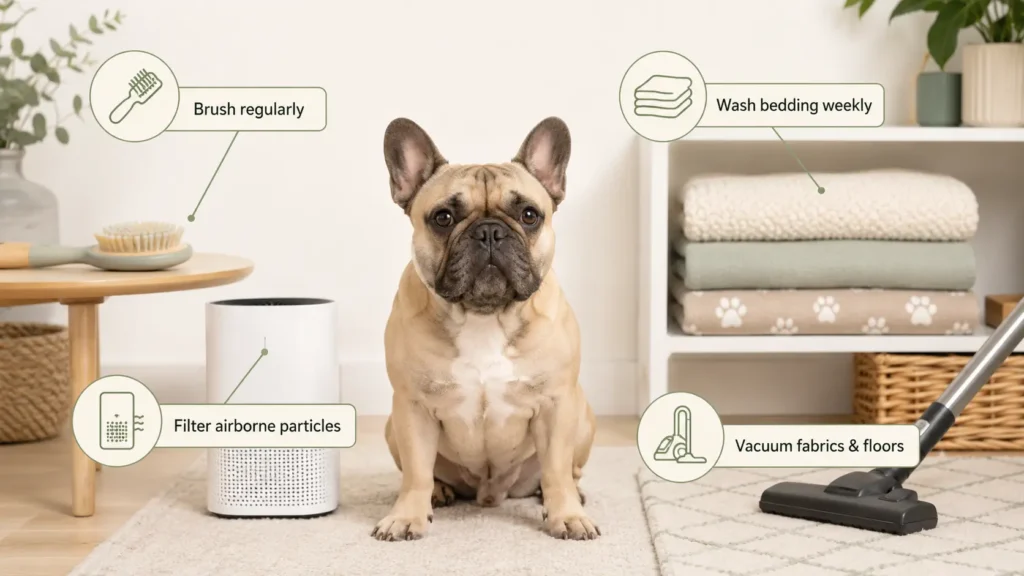
Brush Your Frenchie Regularly
Brush your Frenchie two to three times per week with a soft brush or rubber grooming tool. This helps remove loose hair before it spreads around the house. If possible, brush outside or in an easy-to-clean area.
Wash French Bulldog Bedding Weekly
Your Frenchie’s bed, blankets, and soft toys can collect hair, dander, and saliva.
Wash them once a week using a pet-safe detergent.
If your Frenchie sleeps on your bed, allergy control becomes much harder. A dog-free bedroom is one of the most helpful changes for sensitive owners.
Use a HEPA Air Purifier
A HEPA air purifier can help reduce airborne particles in rooms where your Frenchie spends the most time. It will not make the home allergy-free, but it can support the rest of your routine.
Vacuum Sofas, Rugs, and Floors Often
Frenchie hair is short and stiff, so it can stick into fabric. Vacuum carpets, rugs, couches, corners, and car seats regularly. If possible, use a vacuum with a HEPA filter.
Hard flooring is easier to clean than thick carpet.
Clean Facial Folds Gently
Keep your Frenchie’s wrinkles clean and dry.
Use vet-approved wipes or a soft damp cloth, then dry the folds carefully. This helps reduce trapped debris and supports healthier skin.
Avoid Over-Bathing
Bathing may help reduce loose hair and some allergens, but too much bathing can dry out your Frenchie’s skin. Dry skin may lead to more flakes and irritation. Ask your vet how often your individual Frenchie should be bathed, especially if your dog already has sensitive skin.
Wash Hands After Licking or Play
Frenchies are affectionate, and many love licking. If saliva triggers your symptoms, wash your hands after playtime and avoid letting your Frenchie lick your face.
This small habit can make a noticeable difference.
Are Frenchies Bad for Asthma?
Frenchies can trigger asthma symptoms in some people who are sensitive to dog allergens.
If being around dogs causes coughing, wheezing, chest tightness, or breathing difficulty, you should speak with an allergist before getting a Frenchie.
Asthma-related reactions can be more serious than mild sneezing or itchy eyes. A Frenchie may be manageable for some people with mild allergies, but asthma needs extra caution.
Best Dogs for People Who Love Frenchies but Have Allergies
If you love the small size and affectionate personality of Frenchies but have strong allergies, you may want to consider breeds that some allergy sufferers tolerate better.
Common examples include:
- Poodles
- Bichon Frises
- Maltese
- Schnauzers
- Portuguese Water Dogs
Even then, no breed is guaranteed allergy-free.
The best approach is to spend time with the specific dog before adopting. Individual dogs vary, and individual people react differently too.
FAQs About Frenchies and Allergies
Are Frenchies hypoallergenic?
No. Frenchies are not hypoallergenic. They shed, produce dander, and have saliva proteins that can trigger allergies.
Are French Bulldogs hypoallergenic dogs?
No. French Bulldogs are not considered hypoallergenic dogs, even though they have short coats.
Are fluffy Frenchies hypoallergenic?
No. Fluffy Frenchies are not hypoallergenic. Their longer coat does not remove the risk of dander, saliva, or skin-related allergens.
Are Frenchie Pugs hypoallergenic?
No. Frenchie Pugs, also called Frugs, are not hypoallergenic. They can still shed and produce dander like both parent breeds.
Do Frenchies shed a lot?
Frenchies usually shed a moderate amount. Their hair is short, but it can still stick to clothing, furniture, and bedding.
Can I have a Frenchie if I am allergic to dogs?
Maybe, if your allergies are mild. Spend time around Frenchies first and monitor your symptoms. If you have asthma or severe allergies, speak with an allergist before getting one.
Are blue or lilac Frenchies more hypoallergenic?
No. Coat color does not make a Frenchie hypoallergenic. Blue, lilac, fawn, brindle, cream, and pied Frenchies can all produce dander and saliva allergens.
Does bathing a Frenchie reduce allergens?
Bathing may help reduce loose hair and some allergens, but it will not make a Frenchie hypoallergenic. Over-bathing can dry the skin, so follow your vet’s advice.
Can Frenchie allergies get worse over time?
They can. Some people become more sensitive with repeated exposure, while others adjust better over time. If your symptoms are getting worse, talk to a doctor or allergist.
Final Verdict: Are Frenchies Hypoallergenic?
Frenchies are not hypoallergenic.
Their short coat may make them look like a low-allergy dog, but they still produce dander, shed hair, and spread saliva allergens through close contact.
Standard Frenchies, fluffy Frenchies, and Frenchie Pugs can all trigger allergies.
That does not mean every allergy sufferer must avoid French Bulldogs completely. Some people with mild symptoms may live comfortably with a Frenchie by grooming regularly, cleaning often, using air filtration, and keeping the bedroom dog-free.
But if you have severe allergies, asthma, or strong reactions around dogs, a Frenchie is not the safest breed to choose without medical advice.
The best answer is honest and practical: Frenchies are not allergy-free, but the right decision depends on your symptoms, your home routine, and how your body reacts to the individual dog.
Sources Reviewed
This article was source-reviewed using information from:
- Asthma and Allergy Foundation of America: pet allergies and dog allergens
- Mayo Clinic: pet allergy symptoms and causes
- American Academy of Allergy, Asthma & Immunology: hypoallergenic dog myths
- The Breed Expert editorial methodology and breed-specific care standards

The Breed Expert provides research-based information for educational purposes only. This article is not medical advice for humans or veterinary advice for pets. If you have asthma, severe pet allergies, breathing symptoms, or concerns about living with a dog, speak with a qualified doctor or allergist. For your dog’s health, always consult a licensed veterinarian.