
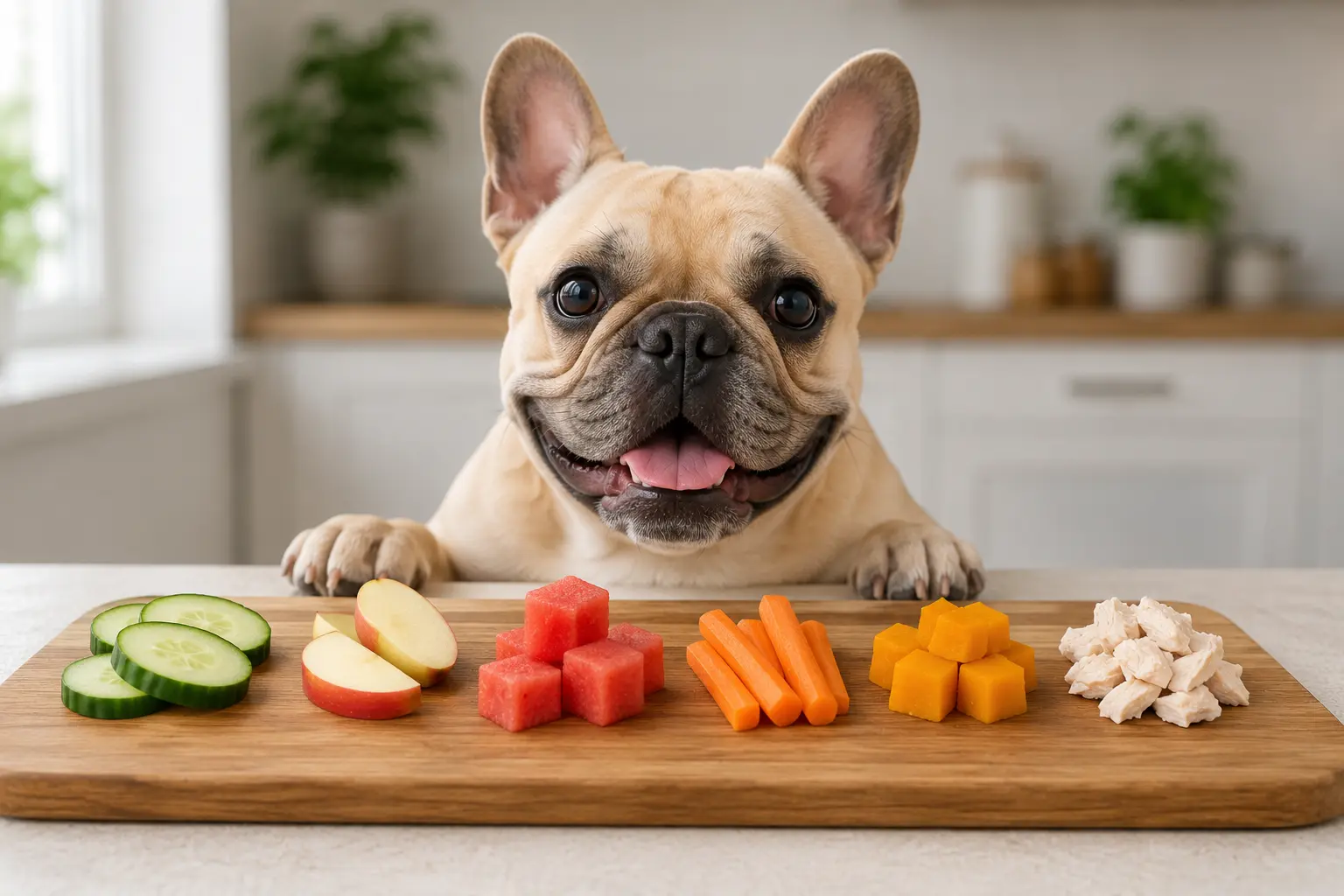
Frenchies can eat some plain human foods like cucumber, carrot, apple slices without seeds, seedless watermelon, plain cooked chicken, plain egg, and small amounts of rice or pumpkin. These foods should be fresh, unseasoned, cut into tiny pieces, and given as occasional treats.
Richer foods like cheese, yogurt, peanut butter, cashews, tuna, and potatoes should only be given in small amounts if they are plain and safe. French Bulldogs can gain weight easily, so human food should stay under the daily treat limit.
French Bulldogs should not eat chocolate, grapes, raisins, onion, garlic, xylitol, alcohol, caffeine, cooked bones, macadamia nuts, raw yeast dough, or very fatty foods. If your Frenchie eats one of these, contact your vet or pet poison control quickly.
That is the quick answer, but the real question is not only “what can Frenchies eat?” It is also “how much is safe, how often should I give it, and what is risky for this breed?” French Bulldogs are small dogs with sensitive stomachs, a tendency to gain weight, and a flat-faced body structure that makes healthy weight especially important. A food that is safe for dogs in general can still be too rich, too large, too salty, or too hard for a Frenchie.
This guide is designed to help Frenchie owners make better food choices at home. You will find a quick safety chart, the 10% treat rule, portion examples, safe fruits and vegetables, caution foods, dangerous foods, and simple steps to follow if your Frenchie eats something unsafe.
This article is for general education only. If your Frenchie has allergies, pancreatitis, kidney disease, diabetes, obesity, chronic diarrhea, breathing trouble, or any medical condition, ask your veterinarian before adding new foods.
Quick Frenchie Food Safety Chart
Use this chart as a starting point. “Safe” does not mean unlimited. It means the food may be okay for many healthy Frenchies when served correctly and in small amounts.
A simple rule: the safer foods are usually plain, soft, low-fat, low-salt, and easy to cut into small pieces. Riskier foods are usually fatty, salty, sugary, hard, sticky, seasoned, processed, or mixed with ingredients you cannot clearly check.
| Food | Status | Best Advice |
|---|---|---|
| Cucumber | Safe | Serve washed, plain, and cut into thin slices. |
| Watermelon | Safe | Remove seeds and rind. Give small soft cubes. |
| Apple | Safe | Remove seeds and core. Serve thin slices only. |
| Cheese | Limit | Use a tiny plain piece only. Not a daily treat. |
| Cashews | Rarely | Plain, unsalted, and broken into tiny pieces. |
| Bacon | Avoid | Too salty and fatty for regular Frenchie treats. |
| Oranges | Limit | Peel first, remove seeds, and give tiny pieces. |
| Cantaloupe | Safe | Remove rind and seeds. Serve small soft cubes. |
| Mango | Limit | Remove skin and pit. Give only tiny cubes. |
| Papaya | Safe | Remove skin and seeds. Start with tiny pieces. |
| Grapes/Raisins | No | Do not feed. Call a vet if your Frenchie eats them. |
| Chocolate | No | Unsafe for dogs. Keep all chocolate away. |
The 10% Treat Rule for Frenchies
When giving human food to a Frenchie, the safest approach is to count it as a treat, not part of the main meal. A common veterinary nutrition guideline is the 90/10 rule: most calories should come from complete dog food, while treats should stay limited.
Use this simple rule to keep snacks controlled: treats should stay under 10% of your dog’s daily calories. For Frenchies that gain weight easily, staying closer to 5% is often a safer habit.
Frenchie Portion Guide: What Does “Small Amount” Mean?
Most dog food articles say “give a small amount,” but that is not always helpful. A small amount for a Labrador is not the same as a small amount for a Frenchie.
For an average adult Frenchie, start with tiny portions like these. Give less than you think, especially when the food is new.
| Food Type | First Portion | Notes |
|---|---|---|
| Fruit | 1–2 tiny pieces | Avoid seeds, pits, rind, and large chunks. |
| Vegetable | 1–3 small slices | Serve plain, with no butter, salt, or sauce. |
| Cheese | Pea-sized piece | Avoid if dairy causes gas, itching, or loose stool. |
| Nuts | Tiny broken piece | Rare treat only. Never salted or flavored. |
| Plain meat | 1–2 small pieces | Cooked, lean, boneless, and unseasoned. |
| Rice or pumpkin | 1 teaspoon | Useful only when plain and tolerated. |
| Peanut butter | Small lick | Must be xylitol-free and given rarely. |
How Much Food Should a French Bulldog Eat a Day?
“How much food should a French Bulldog eat?” is a common question, but there is no single cup amount that fits every Frenchie. The right amount depends on your dog’s age, current weight, ideal weight, activity level, body condition, health issues, and the calorie level of the dog food.
This is why “cups per day” can be misleading. One dry food may have 320 calories per cup, while another may have 480 calories per cup. If you feed both foods in the same cup amount, your Frenchie may get very different calories.
The safest starting point is the feeding guide on your dog food bag or can. After that, adjust based on your Frenchie’s body condition, weight changes, activity level, and how many treats they get.
How Much Food Should a French Bulldog Puppy Eat?
A French Bulldog puppy needs more frequent meals than an adult because puppies are growing and have smaller stomachs. Most puppies do better with several small meals per day instead of one large meal. The exact amount depends on age, weight, growth rate, and the puppy food’s calories.
If you are wondering how much food should a French Bulldog puppy eat, start with the puppy food label and ask your vet during puppy checkups. Puppies should not be placed on random homemade diets or adult dog food unless your vet recommends it. They need balanced nutrition for growth.
For treats, be extra careful with puppies. Their stomachs are still developing, and too many new foods can cause diarrhea. If you want to offer human food to a Frenchie puppy, keep it very simple and tiny. Plain cooked chicken, a tiny bit of plain pumpkin, or a small soft vegetable piece may be easier than rich foods like cheese, bacon, or nuts.
What Dog Food Is Good for French Bulldogs?
The best dog food for French Bulldogs is not one magic brand. A good dog food for French Bulldogs should be complete and balanced, appropriate for their life stage, easy for them to digest, and not too high in unnecessary calories.
When choosing what food is good for French Bulldogs, look for a formula made for your dog’s age: puppy, adult, or senior. Check calories per cup or per can. Frenchies can gain weight quickly, so calorie control matters. If your dog has allergies, itchy skin, repeated ear infections, or stomach issues, your vet may suggest a specific diet.
A good dog food for French Bulldogs should also be practical. Your Frenchie should have normal stool, steady energy, healthy skin, and a stable weight on it. If the food causes repeated gas, vomiting, loose stool, or itching, it may not be the right match.
Wet food can work for some Frenchies, dry food can work for others, and some dogs eat a mix. What matters most is balance, calories, digestibility, and your individual dog’s health needs.
What Human Food Can Frenchies Eat Besides Dog Food?
Frenchies can eat some human foods besides dog food, but these foods should be occasional extras. They should not replace a complete dog diet.
Some human foods Frenchies can eat in small amounts include cucumber, carrot, apple without seeds, seedless watermelon, blueberries, strawberries, plain pumpkin, plain cooked chicken, plain cooked egg, and plain rice.
The safest human food is usually simple food with one ingredient. For example, plain cooked chicken is easier to judge than leftover chicken curry, fried chicken, or chicken cooked with garlic and onion. Plain cucumber is safer than pickles. Plain pumpkin is safer than pumpkin pie.
What Fruits Can Frenchies Eat?
Frenchies can eat some fruits, but fruit should be limited because it contains natural sugar. Fruit is best used as a small treat, not a daily bowl.
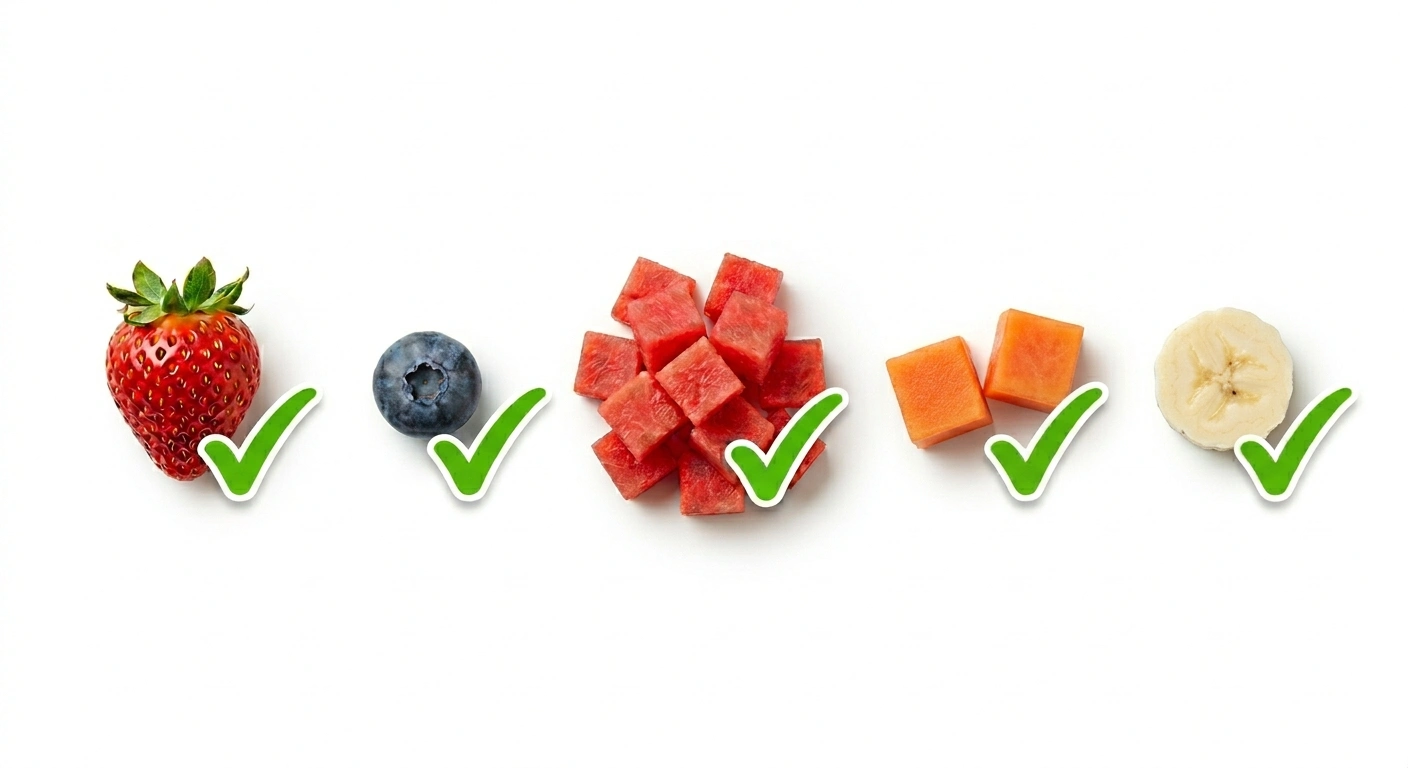
Frenchies can usually try tiny amounts of banana, apple, watermelon, blueberries, strawberries, mango, papaya, cantaloupe, and orange. Preparation matters more than people think. Remove apple seeds and cores, watermelon seeds and rind, mango pits and skin, papaya seeds, and cantaloupe rind.
If you are asking what fruits can Frenchies eat, the safer choices are usually soft, fresh, seedless, and served in tiny pieces. Do not give canned fruit in syrup, dried fruit mixes, fruit desserts, fruit candy, fruit ice cream, or sweetened fruit snacks.
Grapes and raisins are not safe fruits for Frenchies. Keep them completely away from your dog. If your Frenchie eats grapes or raisins, call a veterinarian or poison control.
What Fruits Can Frenchies Not Eat?
Frenchies should not eat grapes or raisins. These are the most important fruits to avoid because they can be dangerous for dogs.
You should also be careful with fruit pits and seeds. Mango pits, peach pits, plum pits, cherry pits, and large hard seeds can create choking or digestive risks. Some fruit parts are also not meant to be eaten by dogs, even if the soft flesh is safe in tiny amounts.
Avoid fruit served with chocolate, whipped cream, sugar, syrup, alcohol, artificial sweeteners, or baked desserts. A plain apple slice and an apple pie are completely different foods for a Frenchie.
What Vegetables Can Frenchies Eat?
Frenchies can eat some vegetables when they are plain and cut small. Good options to research and cover on your site include cucumber, carrots, green beans, pumpkin, peas, broccoli, spinach, and sweet potato.
Cucumber is a great low-calorie snack for many Frenchies. Carrots can be useful because they are crunchy and lower in calories than many commercial treats. Pumpkin is popular with dog owners, but it should be plain pumpkin, not sweetened pie filling.
If you are wondering what vegetables can Frenchies eat, focus on plain preparation. No butter, no salt, no garlic, no onion, no chili, no sauces, and no seasoning mixes. A plain cooked carrot may be fine, but a dinner-plate carrot cooked with butter, salt, and spices is not the same thing.
What Vegetables Can Frenchies Not Eat?
Frenchies should avoid onion, garlic, chives, leeks, and foods cooked with them. This includes soups, gravies, sauces, stuffing, seasoned meats, and leftovers where onion or garlic powder may be hidden.
Be careful with vegetables that are too hard, too large, or too fibrous. Large raw chunks can be difficult for a Frenchie that gulps food. Even safe vegetables should be cut into pieces that match your dog’s size.
Avoid fried vegetables, heavily salted vegetables, spicy vegetables, and creamy vegetable dishes. Again, the problem is often not the vegetable itself but what humans add to it.
What Meat Can Frenchies Eat?
Frenchies can eat some plain cooked meats, such as chicken, turkey, lean beef, and some fish, if they are cooked without bones, seasoning, skin, heavy oil, onion, garlic, or sauces. Meat should be a small topper or treat unless your vet has designed a full diet plan.
Plain cooked chicken is usually one of the easiest meats to understand. Fried chicken, chicken skin, spicy chicken, barbecue chicken, and chicken with bones are not the same as plain cooked chicken.
Fish such as salmon or tuna may be okay in specific forms, but portions matter. Fish should be cooked, plain, and boneless. Tuna should not become a daily habit because of salt and other concerns. If you publish individual guides for tuna, salmon, shrimp, beef, chicken, and turkey, this section can later link to all of them.
Bacon is a meat, but it is not a good meat choice for Frenchies. It is salty and fatty, and it can easily upset a sensitive stomach.
Nuts, Dairy, and Peanut Butter: Use Extra Caution
Nuts and dairy are not simple “yes” foods for French Bulldogs. They are often high in fat and calories, which is why they belong in the caution category.
Plain unsalted cashews may be okay as a rare tiny piece for some healthy adult Frenchies, but they should not become a normal snack. Avoid salted nuts, flavored nuts, mixed nuts, chocolate-covered nuts, and macadamia nuts.
Cheese may be okay in a pea-sized amount for some Frenchies, but many dogs do not handle dairy well. If cheese causes gas, loose stool, itching, paw licking, or ear problems, avoid it.
Peanut butter must be checked carefully. It should be xylitol-free and given only as a small lick. Peanut butter is calorie-dense, so a spoonful can be too much for a small Frenchie.
Foods Frenchies Should Never Eat
Some foods are not worth testing at all. If a food is known to be dangerous for dogs, it should stay completely off your Frenchie’s menu, even in small amounts.
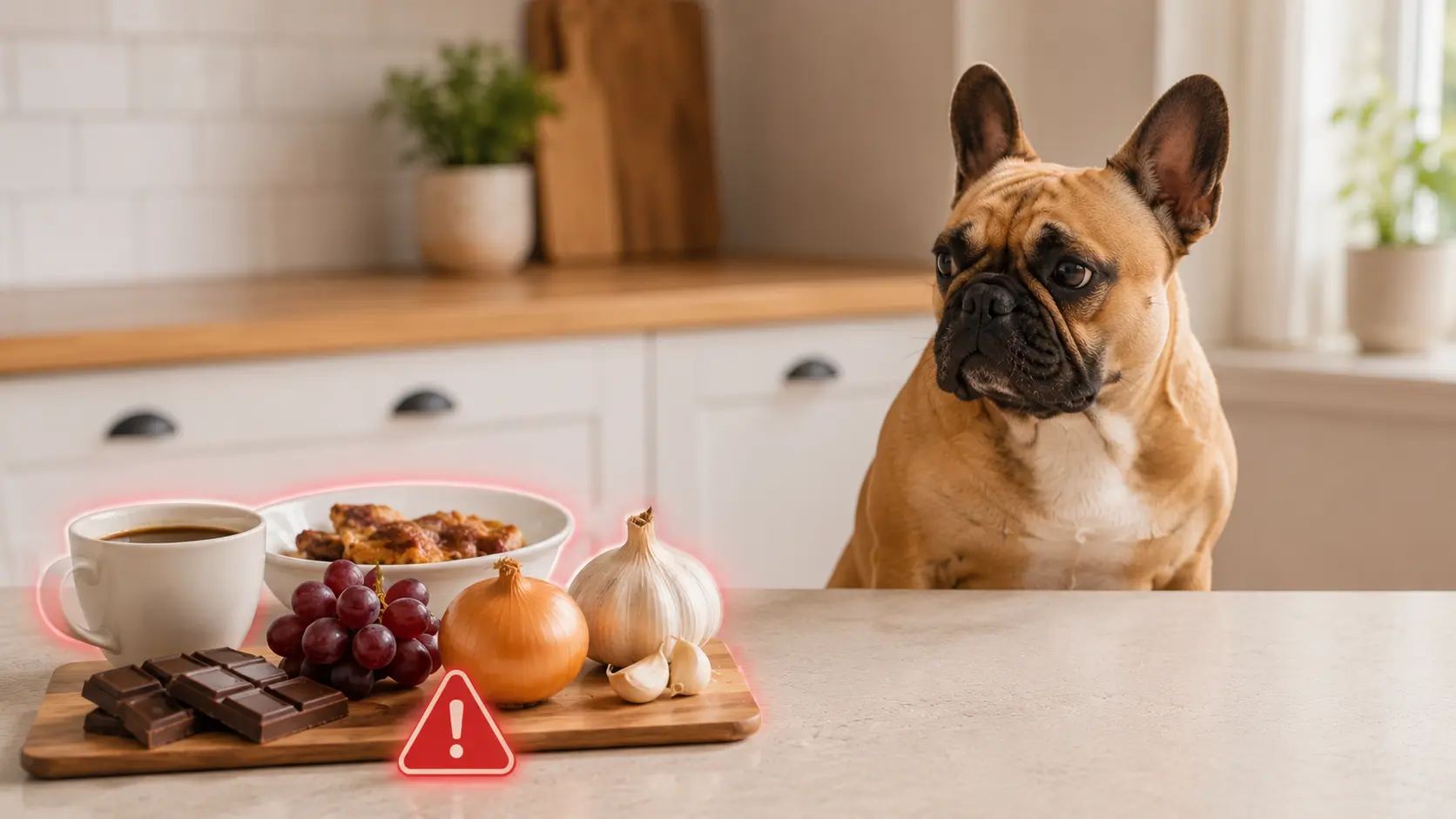
These foods should stay completely off your Frenchie’s menu. Some are toxic, while others can cause choking, digestive trouble, or serious health problems.
This is the “do not test” list. Even if another dog seemed fine after eating something risky, that does not make it safe for your Frenchie.
Many dangerous foods are hidden inside normal human meals. Onion and garlic can be in sauces, soups, gravies, marinades, and seasoning powders. Xylitol can be in sugar-free gum, candies, baked goods, and some nut butters. Chocolate can be in cookies, cakes, protein bars, and desserts.
Frenchie-Specific Food Risks Most Owners Miss
French Bulldogs need food advice that is more specific than general dog advice. Their size, body shape, and common sensitivities matter.
Best Way to Introduce a New Food
Introduce one new food at a time. This is important because if you give cheese, apple, and chicken on the same day and your Frenchie gets diarrhea, you will not know which food caused it.
Start with one tiny piece. Wait 24 hours. Watch your dog’s stool, skin, ears, energy, and stomach. If everything looks normal, you can offer that food occasionally in a small amount.
Do not introduce new foods when your Frenchie is already sick, changing dog food, taking new medication, recovering from surgery, or dealing with allergies. Keep things simple during those times.
What to Do If Your Frenchie Eats Something Unsafe
If your Frenchie eats something unsafe, the most important thing is to stay calm, stop them from eating more, and get proper advice quickly. Some foods need urgent help even before symptoms appear.
Latest Frenchie Food Guides
Use this section to connect your full food cluster. Add links to your published guides, and update this list every time you publish a new “Can Frenchie eat” article.
Final Thoughts
So, what can Frenchies eat? They can eat some plain fruits, vegetables, meats, and simple human foods, but the safest choice depends on preparation, portion size, and your dog’s health.
The biggest mistake is thinking “safe” means “as much as they want.” For French Bulldogs, a safe food can still become a problem if it is too fatty, too salty, too sugary, too large, or given too often.
Use this guide as your main Frenchie food safety list. Check the quick chart, follow the 10% treat rule, cut food into tiny pieces, and read the full guide for each food before giving it often. When in doubt, skip the snack and ask your vet. Your Frenchie will not miss one bite, but the right choice can protect their stomach, weight, and long-term health.

FAQs About What Frenchies Can Eat
These quick answers cover the most common questions Frenchie owners ask about human foods, safe portions, fruits, vegetables, treats, and foods to avoid. Use them as a simple guide, but always check with your vet if your Frenchie has allergies, stomach problems, weight issues, or any medical condition.
What can Frenchies eat every day?
Frenchies should eat complete and balanced dog food every day. Human foods should only be small extras. Plain foods like cucumber, carrot, or tiny pieces of plain cooked chicken can be occasional treats, but they should not replace regular meals.
What can Frenchies eat besides dog food?
Frenchies can eat small amounts of some plain human foods besides dog food, such as cucumber, carrot, apple without seeds, seedless watermelon, plain cooked chicken, plain cooked egg, plain pumpkin, and plain rice. Keep portions tiny and avoid seasoning.
What human food can Frenchies eat?
Frenchies can eat some human food if it is plain, safe for dogs, and served in tiny amounts. Good examples include cucumber, carrot, apple slices, watermelon, blueberries, plain chicken, and plain egg. Avoid foods cooked with salt, butter, garlic, onion, sauces, or spices.
What can Frenchies not eat?
Frenchies should not eat chocolate, grapes, raisins, onion, garlic, xylitol, alcohol, caffeine, macadamia nuts, cooked bones, raw yeast dough, or very fatty foods. These foods can be dangerous and may need urgent veterinary advice.
What fruits can Frenchies eat?
Frenchies can eat tiny amounts of apple, watermelon, blueberries, strawberries, mango, papaya, cantaloupe, and orange when prepared safely. Remove seeds, pits, rinds, cores, and peels where needed. Never give grapes or raisins.
What vegetables can Frenchies eat?
Frenchies can eat some plain vegetables such as cucumber, carrots, green beans, pumpkin, peas, broccoli, spinach, and sweet potato. Serve them plain and in small pieces. Avoid onion, garlic, chives, leeks, and heavily seasoned vegetables.
How much food should a French Bulldog eat per day?
The amount depends on your Frenchie’s age, ideal weight, activity level, body condition, health, and the calories in the food. Use the feeding guide on the food package as a starting point, then adjust based on weight and body condition.
Can Frenchies eat human food every day?
Frenchies can have tiny dog-safe human foods occasionally, but human food should not become a large daily habit. Treats should stay under 10% of daily calories, and many Frenchies do better with even less.
Editorial Note
This guide is for general educational purposes only and does not replace veterinary diagnosis, nutrition planning, or emergency treatment. If your French Bulldog has allergies, pancreatitis, diabetes, kidney disease, obesity, repeated vomiting, diarrhea, breathing trouble, or any medical condition, ask your veterinarian before changing their diet or adding new human foods.