
Yes, French Bulldogs can be crate trained, but they need a slow and positive routine. Start with short sessions, keep the crate cool, avoid punishment, and build calm time gradually so your Frenchie sees the crate as a safe resting space, not a place of separation.
A French Bulldog does not usually hate the crate because it is a crate. Most of the time, they dislike what the crate suddenly means: the room gets quiet, their favorite person walks away, and they are not sure what happens next.
That is why French Bulldog crate training should never feel like “putting your Frenchie away.” It should feel like teaching your Frenchie that the crate is their small, safe bedroom, and a calm place to sleep, chew, cool down, and reset.
The first goal is not to make your Frenchie stay silent in the crate. The first goal is to make the crate feel boring, safe, and predictable. Once your Little Friend understands that, crate training becomes much easier.
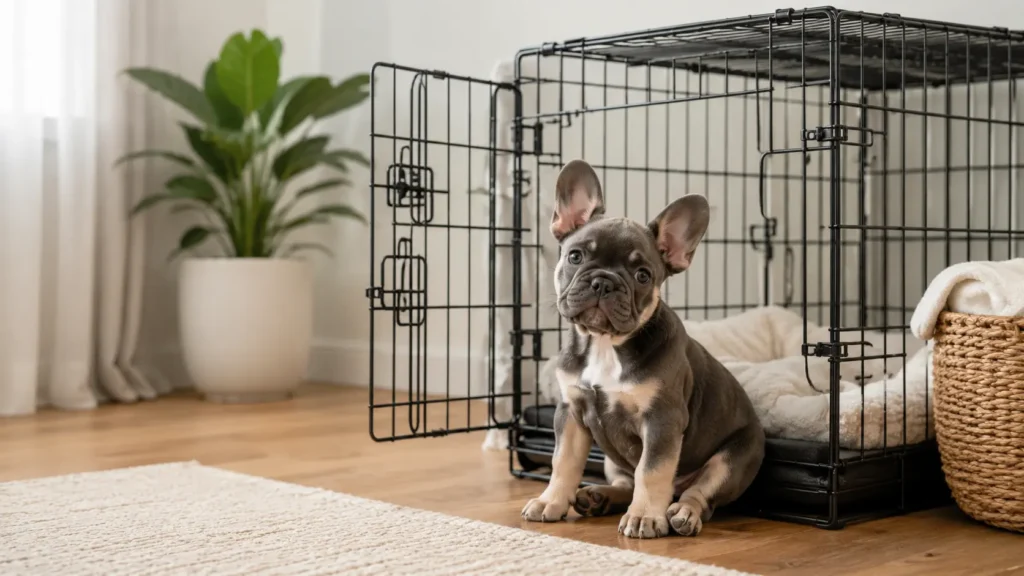
Table of Contents
Can French Bulldogs Be Crate Trained?
Yes, French Bulldogs can be crate trained. Many Frenchies do well with a crate when it is introduced slowly and used in a positive way.
The key is to make the crate feel safe, not forced. Your Frenchie should not be pushed inside, punished inside, or left there until they panic. A crate should be connected with calm things: meals, treats, naps, quiet time, and short periods of safe separation.
Frenchies are people-loving dogs. They often want to stay near their owners, so crate training may take patience. That does not mean they are impossible to train. It just means the process should be gentle and consistent.
Should You Crate Train a French Bulldog?
For most French Bulldogs, crate training is useful. It can help with potty training, prevent unsafe chewing, make travel easier, and give your dog a quiet place when the house is busy.
But the crate should not become an all-day solution. Frenchies need attention, exercise, potty breaks, and time with their family. A crate is a training tool, not a replacement for care.
You should crate train a French Bulldog if you want structure, safety, and a calmer routine. You should not use the crate as punishment or as a way to keep your dog out of sight for long hours.
Why Crate Training Helps French Bulldogs
Crate training can help French Bulldogs in very practical ways.
It gives your puppy a safe place when you cannot watch them closely. It supports house training because most dogs do not want to soil the place where they sleep. It also helps during travel, vet visits, grooming appointments, or recovery periods when your Frenchie may need restricted movement.
For a breed that loves attention, crate training can also teach calm independence. Your Frenchie learns that being away from you for a short time is not scary. You always come back.
Best Crate Size for a French Bulldog
The best crate size for a French Bulldog is one that allows your dog to stand, turn around, and lie down comfortably. Use the guide below as a starting point, then measure your Frenchie before buying.
A wire crate is often a good choice because it allows better airflow. This matters for French Bulldogs because they are flat-faced dogs and can struggle more in hot or poorly ventilated spaces.
Where to Put the Crate
Crate location matters more than many owners realize. Your Frenchie should not feel like they have been sent away to a lonely corner.
Choose a place that is calm but not isolated. During the day, a quiet living area can work well. At night, many puppies settle better when the crate is near your bed for the first few nights. They can hear you, smell you, and feel less alone.
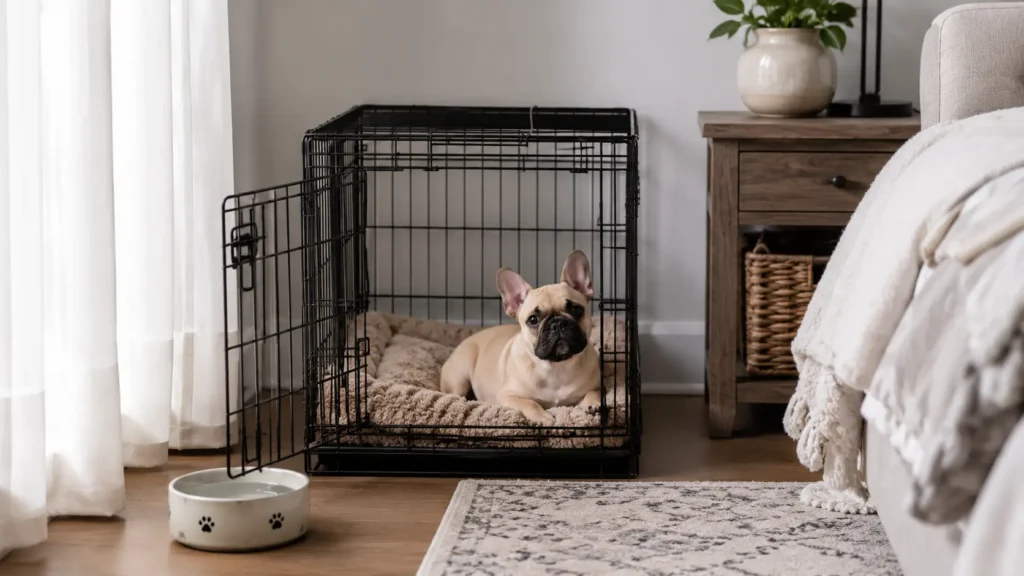
Crate placement is a safety detail for French Bulldogs. Because Frenchies are flat-faced, warm or poorly ventilated spaces can become risky faster than many owners expect.
For extra safety context, the Royal Veterinary College notes that flat-faced dogs such as French Bulldogs are at higher risk of heat stroke .
How to Crate Train a French Bulldog Step by Step
Frenchies usually learn faster when each step feels like a small win. This process starts with simple curiosity, then slowly builds toward closed-door practice, short distance, and quiet independence.
Step 1: Let Your Frenchie Explore
Start with the crate door open. Let your Frenchie sniff it, walk around it, and go inside without pressure. Place a few treats near the entrance, then a few more inside.
Step 2: Feed Meals Near or Inside the Crate
Once your dog is relaxed, feed meals near the crate. Then move the bowl just inside, and later farther back. This helps your Frenchie connect the crate with something good.
Step 3: Close the Door for a Few Seconds
When your dog is comfortable going inside, close the door for just a few seconds. Open it before your Frenchie panics. At this stage, you are building trust, not long crate time.
Step 4: Build Time Slowly
Increase the time little by little. Try 30 seconds, then 1 minute, then 3 minutes, then 5 minutes. Reward calm behavior. If your Frenchie cries immediately, you may have moved too fast. Go back to a shorter session.
Step 5: Step Away Briefly
Once the puppy can stay calm with the door closed, step away for a few seconds and return calmly. Do not make leaving or coming back too emotional.
Step 6: Practice While You Are Home
Use short crate sessions while you cook, work, or clean. If the crate only appears when you leave the house, your Frenchie may start to see it as a sign of separation.
French Bulldog Crate Training Schedule: First 7 Days
Use this as a simple starting plan. It is not a race. Some Frenchies need more time, and that is okay.
Introduction: Keep the crate door open and let your Frenchie explore it with treats inside.
Positive Association: Feed one meal near or inside the crate.
Door Practice: Close the door for a few seconds, then open it calmly.
Building Time: Practice short 1–5 minute crate sessions.
Distance: Step away briefly and return without excitement.
Independence: Try short crated periods while you are home.
If your Frenchie stays calm, continue increasing time slowly. If they panic, go back one step. Good crate training is not about forcing progress. It is about making the crate feel safe enough that your dog can relax.
Crate Training a French Bulldog Puppy at Night
Crate training a French Bulldog puppy at night can feel hardest in the first few days. The little pup is tired, in a new home, away from littermates, and still learning what bedtime means.
Before sleep, take them outside for one last potty break. For the first few nights, keeping the crate near your bed can help because they can hear you, smell you, and feel less alone.
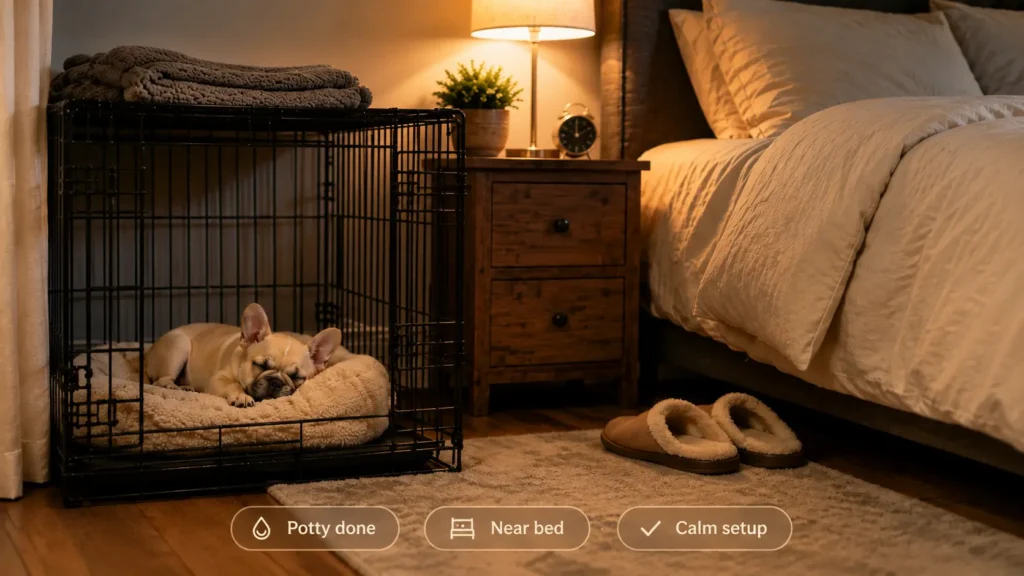
If crying starts, pause and listen. When it continues, take the pup outside calmly for a quick potty break. Keep it boring: no play, no excitement, and no long cuddles.
After potty, place them back in the crate. This teaches that nighttime crying does not start playtime, but real potty needs are still handled.
Once the routine feels easier, the crate can slowly move farther away if that is your goal.
How Long Can a French Bulldog Stay in a Crate?
Young puppies should only have short crate sessions because their bladder control is still developing. A small Frenchie may look settled, but that does not mean they can comfortably hold it for long periods.
For puppies under 6 months, long crate time should be avoided. Short sessions with regular potty breaks are much safer and easier for training.
Adult French Bulldogs can usually handle longer crate periods if they are already trained, relaxed, and have had exercise and a potty break first. Still, the crate should not become where they spend most of the day.
For long workdays, a playpen, dog walker, family help, daycare, or a midday potty break is a better option. The crate should support the routine, not become the whole routine.
Why Your French Bulldog Cries in the Crate
Crying does not always mean the same thing. Your Frenchie may need potty, feel confused, be too hot, want attention, or feel genuinely anxious.
New puppy crying: Your puppy may feel confused or lonely. Keep the crate near you at first and build comfort slowly.
Sudden crying at night: Your Frenchie may need potty. Take them out calmly, keep the break boring, then place them back in the crate.
Loud panic crying: The training may have moved too fast. Return to shorter sessions and rebuild calm time gradually.
Panting or restlessness: Your Frenchie may be too hot or uncomfortable. Check airflow, room temperature, and bedding.
Drooling or escape attempts: This may be real distress. Review signs of distress during crate training and speak with a vet or certified trainer if it continues. That is more than normal crate protest.
Never punish your Frenchie for crying. Look for the reason first, then adjust the training.
What If Your Frenchie Pees or Poops in the Crate?
Crate accidents usually happen for a reason. The crate may be too large, your puppy may have been left too long, or the potty routine may not be clear enough.
For puppies, a divider can help keep the crate space controlled. Take the little Frenchie out before crate time, shorten sessions when needed, and clean any accidents with an enzyme cleaner so the smell does not remain.
If accidents keep happening even with a good routine, speak with a vet to rule out a medical issue. A puppy having accidents is not being stubborn, they may simply need more time, better timing, or a smaller crate space.
Common French Bulldog Crate Training Mistakes
A lot of crate problems start when the crate is introduced too quickly. If a Frenchie is pushed inside, shut in too fast, or only placed there when something stressful is happening, the crate can start to feel scary.
The same thing can happen if the crate is used for punishment. A Frenchie should not think, “I’m in trouble,” every time they go inside. The crate should feel like a quiet resting spot, not a time-out corner.
Other common mistakes to avoid :
- Leaving a puppy crated too long
- Giving too much crate space too early
- Placing the crate in a hot or stuffy room
- Only using the crate when everyone leaves
- Expecting perfect results in one night
Crate training is usually smoother when the routine feels gentle and predictable. Some Frenchies settle quickly, while others need more time. Slow progress is still progress.
When Crate Training May Not Be Right
Some French Bulldogs need a slower plan. If a frenchie panics, drools heavily, screams for long periods, tries to escape, injures themselves, or cannot settle at all, pause the training and get professional help.
A crate should create calm, not fear. If the crate is making the puppy more distressed, the plan needs to change.
For some dogs, a playpen or gated safe area may be a better starting point. You can still build crate comfort later, but you do not need to force it in a way that creates panic.
Final French Bulldog Crate Training Checklist
Before you start, make sure you have the right crate size, a cool and ventilated location, washable bedding, treats, a potty routine, and short daily practice sessions.
Keep the crate positive. Use meals, calm praise, and small steps. Do not punish crying, but do not turn every cry into playtime either. Look for the reason behind the behavior and adjust your plan.
Your Frenchie does not need to love the crate on day one. The goal is steady progress. With patience and a predictable routine, your French Bulldog can learn that the crate is not a punishment, it is their own peaceful little space.
French Bulldog Crate Training FAQs
Here are quick answers to the most common French Bulldog crate training questions, especially for new puppy owners dealing with night crying, potty breaks, crate size, and early routine problems.

Veterinary & Behavioral Disclaimer The information provided in this guide is for educational and informational purposes only and does not constitute professional veterinary or canine behavioral advice. French Bulldogs are a brachycephalic breed highly sensitive to heat, poor airflow, and stress. Always monitor your dog closely during training to ensure their physical safety and respiratory health. If your dog exhibits signs of severe distress, extreme panic, or self-injury, immediately stop crate training and consult a qualified veterinarian or a certified professional dog trainer.
Pingback: How to Potty Train a French Bulldog: Research-Backed Guide