
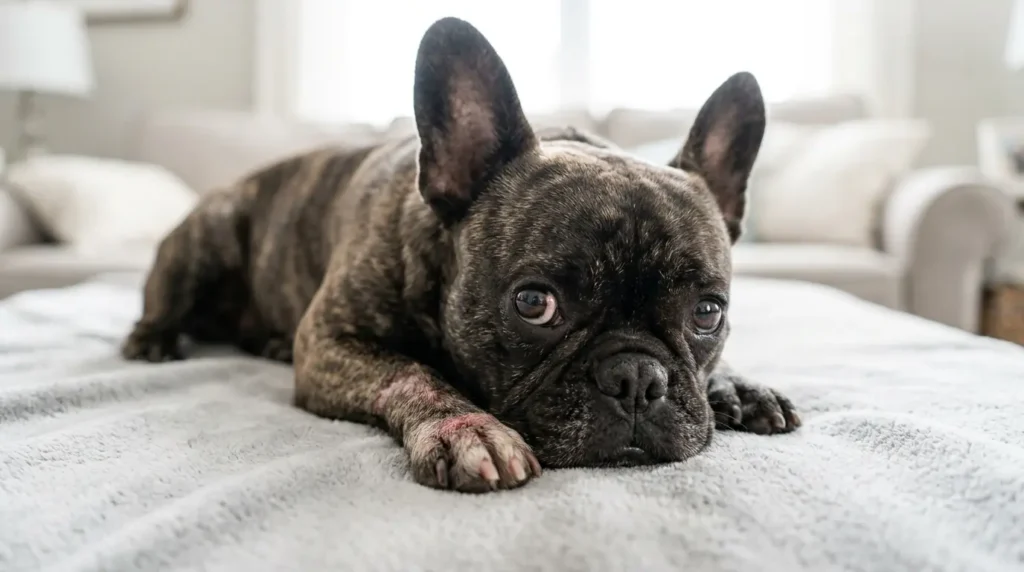
French Bulldog allergies can be frustrating because they rarely show up in one simple way. One Frenchie may lick their paws until they turn red. Another may keep getting ear infections. Another may suddenly break out in hives, bumps, watery eyes, or a red belly rash.
That is why guessing usually does not help. Many owners blame chicken, grain, or kibble first, but French Bulldog allergies can also come from grass, pollen, dust mites, fleas, shampoo, detergents, skin folds, yeast, bacteria, or contact irritation.
A better approach is to read the pattern. Where is the problem showing up? Does it get worse after walks? Are the ears smelly? Is the itching seasonal or year-round? Is there stomach upset too? Those clues matter more than randomly changing food or trying several fixes at once.
Medical note: This guide is for educational purposes only and does not replace veterinary diagnosis or treatment. It was fact-checked against trusted veterinary resources including VCA Hospitals, MSD/Merck Veterinary Manual, Cornell Canine Health Center, and PetMD.
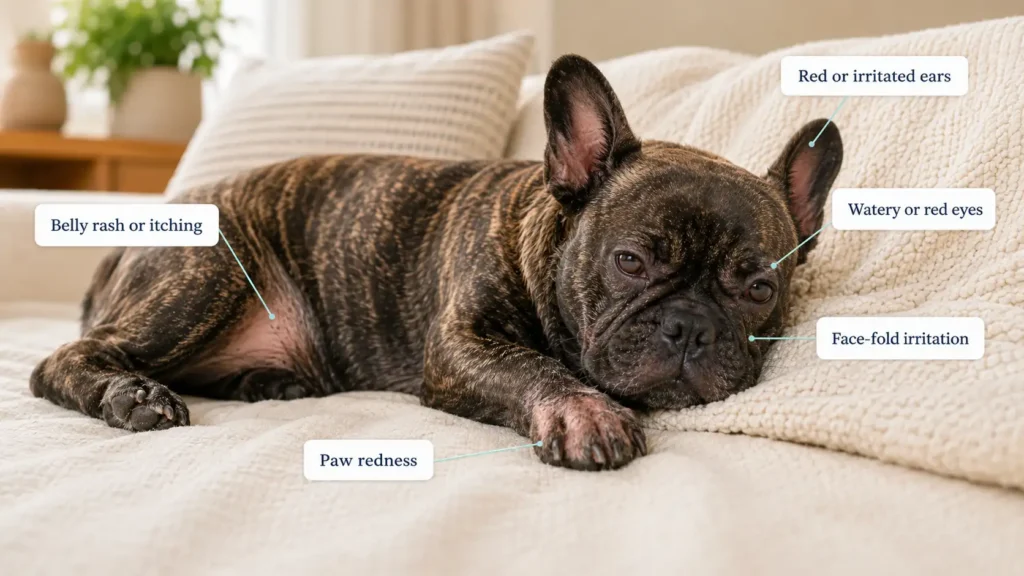
French Bulldog allergies usually show through the skin first. Common signs include paw licking, scratching, red ears, belly rash, face rubbing, watery eyes, hives, skin bumps, hot spots, hair loss, and repeated ear infections.
Some Frenchies may also have gas, vomiting, loose stool, or diarrhea if food is part of the problem. But not every itchy Frenchie has a food allergy, because yeast, bacteria, fleas, mites, ear infections, skin fold irritation, contact reactions, and hot spots can look very similar.
Table of Contents
Quick Glance: 7 French Bulldog Allergy Warning Signs
These signs do not all mean an emergency. Think of them as early warning signs that help you spot where the problem may be coming from: paws, ears, skin, food, infection, or a sudden allergic reaction.
| What Owners Notice | What It May Mean | What to Do First |
|---|---|---|
| Paw licking or red paws | Grass, pollen, yeast, food, or irritation | Wipe and dry paws; check for smell, swelling, or cuts |
| Red ears or head shaking | Ear inflammation, yeast, or bacteria | Check odor, wax, redness, and pain |
| Belly rash or itchy armpits | Grass, cleaners, heat, or contact irritation | Review walks, bedding, shampoo, and detergents |
| Hives or sudden bumps | Allergic reaction, bite, food, medicine, or vaccine | Watch closely; seek help if swelling, vomiting, weakness, or breathing trouble appears |
| Year-round itching with stomach upset | Possible food allergy or sensitivity | Review food, treats, chews, and table scraps |
| Bad smell from paws, ears, folds, or tail pocket | Yeast, bacteria, moisture, or infection | Find the odor source instead of only bathing the coat |
| Swelling, vomiting, or breathing trouble | Severe allergic reaction or urgent complication | Seek urgent veterinary help right away |
Use this table as a starting point, not a diagnosis. If symptoms are painful, smelly, spreading, recurring, or involve swelling, vomiting, weakness, or breathing trouble, contact your vet.
French Bulldog Allergy Symptoms by Body Area
French Bulldog allergy symptoms can appear on the paws, ears, skin, belly, eyes, stomach, or face folds. The same Frenchie may show more than one sign at the same time, especially if scratching or licking has already irritated the skin.
Paws
Paws are often the first place owners notice a problem. Your Frenchie may lick, chew, or bite their paws, especially after walks, during pollen season, or at night when irritation becomes harder to ignore. If paw licking is the main issue, you may also find our guide on why Frenchies lick their paws at night helpful. The paws may look red, wet, swollen, brown-stained, or irritated between the toes.
If the paws smell musty or yeasty, allergy may not be the only issue anymore. Constant licking keeps the skin damp, and that can allow yeast or bacteria to grow. Paw wiping after walks may help mild irritation, but swollen, painful, smelly, or constantly wet paws should be checked.
Ears
Ear problems are another common clue. Allergies can inflame the ear canal, which makes it easier for yeast or bacteria to grow. A Frenchie with allergy-related ear trouble may shake their head, scratch the ears, produce dark wax, or develop a strong ear smell.
If the ear keeps smelling bad after cleaning, do not keep cleaning again and again. Repeated ear infections usually need proper diagnosis and treatment, not just more ear cleaner.
Skin and Belly
Itchy skin can show up on the sides, neck, belly, armpits, face, and around the groin. Some Frenchies scratch, rub against furniture, roll on the carpet, or chew at their skin. If the itching continues, the skin may become red, thickened, scabby, or infected.
A red belly or itchy armpits often points toward contact irritation because those areas touch grass, bedding, carpets, and cleaned floors. If the rash appears after walks, grass or pollen may be involved. If it starts after a new shampoo, detergent, blanket, or floor cleaner, contact irritation is worth considering.
Eyes, Face, and Stomach
Some Frenchies rub their face, get watery eyes, or develop irritation around the folds. Mild watery eyes can happen with pollen, dust, smoke, fragrance, or household irritants. But squinting, thick discharge, cloudy eyes, or obvious eye pain should not be treated as a simple allergy.
Food-related problems may also include gas, vomiting, loose stool, or diarrhea. Stomach signs alone do not prove food allergy, but when they appear with itchy skin, red ears, or paw licking, food should be part of the discussion.
Allergy or Infection? How to Tell the Difference
Allergies often start the itch, but infection can keep it going. If your French Bulldog’s paws, ears, skin folds, or tail pocket smell musty, feel wet, look greasy, or continue worsening after licking, a yeast or bacterial infection may be involved.
Key differences:
| Symptom | Allergies | Secondary Infection |
|---|---|---|
| Smell | Usually no odor | Musty, yeasty, or foul |
| Discharge | Clear watery eyes, mild | Thick, yellow, or green |
| Redness | Even across areas | Patches with scabs or oozing |
| Licking/Scratching | Constant but mild | Persistent, painful, worsening despite care |
Tip: Treating only allergies may not fix infection. Always check with your vet if smell, oozing, or wet patches are present. Infection often requires medicated shampoo, ear drops, or antibiotics.
Common Causes of French Bulldog Allergies
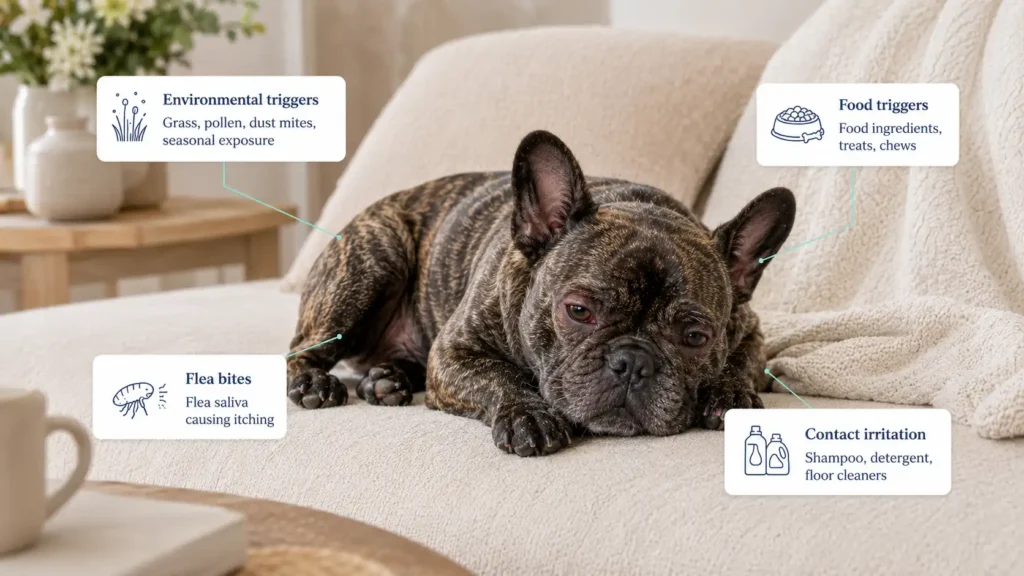
French Bulldog allergies can have several causes. Some are environmental, some are food-related, some come from fleas, and others happen when the skin touches something irritating. Many Frenchies also develop yeast or bacterial infections after the skin has already been damaged by licking or scratching.
Environmental Allergies
Environmental allergies are triggered by things around your dog, such as grass, pollen, weeds, trees, dust mites, mold, smoke, fragrance, or household dust. These allergies may get worse in spring, summer, or fall, but indoor triggers can bother a Frenchie all year.
If your Frenchie gets worse after walks, grass play, windy days, or certain seasons, environmental allergy may be more likely than food.
Food Allergies and Sensitivities
Food allergies can cause itchy skin, paw licking, red ears, recurring ear infections, belly rash, face rubbing, vomiting, gas, or loose stool. Food sensitivities can look similar, but they may affect digestion more than the immune system.
The hard part is that food allergy signs overlap with environmental allergies, yeast, fleas, and skin infections. That is why symptoms alone cannot prove that chicken, grain, or kibble is the cause.
Fleas, Contact Irritation, and Skin Folds
Flea allergy can make a French Bulldog extremely itchy, even if you do not see many fleas. Some dogs react strongly to flea saliva, and only a few bites can trigger intense scratching.
Contact irritation can happen when your dog’s skin touches grass, shampoo, laundry detergent, floor cleaner, lawn chemicals, bedding, or scented wipes. Frenchies are also prone to moisture getting trapped in wrinkles, lip folds, paws, and the tail pocket. Once moisture sits there, yeast and bacteria can join the problem.
This is the part many owners miss: allergies may start the itch, but infection can keep it going. If your Frenchie smells bad, has oozing skin, keeps licking paws, or gets repeated ear infections, the problem may be more than “just allergies.”
French Bulldog Food Allergies, Chicken Allergy, and Best Food
Food allergies are possible in French Bulldogs, but food is not always the reason a Frenchie becomes itchy. Before blaming chicken, grain, or kibble, look at the bigger picture.
Did the itching get worse after walks or grass exposure? Is it seasonal or year-round? Are the ears smelly? Are treats, chews, table scraps, or supplements part of the diet? Do the paws, folds, or tail pocket smell? These questions can save you from switching foods over and over without solving the real problem.
Can French Bulldogs Be Allergic to Chicken?
Yes, some French Bulldogs can be allergic to chicken, but not all Frenchies are. Chicken allergy symptoms may include itchy paws, red ears, stomach upset, skin bumps, and recurring ear problems. These signs may appear after chicken-based kibble, boiled chicken, chicken treats, chicken meal, or foods containing chicken ingredients. For general chicken safety, portions, and serving advice, read our guide on whether French Bulldogs can eat chicken.
But those symptoms do not prove chicken allergy by themselves. The same signs can come from grass, pollen, dust mites, yeast, fleas, mites, beef, dairy, or another ingredient. If you suspect chicken, the best approach is a controlled food trial with vet guidance, not random switching.
What Is the Best Food for a French Bulldog With Skin Allergies?
The best food depends on what is actually causing the skin problem. If the issue is environmental allergy, food alone may not solve it. If food allergy is involved, the right diet can make a big difference.
Vets may recommend a hydrolyzed protein diet, a novel protein diet, or a limited-ingredient diet. A hydrolyzed diet uses proteins broken into smaller pieces. A novel protein diet uses a protein your Frenchie has not eaten before, such as duck, rabbit, venison, or certain fish, depending on your dog’s food history.
The biggest mistake is choosing food only because the label says “hypoallergenic,” “grain-free,” or “sensitive skin.” Grain-free is not automatically better, and one protein does not work for every Frenchie. The best protein is usually one your dog has not eaten before, or a hydrolyzed protein recommended by your vet.
The Food Trial Rule Most Owners Get Wrong
A food trial only works when it is strict. That means one chosen diet, no extra treats, no table scraps, no flavored chews, and enough time to judge results. Many food trials fail because owners change the kibble but forget training treats, dental chews, flavored medicine, peanut butter, supplements, or food from another pet’s bowl.
A simple food trial often looks like this:
| Stage | What to Do | What to Watch |
|---|---|---|
| Week 0 | Choose the trial diet with your vet | Current symptoms, food history, treats, chews |
| Weeks 1–2 | Transition and remove extras | Stool changes, appetite, vomiting |
| Weeks 3–5 | Keep the diet strict | Paws, ears, belly, scratching, stool |
| Weeks 6–8 | Continue even if improvement starts | Itch level, redness, ear flare-ups |
| Challenge phase | Reintroduce old food only with vet guidance | Return of itching, paw licking, ear or stomach signs |
Do not stop early just because the skin looks slightly better. Also do not add “just one treat.” With food allergies, every bite matters.
What to Do: Home Care, Treatment, and Vet Help
The best treatment depends on the cause. A Frenchie reacting to pollen may need different care than a Frenchie with food allergy, fleas, yeast, bacteria, or a painful ear infection. The safest plan is to treat the real problem, not just the visible itch.
What You Can Do at Home
For mild irritation, simple care can help. Wipe your Frenchie’s paws and belly after walks, especially during pollen season or after grass contact. Wash bedding weekly, clean food and water bowls, use fragrance-free detergent, and avoid harsh floor cleaners where your dog lies down.
Also keep folds dry. Face folds, lip folds, paws, armpits, and the tail pocket can trap moisture. If your Frenchie smells bad soon after a bath, the odor may be coming from one of those hidden areas, not the coat. For a deeper odor-focused routine, read our guide on how to keep a French Bulldog from smelling.
Use only dog-safe products. Human shampoo, strong fragrances, essential oils, harsh disinfectants, and random creams can make irritated skin worse.
What Your Vet May Do
A vet may check the skin, ears, paws, coat, folds, and overall pattern. They may ask about food, treats, seasons, flea prevention, shampoos, cleaners, and how long the symptoms have been happening.
They may need to rule out fleas, mites, yeast, bacteria, ear infection, or skin fold problems. If food allergy is suspected, they may recommend a strict elimination diet. If environmental allergy is suspected, they may discuss long-term allergy management, medication, or allergy testing.
Some French Bulldogs need allergy medicine, especially when itching is severe, recurring, or affecting sleep. Depending on the cause, your vet may recommend itch-control medicine, ear drops, medicated shampoo, antibiotics, antifungal treatment, allergy testing, or immunotherapy.
Many owners ask about Benadryl for French Bulldog allergies. Ask your vet before giving it. The right choice depends on your dog’s weight, health, symptoms, and the exact product.
When French Bulldog Allergies Are an Emergency
Hives are raised bumps or welts that may appear suddenly on the skin. They can happen after insect bites, food reactions, vaccines, medications, shampoo, or unknown triggers. Hives are more concerning when they come with facial swelling, swollen eyes, vomiting, weakness, breathing trouble, or rapid worsening.
Seek urgent veterinary help if your Frenchie has sudden facial swelling, swollen eyes, breathing difficulty, repeated vomiting, collapse, weakness, widespread hives, or extreme distress.
Also call your vet quickly if your dog has open sores, severe pain, rapidly spreading redness, or a wet, raw, infected-looking hot spot.
French Bulldogs are flat-faced dogs, so breathing trouble should always be taken seriously.
When to Book a Vet Visit
See a vet if your Frenchie has daily scratching, repeated ear infections, strong odor, oozing skin, hair loss, painful paws, swollen eyes, vomiting, diarrhea, or symptoms that keep coming back.
Before the appointment, write down when symptoms started, whether they are seasonal or year-round, what your Frenchie eats, which treats and chews they get, and whether anything changed recently. Photos of the rash, paws, ears, hives, or belly can also help your vet understand the pattern.
Final Thoughts
French Bulldog allergies can be frustrating because the signs overlap. Paw licking, itchy skin, red ears, belly rash, hives, watery eyes, hot spots, stomach upset, and bad smell can come from food, pollen, grass, fleas, yeast, bacteria, contact irritation, or skin folds.
The best approach is to stop guessing and start reading the pattern. Look at where the symptom appears, when it gets worse, what your Frenchie eats, whether there is smell or infection, and whether the reaction is urgent. With simple tracking, careful home care, and vet help when needed, many French Bulldogs with allergies can get real relief.

FAQs About French Bulldog Allergies
Here are quick answers to the most common questions owners ask about French Bulldog allergies, food reactions, itchy skin, hives, and when to call a vet.
Editorial Note
This article is for general educational purposes and is not a substitute for veterinary diagnosis or treatment. French Bulldog allergies can look similar to yeast infections, bacterial infections, parasites, ear infections, and other skin problems. If your Frenchie has severe symptoms, repeated flare-ups, swelling, breathing trouble, open sores, or strong odor, contact your veterinarian. You can also read more about our content process on our Research & Verification Index.
Sources Consulted
PetMD
VCA Hospitals: Allergies in Dogs
MSD Veterinary Manual
Merck Veterinary Manual
Cornell Richard P. Riney Canine Health Center: Atopic Dermatitis
VCA Hospitals: Implementing an Elimination-Challenge Diet Trial in Dogs
Pingback: Can Frenchies Eat Cashews? Nuts, Risks & Safe Portions