
To keep a French Bulldog from smelling, focus on removing odor at the source instead of masking it. Clean wrinkles, lip folds, ears, paws, and the tail pocket regularly, and make sure food, water bowls, and bedding are washed often.
If your Frenchie still smells after a bath, the issue is usually hidden like the tail pocket, anal glands, lip folds, or dirty bedding. Identify the source first, then apply the correct fix instead of over-bathing.
Let’s be completely honest for a second. We all love our Frenchies. They are charming, hilarious, and undeniably the kings and queens of the couch. But every once in a while, your little bat-eared companion hops up next to you, and you’re hit with a wave of odor that makes you question how something so small can produce a smell so massive.
If you’re currently wondering why does my French Bulldog smell so distinct, you’re definitely not alone. It’s a question almost every Frenchie parent asks at some point. The reality is that French Bulldogs are practically built to trap odors. Their adorable flat faces, deep wrinkles, compact bodies, and skin folds create the perfect environment for moisture, bacteria, yeast, and trapped debris.
The good news is that you don’t have to simply accept a smelly dog or a smelly house. Once you learn how to keep a French Bulldog from smelling by identifying where the odor is coming from, keeping your companion fresh becomes much easier.
Instead of masking the smell with perfumes or air fresheners, use these 16 practical, Frenchie-specific fixes to target the source of the odor and keep your pup smelling their best.
Table of Contents
Quick Smell Diagnosis Guide
Before trying every solution on this list, take a moment to identify where the smell is strongest.
Finding the source first can save you a lot of time and frustration.
Why Do French Bulldogs Smell More Than Some Other Dogs?
French Bulldogs are not naturally dirty dogs, but they do have several physical traits that make odor more likely than in some other breeds. Their facial wrinkles trap moisture, their compact bodies create warm skin folds, and their flat-faced structure can contribute to messy eating, drinking, and increased gas.
This is why many owners eventually find themselves asking, “Why does my French Bulldog smell?” or “Do French Bulldogs smell bad?” In most cases, the smell isn’t coming from the dog itself. It’s coming from a specific area such as the wrinkles, ears, paws, tail pocket, mouth, or bedding.
The good news is that most French Bulldog odors have a clear source. Once you identify where the smell is coming from, fixing it is usually much easier than owners expect.
Facial, Dental, and Upper Body Fixes
Most French Bulldog odors come from the face, mouth, and upper body. These areas trap moisture, saliva, and bacteria throughout the day. Cleaning them properly is usually the quickest way to reduce bad smell.
Fix 1: The Daily “Swipe and Dry” Wrinkle Routine
Your Frenchie’s signature facial wrinkle is one of the most common sources of odor. Food particles, saliva, dirt, and moisture easily collect inside the fold above the nose. Because the area stays warm and dark, yeast and bacteria thrive there.
Gently separate the wrinkle once a day and wipe it with a soft damp cloth or pet-safe wipe. Most importantly, dry the fold completely afterward. Even a small amount of leftover moisture can encourage odor-causing yeast growth.
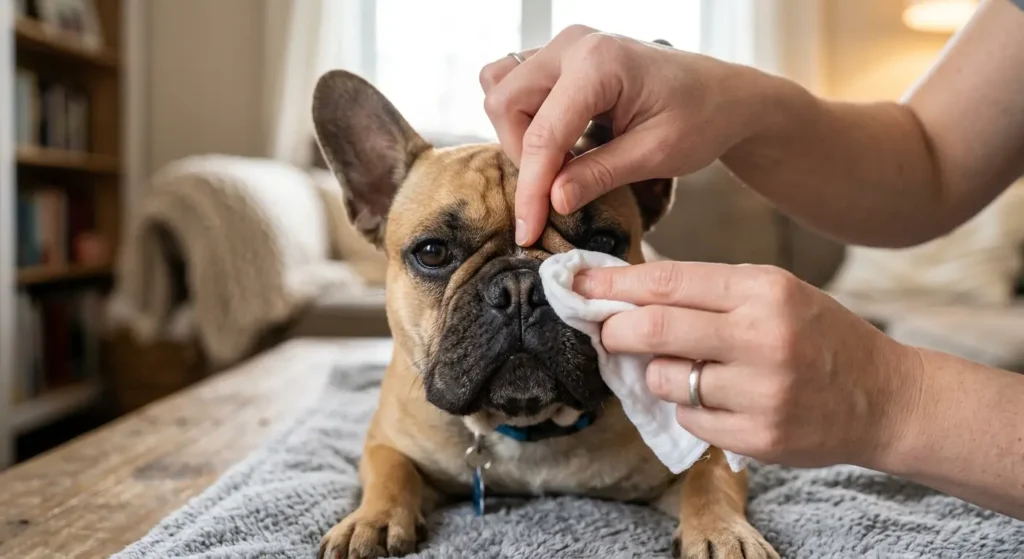
Keeping these folds clean and dry is the first major step in learning how to keep a french bulldog from smelling on a daily basis.”
Fix 2: Deep-Clean the “Bat Ear” Base
Because their ears stand straight up, they catch a lot of airborne dust, pollen, and debris surprisingly quickly.
If your French Bulldog’s ears smell sweet, musty, or unusually strong, wax or yeast buildup may be the cause. Persistent odor can sometimes indicate an ear infection, which is one of the most common ear problems seen in dogs.
Use a veterinarian-approved ear cleaner every couple of weeks. Squirt the cleaner into the ear, gently massage the base of the ear until you hear a squishing sound, allow your dog to shake, and then wipe away debris from the outer ear with a cotton pad.
Fix 3: Eradicate Fishy Breath with Better Dental Care
If the odor isn’t coming from their body, take a close look at their mouth.
Dental hygiene is highly overlooked in small breeds, and their tight jaw structures mean teeth are crowded together, trapping food particles and plaque easily. Over time, this buildup can contribute to periodontal disease, one of the most common health issues affecting adult dogs.
If your french bulldog breath smells like fish, it is usually a sign of plaque buildup or trapped debris under the gumline. Regular dental chews, dog-safe enzyme toothpaste, and annual veterinary dental cleanings are non-negotiable for keeping their breath fresh.
Fix 4: Upgrade Your Food and Water Bowls
Plastic bowls develop tiny scratches over time. These scratches trap bacteria that transfer directly onto your dog’s mouth and chin during meals.
Switch to stainless steel or ceramic food and water bowls and wash them daily with hot water. This simple change often reduces lingering facial odors.
Fix 5: Clean the Hidden Lip Folds
Most owners focus on nose wrinkles but completely overlook the lip folds around the mouth.
Food particles, saliva, and moisture often become trapped inside these folds, creating a sour or yeasty smell that can persist even when the rest of the face is clean.
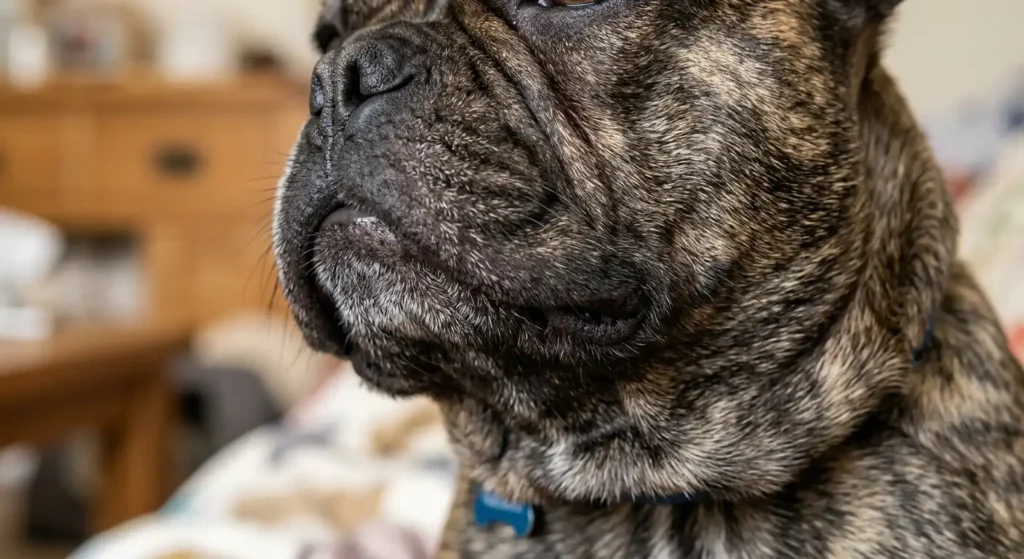
Once or twice a week, gently lift your Frenchie’s lips and inspect the folds around the mouth. Remove any buildup with a soft damp cloth and dry the area thoroughly.
If your Frenchie smells clean everywhere else but still has a noticeable facial odor, hidden lip folds are often the culprit.
Fix 6: Dry the Chin After Meals and Water Breaks
French Bulldogs are notoriously messy drinkers. Water frequently collects under the chin and around the lower mouth folds. Over time, constant dampness can create sour-smelling skin irritation.
After meals and drinking sessions, quickly wipe and dry the chin area. This takes only a few seconds but can significantly reduce odor.
Diet and Gas-Control Fixes
A lot of French Bulldog smell problems don’t actually come from the skin, they come from the stomach. If your Frenchie has strong gas, bad breath, or frequent fart smell, the issue is often linked to digestion and food quality.
Fix 7: Switch to an Elevated Slow-Feeder Bowl
French Bulldogs tend to swallow a large amount of air while eating because of their flat-faced structure. The more air they swallow, the more gas they often produce later.
A slow-feeder bowl encourages smaller bites, while an elevated feeding position may help reduce excessive air intake during meals.
Fix 8: Eliminate Low-Quality Fillers from the Diet
Poor-quality ingredients can contribute to digestive upset and excessive gas.
If your Frenchie frequently produces strong-smelling flatulence, review the ingredient list of their food. Some dogs do better on diets with simpler ingredient profiles and clearly identified protein sources.
When making dietary changes, transition gradually and consult your veterinarian if digestive issues persist.
Fix 9: Slow Down Fast Eaters to Reduce Gas
Some French Bulldogs inhale their food in seconds. Fast eating increases the amount of swallowed air and can contribute to bloating, burping, and foul-smelling gas.
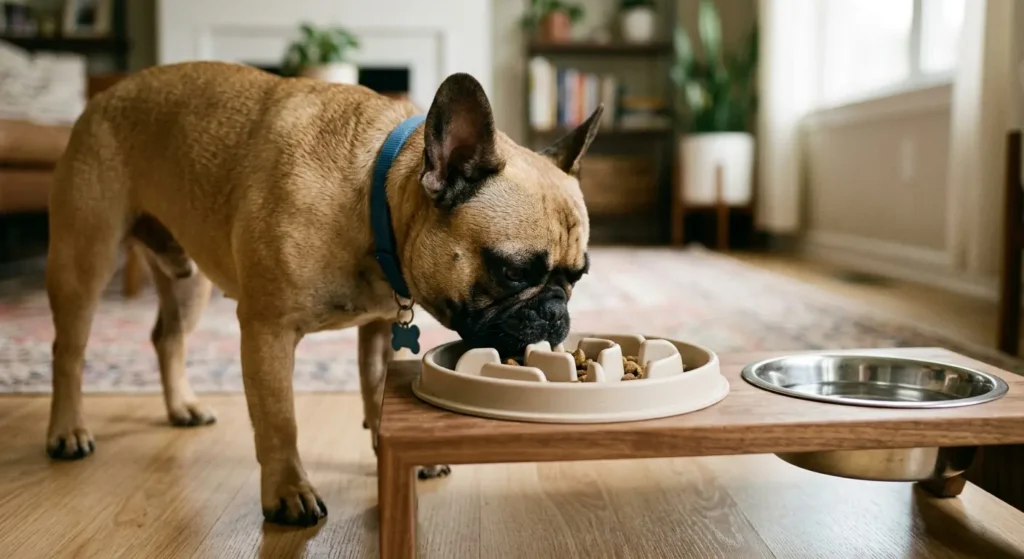
If your frenchie finishes meals extremely quickly, use puzzle feeders, slow-feeder bowls, or divide meals into smaller portions throughout the day. Many owners notice a reduction in gas simply by slowing down mealtime.
Fix 10: Introduce a Veterinarian-Approved Probiotic
A healthy gut microbiome supports digestion and may help reduce digestive odors. Research continues to show that gut bacteria play an important role in digestive health, stool quality, and nutrient absorption in dogs.
Some French Bulldogs benefit from veterinarian-approved probiotics designed specifically for dogs.
If your french bulldog struggles with frequent digestive upset, discuss probiotic options with your veterinarian.
Lower Body and Hindquarters Fixes
The lower body is one of the most overlooked areas in French Bulldogs. Because they are short, compact, and low to the ground, dirt and moisture can easily get trapped near the tail, rear, and skin folds without owners noticing.
Fix 11: Uncover the Inverted Tail Pocket
This is one of the most commonly missed odor sources in the breed. Many French Bulldogs have a screw tail or tightly tucked tail that creates a hidden skin pocket underneath.
Dirt, moisture, and fecal residue can become trapped in this area, creating an incredibly strong odor. Gently lift the tail and inspect the pocket regularly. Clean the area carefully and dry it thoroughly afterward.
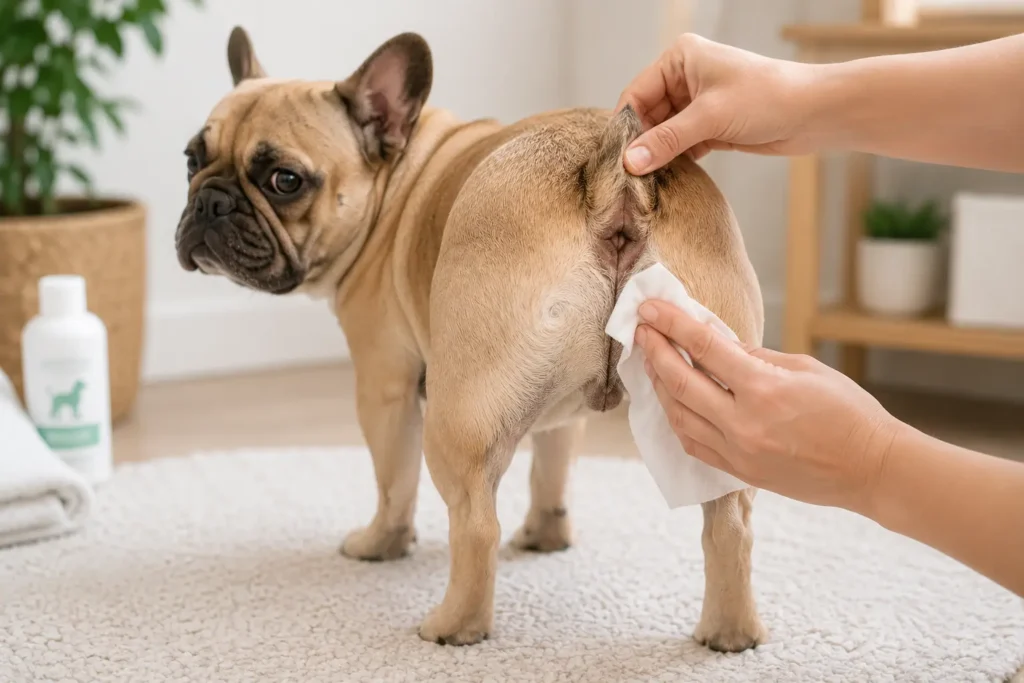
Many French Bulldog owners spend months changing shampoos, wipes, and diets before realizing the smell is actually coming from an unnoticed tail pocket.
Fix 12: Address Fishy Anal Gland Odor
If your French Bulldog suddenly smells strongly of fish, the anal glands are often responsible. These small glands normally empty during bowel movements. When they don’t empty properly, they may leak or become impacted.
Signs may include:
- Fishy odor
- Scooting
- Excessive licking of the rear end
If you suspect anal gland issues, contact your veterinarian or groomer for guidance.
Fix 13: Use a Quick Post-Potty Hygiene Wipe
French Bulldogs are compact and low to the ground. Small amounts of urine or fecal residue can remain on the rear area after bathroom breaks.
Keeping unscented pet wipes near the door makes it easy to perform a quick cleanup and prevent odors from spreading onto furniture and bedding. This habit can be especially helpful for dogs recovering from mobility issues or back problems, including Frenchies affected by IVDD.
Coat, Paws, and Home Environment Fixes
Sometimes your French Bulldog is clean, but your home isn’t. Beds, toys, harnesses, and carpets can hold onto odor and keep transferring it back onto your dog even after cleaning.
Fix 14: Treat the “Fritos” Paw Smell
If your French Bulldog smells like corn chips or Fritos, don’t panic. The smell often comes from natural bacteria and yeast that live on the paws.
After walks, especially in wet conditions, wipe the paws and dry between the toes. This helps control odor and reduces moisture buildup. If your Frenchie constantly licks their paws in addition to having a strong corn-chip smell, allergies or irritation may also be contributing factors.
Learn more about why French Bulldogs lick their paws and when it may indicate an underlying problem.
Fix 15: Follow a Smart Bathing Schedule
Bathing too frequently can strip the natural oils from your dog’s skin. When that happens, the skin may compensate by producing even more oil, which can actually worsen odor over time.
For most French Bulldogs, bathing every four to six weeks with a gentle dog shampoo works well unless your veterinarian recommends otherwise.
If your Frenchie gets dirty or muddy between scheduled bath weeks, skip the full shampoo bath. Use a damp washcloth or a dedicated dog-safe grooming wipe to spot-clean dirty areas instead.
Fix 16: Wash Harnesses, Bedding, Blankets, and Toys Regularly
Sometimes the smell isn’t coming from your Frenchie at all.
Harnesses, blankets, crate mats, and plush toys absorb body oils, saliva, dirt, and environmental odors every day. A freshly bathed dog can quickly pick up old smells again by rubbing against these unwashed items.
To prevent this, wash your dog’s bedding weekly, clean harnesses regularly, and replace toys that remain smelly even after a thorough washing. This is one of the most overlooked ways to keep both your Frenchie and your home smelling fresh.
When a Bad Smell Means It’s Time to Call the Vet
Not every smell is normal. Some odors can be a sign of infection, allergies, or digestive issues. Knowing when to stop home care and contact a vet is just as important as daily cleaning.
- A strong, pungent odor appears suddenly
- Skin folds become visibly red, swollen, or painful
- There is distinct fluid or discharge leaking from the ears
- Your Frenchie is excessively scratching, biting, or licking
- The smell remains exactly the same immediately after a bath
Final Thoughts
French Bulldogs are not naturally dirty dogs, but they do have several unique features that make them more prone to developing odors than many other breeds.
The key is identifying the source rather than simply covering up the smell.
For most Frenchies, consistent wrinkle care, ear cleaning, dental hygiene, tail pocket inspections, proper diet, and regular cleaning of bedding and accessories are enough to keep odors under control.
A few minutes of preventative care each week can make a noticeable difference, not only in how your French Bulldog smells, but also in their overall comfort and long-term health. Proper hygiene is one of the many small habits that can support a healthier life throughout a Frenchie’s lifespan.
Frequently Asked Questions
Still trying to pinpoint the exact cause of your pup’s odor? Below are quick answers to the most common questions Frenchie owners face.
Why do French Bulldogs smell so bad?
French Bulldogs have deep skin folds, compact bodies, and sensitive digestion. These features trap moisture, bacteria, and yeast, which can create odor if not cleaned regularly.
Do French Bulldogs smell naturally?
Yes, French Bulldogs can have a mild natural dog scent, but a strong or unpleasant smell usually comes from hygiene issues, diet, or skin folds rather than the breed itself.
Why does my French Bulldog smell like fish?
A fishy smell is often linked to anal glands. When these glands don’t empty properly, they can release a strong odor around the rear end.
Why does my French Bulldog smell like corn chips or Fritos?
This usually comes from bacteria and yeast on the paws. It becomes more noticeable after walks, especially in damp or warm weather.
Why does my French Bulldog breath smell bad?
Bad breath is commonly caused by plaque buildup, food trapped between teeth, or early dental disease. Regular brushing and dental care help reduce this.
How can I make my French Bulldog smell better?
Regular cleaning of wrinkles, ears, paws, and bedding, along with a proper diet and dental care routine, can significantly reduce odor.
Why do French Bulldogs fart smell so bad?
French Bulldogs tend to swallow air while eating and may have sensitive digestion. This combination can lead to strong-smelling gas if their diet is not well balanced.
What is the best smelling shampoo for French Bulldogs?
Look for gentle, unscented or oatmeal-based shampoos designed for sensitive skin. Strong fragrances often irritate their skin and can make odor problems worse over time.
Why does my French Bulldog still smell after a bath?
If your dog still smells after bathing, the odor is usually coming from skin folds, ears, tail pocket, bedding, or dental issues rather than the coat itself.
Do French Bulldogs smell bad compared to other dogs?
Not naturally. They are more prone to odor due to their facial structure and skin folds, but with proper care, they can smell just as clean as any other breed.
Veterinary Disclaimer: The information on The Breed Expert is for general educational purposes only and does not represent a definitive diagnosis. It is not a substitute for professional veterinary advice. Please double-check the physical label of any grooming wipes or hygiene products to verify safe usage. Always consult your veterinarian if your French Bulldog displays signs of chronic skin infections, severe irritation, raw folds, intense pain, or if strong odors persist despite proper cleaning.
I’m always surprised by how easily Frenchies can get smelly. Do these fixes actually work long-term?
Yes, they do work long-term as long as you keep up with the routine. Frenchie odor usually comes back when the hidden spots like wrinkles, ears, paws, or tail pocket are missed.