
Learning how to potty train a French Bulldog starts with a predictable routine: frequent potty breaks, quick rewards, one consistent potty spot, and proper cleanup after accidents. Frenchies are smart, but many need repetition, patience, and clear timing before the routine becomes reliable.

French Bulldogs are among the most charming and loyal companions on the planet. Their compact size and low-maintenance lifestyle make them ideal for apartment living. However, as any Frenchie parent will tell you, there is one significant hurdle: the stubborn potty training phase.
At The Breed Expert, we review veterinary guidance, trusted breed resources, and real owner questions to make Frenchie care easier to understand. One thing is clear: while Frenchies are intelligent and naturally clean, their independent streak requires a specialized approach, they often need clear rewards, short sessions, and a routine that makes sense to them. If potty training has started to feel frustrating, this guide will help you build a cleaner routine without punishment or confusion.
Table of Contents
Are French Bulldogs Hard to Potty Train?
French Bulldogs are not impossible to potty train, but they can feel harder than some breeds because they are independent, easily distracted, and very routine-driven. A Frenchie may understand what you want, but still need clear timing, quick rewards, and the same potty routine repeated every day.
Most potty training problems happen when the schedule is inconsistent, accidents are not cleaned properly, or the puppy is expected to hold it for too long. Once the routine becomes predictable, many Frenchies start improving quickly.
So yes, French Bulldogs can be hard to potty train in the beginning, but they usually respond well to patience, short outdoor trips, positive reinforcement, and a setup that makes success easy.
Why French Bulldogs Can Be Tricky to Potty Train
Before fixing accidents, it helps to understand why Frenchies can be different from some other breeds. Their body shape, heat sensitivity, and independent personality all affect how potty training should be handled.
The Brachycephalic Factor: Heat Safety
According to the Royal Veterinary College , flat-faced breeds such as French Bulldogs are at higher risk of heat stroke, so potty training should never mean standing outside in heat for too long. In warm weather, keep outdoor potty trips short, choose shaded areas, and bring your Frenchie back inside if they are panting heavily, slowing down, or struggling to settle.
The “What’s in it for me?” Mindset
According to data from the American Kennel Club (AKC), Frenchies are highly intelligent but not always “eager to please” like a Labrador. They require positive reinforcement. If the training isn’t rewarding, they will simply choose not to participate.
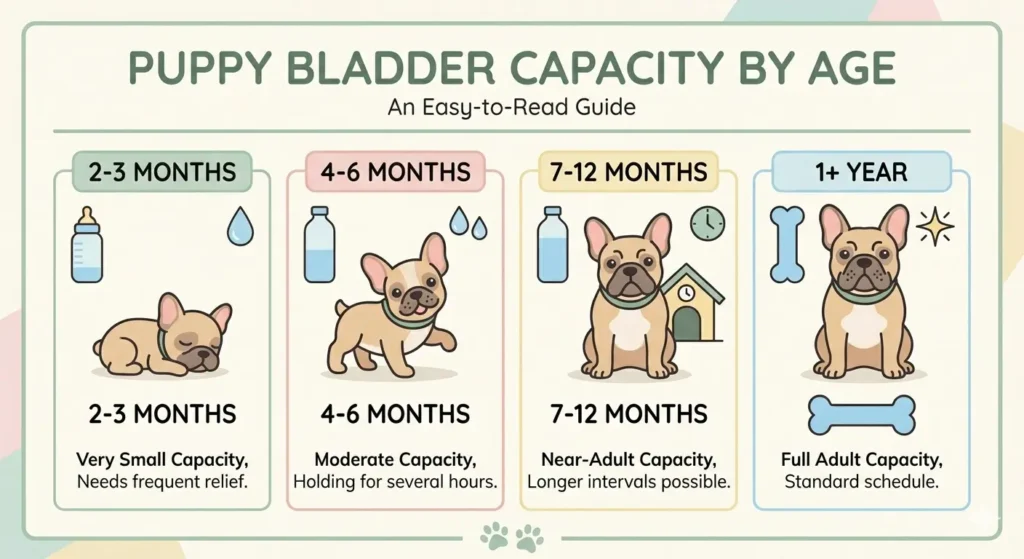
Understanding bladder capacity
One of the biggest mistakes owners make is expecting a 10-week-old puppy to hold it for 5 hours. Younger Frenchies need more frequent potty breaks, especially after waking up, eating, drinking, playing, or leaving the crate.
If your puppy sleeps in a crate at night, pair potty training with a simple crate routine so the first morning trip happens immediately after they come out. You can follow our French Bulldog crate training guide for a calmer crate schedule that supports potty training instead of causing accidents.
How Long Does It Take to Potty Train a French Bulldog?
Most French Bulldogs take several weeks to a few months to become reliably potty trained. Some puppies may start understanding the routine within 2-4 weeks, but being fully reliable inside the home usually takes longer.
A realistic timeline looks like this:
- First 1-2 weeks: fewer random accidents if the schedule is consistent.
- Weeks 3-6: the puppy starts understanding the potty spot, command, and reward routine.
- 2-4 months: accidents should become much less common if cleanup, timing, and supervision are done well.
- Longer than 4 months: still possible, especially with inconsistent routines, previous bad habits, medical issues, or a puppy that has had too much freedom indoors.
The better question is not only “how long will it take?” but “are accidents reducing?” If the number of indoor accidents is going down each week, training is working. If accidents are staying the same after several weeks, something in the routine needs fixing, usually timing, supervision, cleanup, or crate/playpen setup.
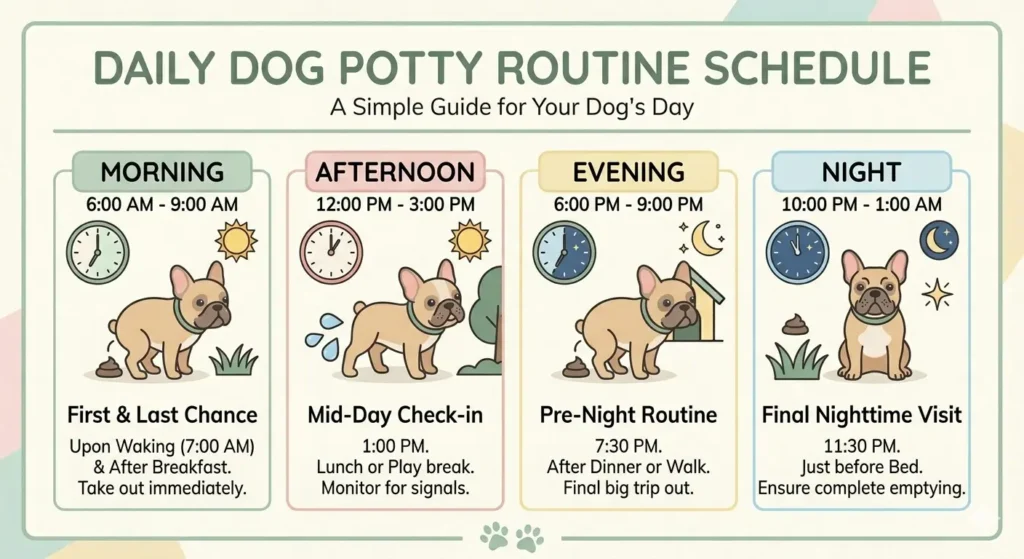
The “Breed Expert” daily potty schedule
Consistency is the antidote to stubbornness. By analyzing feedback from successful Frenchie owners via frenchie community groups, A predictable routine helps a Frenchie understand when potty breaks happen, where to go, and what behavior gets rewarded.
How to Train a French Bulldog to Go Potty Outside
The easiest way to train a French Bulldog to go potty outside is to make the outdoor routine feel familiar. Use the same door, walk to the same potty spot, and keep the first few minutes boring so the little Frenchie understands this trip has one job.
Take them outside after the main trigger moments: waking up, meals, drinking, playtime, and crate time. Once they start going, use a short cue like “go potty,” then reward right after they finish.
Try not to turn every potty trip into playtime too quickly. If outside becomes exciting before they potty, they may get distracted and forget why they came out. Keep it simple: outside, potty, reward, then play or go back in.
Essential tools for housebreaking success
The necessity of enzymatic cleaners
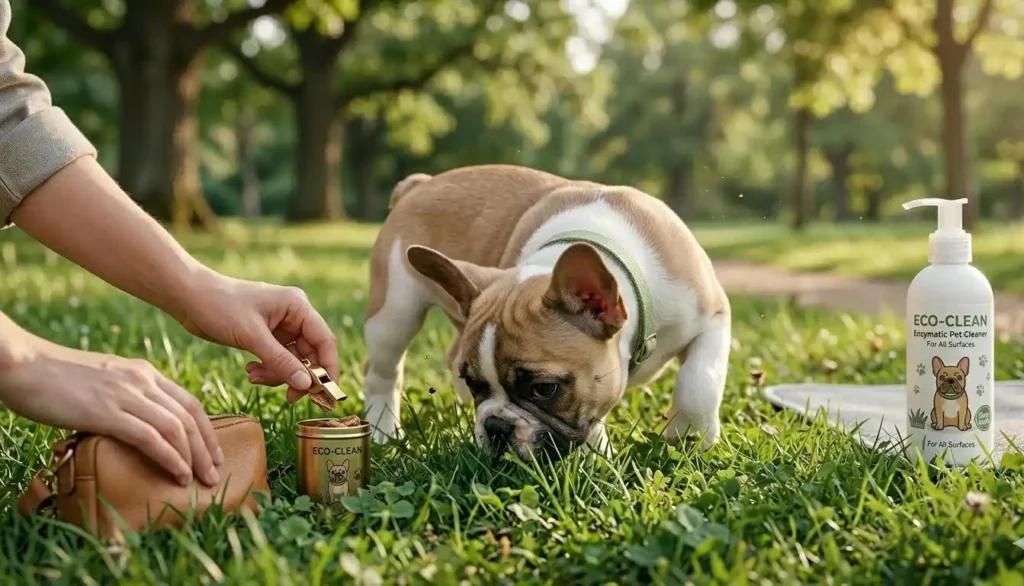
Most people reach for bleach or ammonia-based cleaners after a potty accident. The problem is that urine has an ammonia-like odor, so harsh or ammonia-based products may leave behind a scent that pulls the puppy back to the same spot. A better option is using enzymatic cleaners , because they help break down odor-causing urine residue instead of only covering the smell.
Puppy pee pads: disposable vs. washable
Washable pads (recommended)
Harder for Frenchies to shred, they love to chew! Also better for the environment long-term.
Placement strategy
Keep pads in a consistent “emergency” spot so your Frenchie always knows where to go indoors.
Step-by-step training protocol
Step-by-step training protocol
Choose a “scent post”
Dogs are driven by smell. Choose one specific patch of grass. The pheromones left behind from previous visits will act as a biological trigger for your Frenchie to relieve themselves.
The “Go Potty” command
Timing is everything. Say your chosen command exactly when they start their business. Follow this with high-value praise within 3 seconds of finishing.
Decode the “Frenchie tell”
Learn the warning signs before accidents happen, see the three most common signals illustrated below.
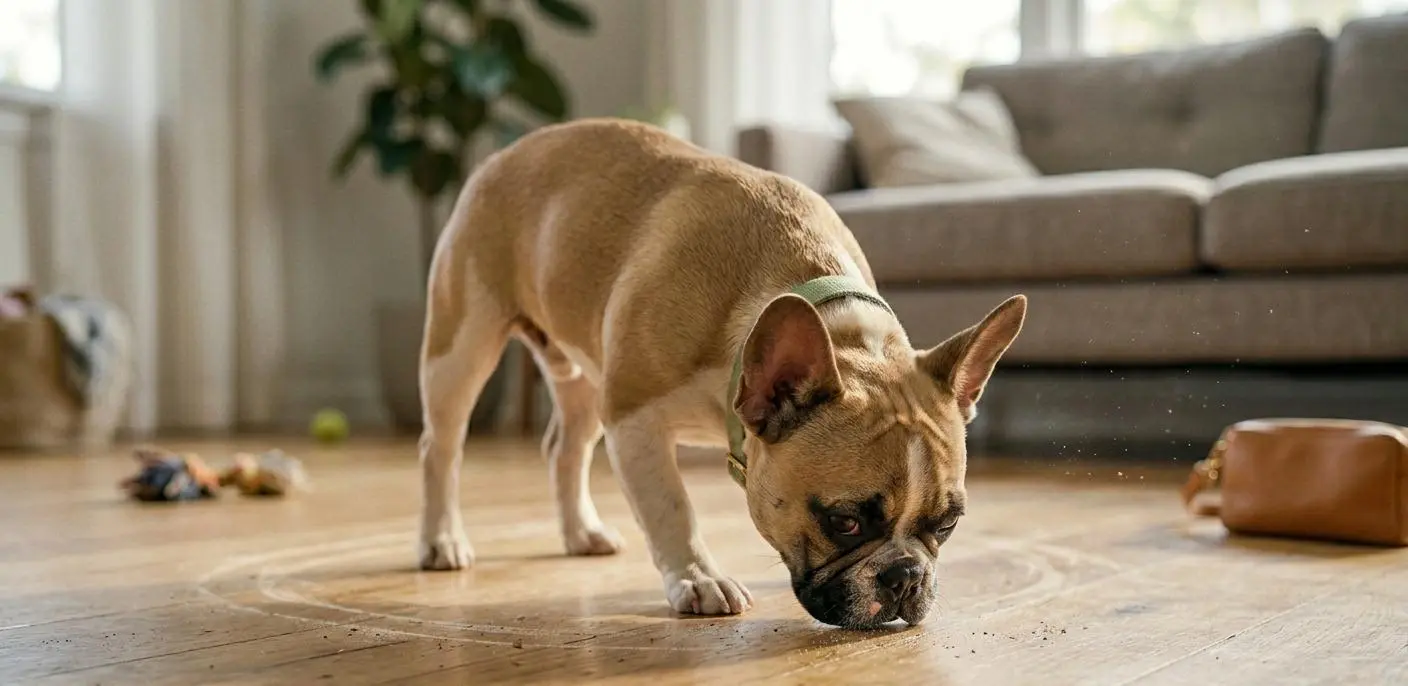
Intense sniffing
Lowering the head and ignoring toys — heading somewhere specific.
The circle dance
Walking in tight circles — a very reliable pre-potty signal.
Sudden disappearance
Leaving the room means they’re looking for a private corner.
Why punishment is counterproductive
Meal prep: the secret to predictable bowels
Avoid fillers
Diets high in corn and soy lead to loose, unpredictable stools.
Hydration control
Avoid heavy drinking right before bed, but never limit water if your Frenchie is hot, unwell, or very active.
Scheduled feeding
Free-feeding is nearly impossible. Use fixed times only.
Potty training a French Bulldog is a test of your consistency, not just the dog’s intelligence. By utilizing a strict schedule, enzymatic cleaners, and positive reinforcement, you can bridge the gap between their stubborn nature and your desire for a clean home.
Stay consistent, stay calm, and remember: every successful “potty” outside is a win for the long-term bond with your Frenchie.
Commonly Asked Questions

Written by Zain
Lead Researcher @ The Breed Expert
Zain researches French Bulldog care using trusted veterinary resources, breed references, and real owner concerns. His goal is to turn reliable information into clear, practical guidance for everyday Frenchie parents.
Medical Disclaimer: The information provided in this guide is for educational and informational purposes only. While we strive to provide science-backed research, The Breed Expert is not a substitute for professional veterinary advice. Always consult with a licensed veterinarian if you suspect your dog has a medical issue, such as a UTI or heat-related distress.
This helped me understand potty training much better, thanks.
Pingback: French Bulldog Crate Training: Easy 7-Day Puppy Schedule