
There is something incredibly sweet about finding out your French Bulldog might be pregnant.

Suddenly, your little couch potato is not just your baby anymore, she may be carrying tiny Frenchie puppies. If you are anything like most Frenchie parents, that initial surge of excitement comes with a sharp side of panic.
You find yourself staring at her bowl, overthinking every single detail:
- Is she eating enough?
- Should I switch her food today?
- Can she eat puppy food yet?
- Does she need extra calcium?
- Am I doing this right?
Take a deep breath. A pregnant Frenchie does not need a complicated, mad-scientist diet from day one. What she needs most is consistent stability, precise weight management, and a data-backed nutritional plan tailored specifically to her unique, compact anatomy.
The Brachycephalic Reality Check
French Bulldogs are significantly more likely to experience dystocia (difficult births) and require planned surgical interventions than crossbred dogs.
French Bulldogs are a beautifully specialized breed, meaning their pregnancies carry much higher physiological stakes than a crossbred dog. They are brachycephalic (flat-faced) with naturally narrow hips and wide-set skeletal frames. Data tracked by the Royal Veterinary College (RVC) confirms this reality. This is not a reason to panic. It is a reason to treat her nutrition as a precise, week-by-week blueprint rather than a guessing game.
Quick Answer: What Should a Pregnant French Bulldog Eat?
A pregnant French Bulldog should eat a complete, balanced, and highly digestible dog food that supports pregnancy and nursing.
Golden Rule: Do not add raw meats, homemade toppers, calcium pills, or pregnancy supplements unless your veterinarian specifically approves them.
French Bulldog Pregnancy Diet at a Glance
Here is the simple pregnancy diet roadmap before we go week by week. Think of this table as the quick overview, while the detailed feeding guide below explains what to do at each stage.
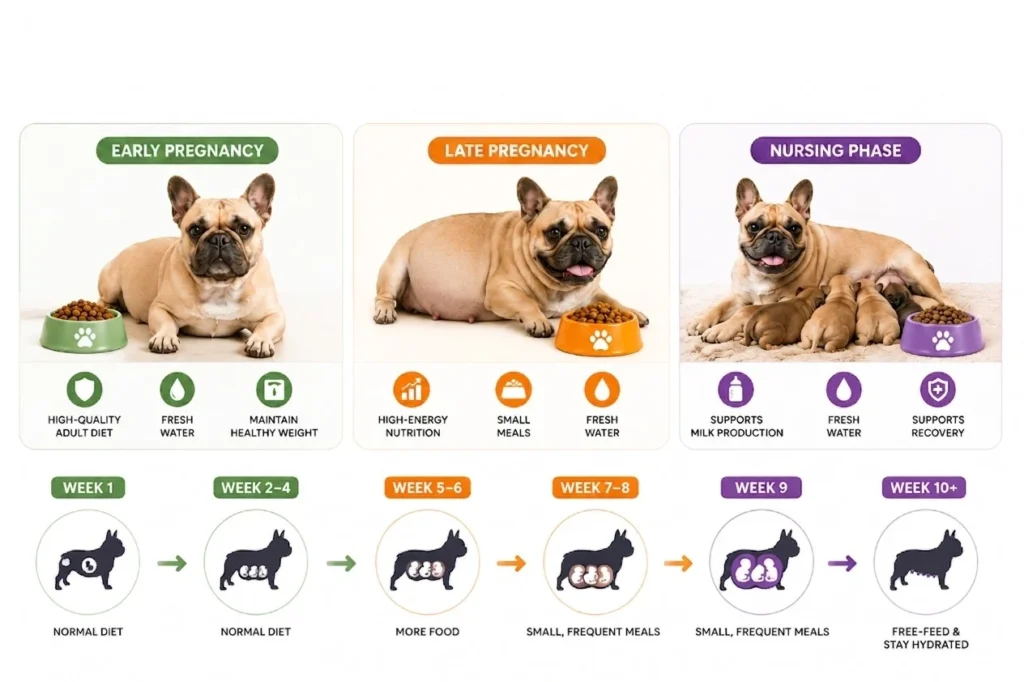
| Pregnancy Stage | What to Feed | Feeding Goal | Breed-Specific Focus |
|---|---|---|---|
| Pre-Breeding | Complete balanced adult food | Optimal Body Condition Score | Avoid any pre-pregnancy obesity. |
| Weeks 1-4 | Normal adult diet | Prevent early weight gain | Embryos grow slowly; extra fat makes surgery risky. |
| Weeks 4-6 | 7-day gradual puppy food transition | Support rapid fetal structural growth | Protect her sensitive stomach from sudden changes. |
| Weeks 6-9 | 3-5 micro-meals of puppy/growth food | High caloric delivery without stomach compression | Prevents brachycephalic gas and acid reflux. |
| Nursing Phase | Free-feeding premium puppy formula | High milk production and tissue recovery | Watch for signs of heavy panting or eclampsia. |
Note: The average canine gestation window lasts roughly 57 to 65 days (typically around 63 days), meaning these nutritional shifts happen rapidly according to clinical data from VCA Animal Hospitals.
Table of Contents
Why a Pregnant Frenchie’s Kitchen Needs Extra Care
A French Bulldog pregnancy is never a simple case of “just feed the mother more food.” Because of their compact, muscular geometry, their internal organs face a massive spatial crisis as the litter expands.
During the final trimester, the puppies occupy a huge percentage of her abdominal cavity. This creates a severe “Space Crunch” inside her body. Her stomach is physically compressed against her diaphragm.
If you feed her standard, high-volume adult meals during this phase, her compressed stomach will trigger severe acid reflux, vomiting, and intense intestinal gas. Furthermore, because Frenchies already struggle with thermoregulation (overheating easily due to their short airways), the metabolic heat generated from trying to digest large, heavy meals puts an immense strain on her cardiovascular system.
The “Frenchie Grandma/Grandpa” Feeding Rule
The absolute easiest way to manage your anxiety and her bowl is to segment her pregnancy into three mental phases:
Stability
No sudden changes, no treat buffets.
Concentrated Support
High calories, micro-portions.
Intense Recovery
Uncapped caloric access.
Do not rush out to buy raw steaks and expensive vitamins the second you think she has been successfully bred. In early gestation, embryos grow at a microscopic pace, and the Royal Kennel Club notes that her energy requirements do not rise at all during the first month. Your job right now is to keep her lean, calm, hydrated, and precisely monitored.
Week-by-Week French Bulldog Pregnancy Feeding Guide
Use this week-by-week feeding guide as a simple roadmap, not a strict rulebook. Every pregnant Frenchie is different, so her exact portions should depend on her body condition, appetite, litter size, current food, and your veterinarian’s advice.
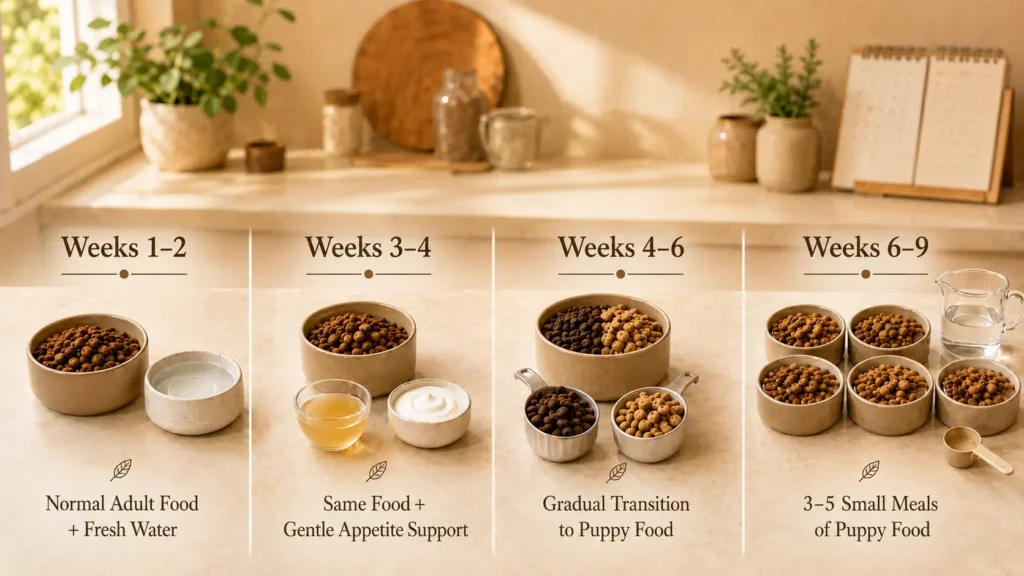
In the first two weeks, your Frenchie may look and act completely normal. She may still have her usual energy, appetite, and daily routine.
Around day 21 to 28, the developing embryos implant into the uterine wall. This hormonal shift can cause subtle changes. She may become more affectionate, slightly tired, or suddenly picky about her food.
It can be normal for a pregnant Frenchie to skip a meal or seem mildly nauseous around week 4. Do not force rich toppers like bacon grease, cheese, or heavy treats into her bowl. If she refuses food for more than 24 hours, vomits repeatedly, or seems weak, contact your veterinarian immediately.
Once your vet confirms the pregnancy, often through ultrasound around day 25–30 or palpation, it is time to prepare her body for the faster growth stage ahead. This is when the puppies’ structural development becomes more demanding.
UC Davis Animal Health Topics notes that a diet formulated for all life stages, including puppies, is generally adequate in minerals and vitamins for pregnancy and nursing, and it should not be further supplemented unless your veterinarian advises otherwise. Because Frenchies can have sensitive digestion, do not switch foods overnight. Use a slow 7-day transition:
This is the final stretch where your Frenchie may look noticeably fuller and move more slowly. Because the growing puppies take up more abdominal space, large meals can become uncomfortable or difficult for her to manage.
Choosing the Best Food for an Expecting Frenchie
When shopping for her pregnancy formula, ignore generic marketing buzzwords and look for these precise clinical profiles:
High Protein Bioavailability
Look for real whole meats (like chicken, turkey, or lamb) listed as the first ingredient to support fetal tissue repair.
Optimal Fatty Acid Ratios
The food must be rich in DHA and EPA (often derived from salmon oil) to maximize puppy brain and retinal development.
No Large-Breed Formulas
VCA explicitly warns against feeding large-breed puppy foods during gestation. These formulas are intentionally designed to restrict rapid growth and do not possess the dense calcium-to-phosphorus ratios required by a small-stature, heavy-boned breed like the French Bulldog.
How Much Should a Pregnant French Bulldog Eat?
There is no single, perfect mathematical portion size that fits every expecting mother. Your Frenchie’s daily intake adjustments must be dynamically based on several distinct variables:
Her Activity Level
Sedentary dogs require fewer early-stage calories.
Her Litter Size
A larger litter places a massive metabolic drain on her body.
Her Food Density
High-calorie, premium kibbles require smaller volume sizes.
Her Current Weight
Underweight vs overweight requires completely different approaches.
Her Vet’s Advice
Always let professional clinical assessments override food bag charts.
A small Frenchie carrying a large litter of several puppies has completely different daily nutritional needs than a heavier, stockier Frenchie carrying a small litter of one or two puppies. According to data published by Royal Canin, letting a pregnant dog gain excessive fat tissue is highly detrimental to maternal wellness. They suggest weekly weigh-ins to help dynamically calibrate her exact daily portions. The overarching objective is a lean, strong mother and structurally resilient puppies, not an obese pregnant belly at any cost.
Toxicities and Hazards: What NOT to Feed a Pregnant Frenchie
Pregnancy is absolutely not the time to experiment with risky raw items or viral internet food bowls. Keep her diet entirely free from these known toxins and digestive hazards:
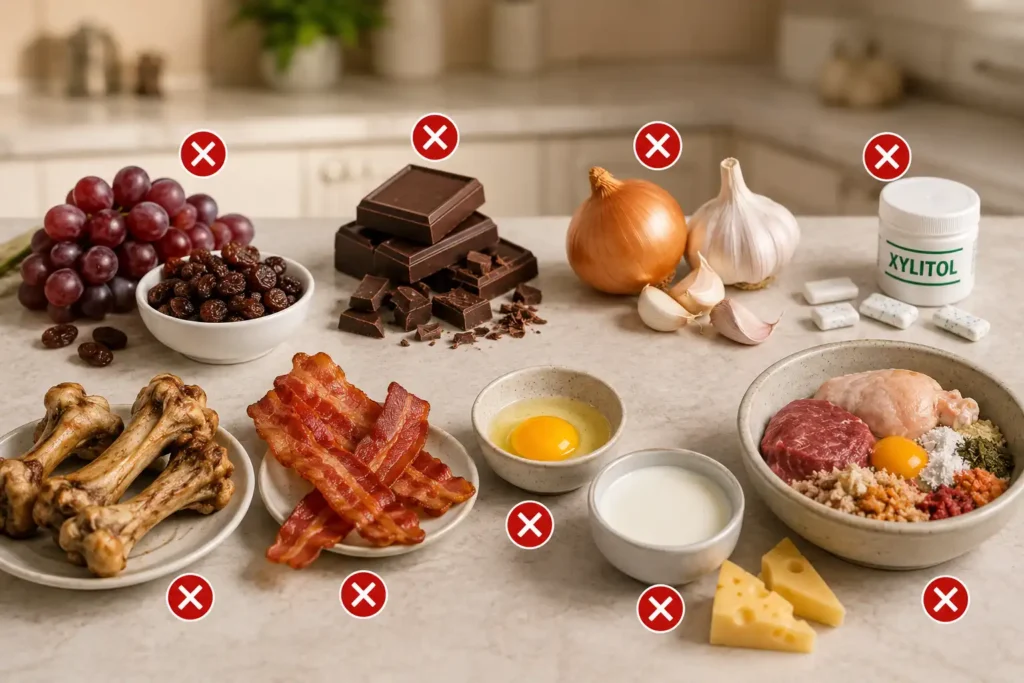
Proven Canine Toxins
Grapes, raisins, chocolate, onions, garlic, and products containing Xylitol (artificial sweetener).
Physical Hazards
Cooked bones (which splinter easily inside brachycephalic tracts) and highly spoiled or expired food items.
Systemic Irritants
Excessively salty snacks, greasy foods (like bacon or sausage), raw eggs, and large volumes of unfermented cow dairy.
The Unbalanced Trap
Homemade-only diets that have not been strictly formulated by a certified veterinary nutritionist.
Does a Pregnant French Bulldog Need Calcium?
Do not administer calcium supplements unless explicitly prescribed by your veterinarian. Many well-meaning Frenchie parents assume extra calcium into her bowl will support the skeletal development of the puppies, but during pregnancy, calcium balance is more delicate than simply adding “more.”
If a pregnant Frenchie receives too much calcium before birth, her body may become less prepared to mobilize calcium naturally when she suddenly needs it for milk production after delivery.
The Royal Kennel Club highlights that when a pregnant mother consumes an appropriate, complete and balanced commercial puppy food, her body receives the exact ratios of vitamins and minerals it requires.
If you force extra calcium into her system during pregnancy, her body shuts down its natural mechanism for extracting calcium from her own bones. When she eventually gives birth and suddenly needs massive amounts of calcium to produce milk, her body will not know how to mobilize it. This causes a sudden, life-threatening metabolic drop known as postpartum eclampsia (milk fever).
Hydration for Pregnant French Bulldogs: The Quiet Hero of Pregnancy
Do not obsess entirely over her food dish while ignoring her water bowl. Hydration is the absolute foundation of healthy amniotic fluid production and smooth embryonic circulation. A pregnant Frenchie must have unrestricted, constant access to fresh, clean, filtered drinking water. Watch her closely for these subtle signs of dehydration:
If you suspect your pregnant Frenchie is struggling to retain fluids or showing signs of dehydration, skip the online forums and contact your emergency vet immediately.
Safe Treats for Pregnant French Bulldogs
Treats are certainly not forbidden, but they should remain simple, plain, and strictly limited to less than 10% of her total daily caloric intake. Stick to these safe options:
Post-Whelping Nutrition for French Bulldogs: What to Feed After Birth
The moment her puppies are safely delivered, your Frenchie enters the most physically demanding athletic event of her life: lactation. Milk production requires an astonishing amount of energy and fluids. During the height of nursing (around weeks 3 to 4 post-birth), she may require up to three to four times her normal baseline maintenance food volume.

The 5 Most Common Mistakes Frenchie Parents Make
Even careful Frenchie parents can make feeding mistakes during pregnancy, especially when they are nervous and trying to help. These are the most common diet mistakes to avoid so your pregnant French Bulldog stays properly nourished without unnecessary risks.
Feeding Too Much Too Early
Shoving extra food into her bowl during weeks 1 and 2 only results in maternal obesity, making her upcoming C-section significantly more hazardous.
Adding Calcium Prematurely
Flooding her system with prenatal calcium supplements shuts down her natural hormone pathways, setting her up for an eclampsia crisis during nursing.
Switching Diets Instantly
Frenchie stomachs are notoriously sensitive. Changing her from adult food to puppy food overnight will trigger severe intestinal gas, vomiting, and diarrhea. Always use a 7-day slow transition.
Trusting Random Breeder Recipes
Unverified homemade recipes found on TikTok or social media are almost always deficient in crucial reproductive microminerals. While they might work for one dog, they can be highly unsafe for yours.
Neglecting the Water Bowl
Forgetting that proper hydration directly controls her milk supply and amniotic fluid volume. Pregnancy and nursing both spike her systemic need for continuous water access.
When to Call the Vet Immediately
Because of their brachycephalic builds and narrow pelvises, French Bulldog pregnancies require hyper-vigilance. Bypass the internet and contact your reproductive veterinarian immediately if you observe any of these warning indicators:
Anorexia
Total refusal to eat any food or drink water for more than 24 consecutive hours.
Systemic Distress
Repeated vomiting, severe diarrhea, or total physical collapse.
The Tremble Shock
Shivering, muscle twitching, or frantic pacing and panting outside of active labor (key signs of an eclampsia crisis).
Abnormal Discharge
Any dark green, black, bloody, or foul-smelling vaginal discharge prior to her formal delivery date.
Dystocia
Active straining for more than 30 to 45 minutes without producing a puppy, or extreme restlessness near delivery without progress.
Airway Blockage
Severe difficulty breathing, blue-tinged gums, or sudden fever.
FAQ: French Bulldog Pregnancy Diet
Can pregnant French Bulldogs eat puppy food?
Yes. In fact, they should. You should transition them to a premium puppy, growth, or all-life-stages formula starting around week 4 or 5 of pregnancy to provide the extra protein and minerals needed for fetal development.
When should I increase my pregnant Frenchie’s food portions?
Do not increase her food during the first half of pregnancy (weeks 1–4). Begin increasing her caloric volume gradually after transitioning her to puppy food in the second half of gestation, peaking during the final trimester.
How many times a day should I feed a pregnant French Bulldog?
Feed her normal 2-meal schedule during early pregnancy. As she enters weeks 6 through 9, split her daily food volume into 3 to 5 small micro-meals to prevent stomach compression and acid reflux.
Does my pregnant Frenchie need human prenatal vitamins?
No. Never feed human prenatal vitamins to a dog. A high-quality, complete commercial puppy food already contains perfectly balanced reproductive vitamins. Extra supplements should only be added under direct veterinary instruction.
Can a pregnant French Bulldog eat a raw food diet?
Clinical veterinary nutrition sources do not recommend raw diets for pregnant dogs due to the high risks of Salmonella or Listeria contamination, which can cause severe maternal illness or sudden pregnancy loss.
What if my pregnant Frenchie is picky?
Mild appetite changes can happen due to hormones, but refusing food for more than 24 hours is a strict reason to call your vet. Do not rely on treats or toppers as her main diet to solve pickiness.
What should a nursing French Bulldog eat?
A nursing Frenchie should be fed a high-calorie puppy, growth, or lactation-specific formula. She should have constant, unrestricted access to both food and fresh water throughout the entire nursing process.
Final Verdict
Your pregnant French Bulldog does not need a complicated bowl full of trendy internet ingredients or unverified breeder supplements. She needs:
The absolute best pregnancy diet isn’t the fanciest or most expensive one on social media. It is the steady, reliable nutrition that keeps your Frenchie comfortable, nourished, and safe while her tiny puppies grow. Stay calm, stay prepared, and keep your reproductive veterinarian’s number pinned directly to your refrigerator!
The Breed Expert Recommendation Hub
Every Product is carefully selected based on ingredient profiles, veterinary nutrition principles, brand reputation, performance metrics, reproductive safety, and biological compatibility with the French Bulldog’s unique anatomy. We maintain zero brand partnerships to ensure total editorial independence.
Top 3 Gestation & Lactation Formulas for French BulldogsRoyal Canin Small Breed Starter Babydog & Mother Dry Dog Food
⭐⭐⭐⭐⭐Highly Rated by Frenchie Breeders
The Breed-Specific Advantage: The nutrient density is packed into mini, rehydratable kibbles. You can easily steep them in warm water to form a smooth porridge, allowing a heavily pregnant Frenchie to lap up high-calorie fuel without swallowing excessive air or triggering brachycephalic acid reflux.
Check current pricing and availability at PetSmart or Chewy.com.
Purina Pro Plan Puppy Small Breed Formula Dry Dog Food
⭐⭐⭐⭐⭐WSAVA-Aligned Standard
The Breed-Specific Advantage: It is richly fortified with guaranteed live probiotics to safeguard the notoriously volatile Frenchie digestive tract against gestation-induced diarrhea. It provides dense quantities of calcium and phosphorus to construct robust skeletal foundations for the puppies without unbalancing the mother’s system.
Check current pricing and availability at PetSmart or Petco.com.
Royal Canin Size Health Nutrition Starter Mother & Babydog Mousse in Sauce Dog Food
⭐⭐⭐⭐⭐Top Choice for Picky Eaters
The Breed-Specific Advantage: When the final trimester “Space Crunch” prevents your Frenchie from handling crunchy, voluminous dry foods, this soft, texturized mousse offers an elegant workaround. It slips down easily, maximizes maternal hydration levels, and contains vitamins E and C to build up your dog’s immune defenses.
Check current pricing and availability at PetSmart or Pet Supplies Plus.
Native Pet All-Natural Organic Bone Broth Topper for Dogs
⭐⭐⭐⭐⭐Zero-Additive Formula
The Breed-Specific Advantage: It is your ultimate defense weapon against week 4 hormonal morning sickness. Stirring a warm splash of this canine-safe broth into her bowl instantly coaxes picky, nauseous Frenchies to keep eating their balanced meals without unbalancing their dietary mineral ratios.
Check current pricing and availability on Amazon or Chewy.com.
Zesty Paws Wild Alaskan Salmon Oil Skin & Coat Supplement
⭐⭐⭐⭐⭐Premium Reproductive Omega
The Breed-Specific Advantage: Dense levels of EPA and DHA are clinically linked to the neurological, retinal, and cognitive mapping of puppies inside the womb. Adding this to her second-trimester diet gives the litter a crucial evolutionary headstart while keeping the mother’s hormonal skin barrier perfectly conditioned.
Check current pricing and availability on Amazon or Chewy.com.

The information provided on The Breed Expert is for educational and informational purposes only. It is not intended as a substitute for professional veterinary medical advice, diagnosis, or treatment. Always seek the direct guidance of a licensed veterinarian or reproductive canine specialist with any questions you may have regarding dietary changes or maternal care for your pet.